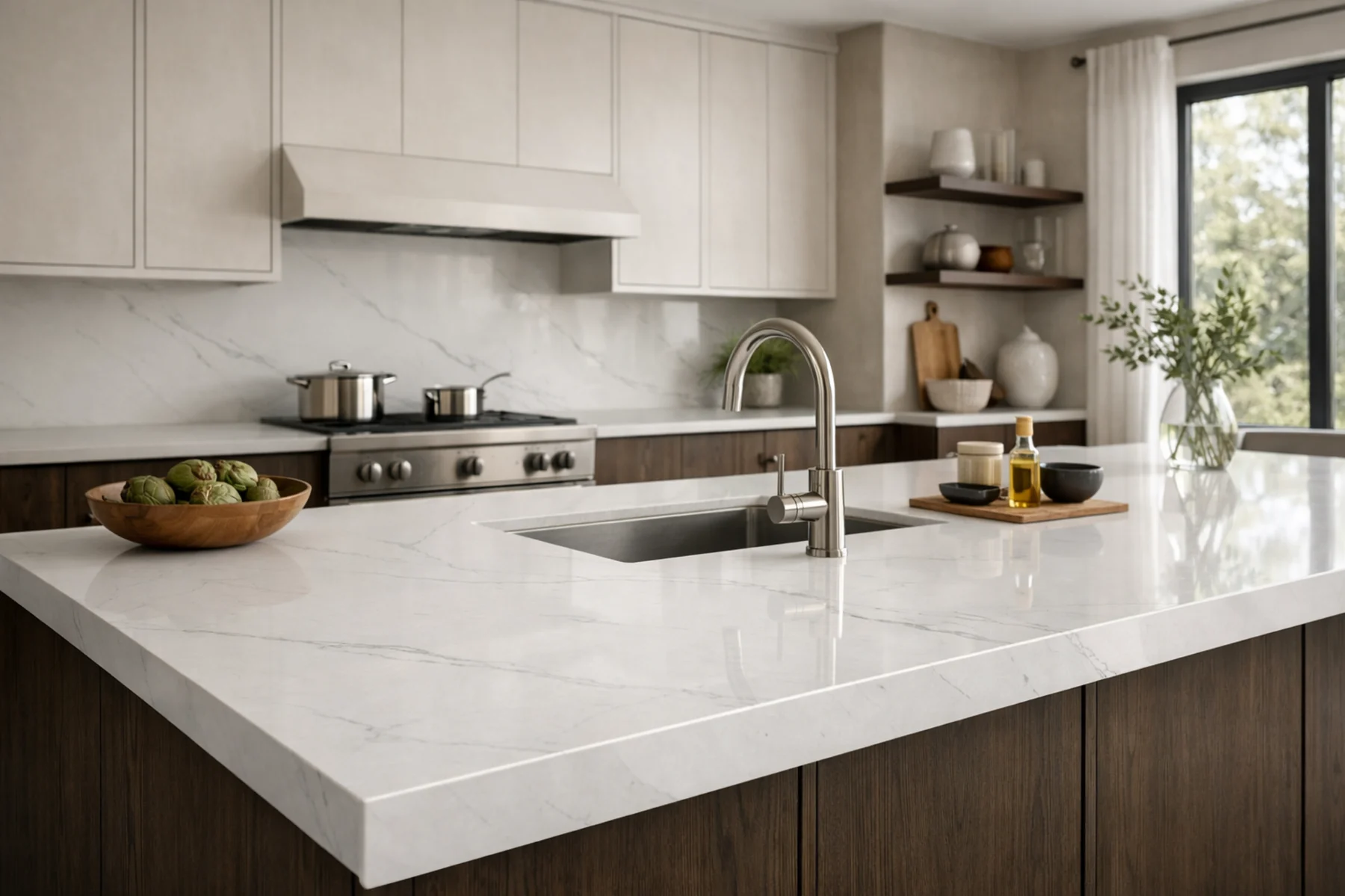
Quartz
Engineered surface with controlled patterning, broad design range, and the easiest everyday care profile for many households.
Explore this page →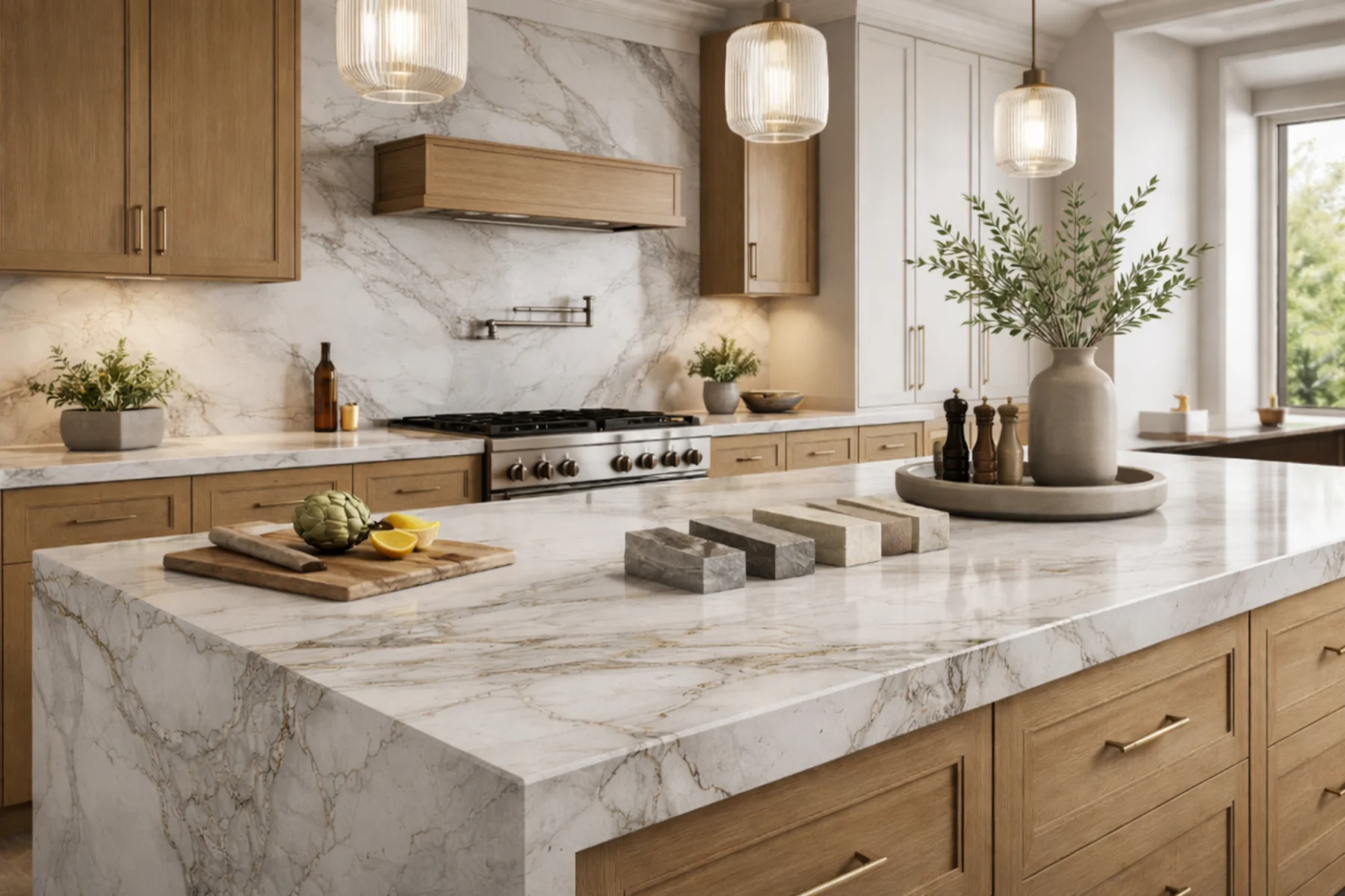
A strong countertop choice balances beauty, value, maintenance, fabrication, seam planning, and how the surface will actually perform inside the home.
Countertops affect the room’s first impression, daily function, cleanup routine, seam layout, sink details, backsplash direction, and long-term wear. A strong selection is not just the prettiest slab in the showroom. It is the surface that supports the cabinetry, fits the home’s use pattern, and still feels right after the novelty wears off.
Countertops can be quiet support, the main focal point, or the bridge between cabinetry, flooring, hardware, and lighting. The mistake is choosing a dramatic slab when the room already has too many competing features.
Installed cost is shaped by slab tier, layout, seam strategy, thickness, edge profile, cutouts, backsplash material, tear-out, plumbing, and fabrication complexity. The material name alone does not explain the final number.
Every surface has a care profile. Quartz is low-maintenance but not heat-proof. Natural stone can need sealing. Marble can etch. Porcelain is easy to clean but requires skilled fabrication and thoughtful edge detailing.
Most problems come from poor slab selection, unrealistic maintenance expectations, awkward seams, weak edge choices, unsupported overhangs, and selections made from small samples instead of actual slabs.
Use these pages to understand what each surface does well, where it struggles, what tends to move cost, and how the material should be cared for after installation.
Engineered surface with controlled patterning, broad design range, and the easiest everyday care profile for many households.
Explore this page →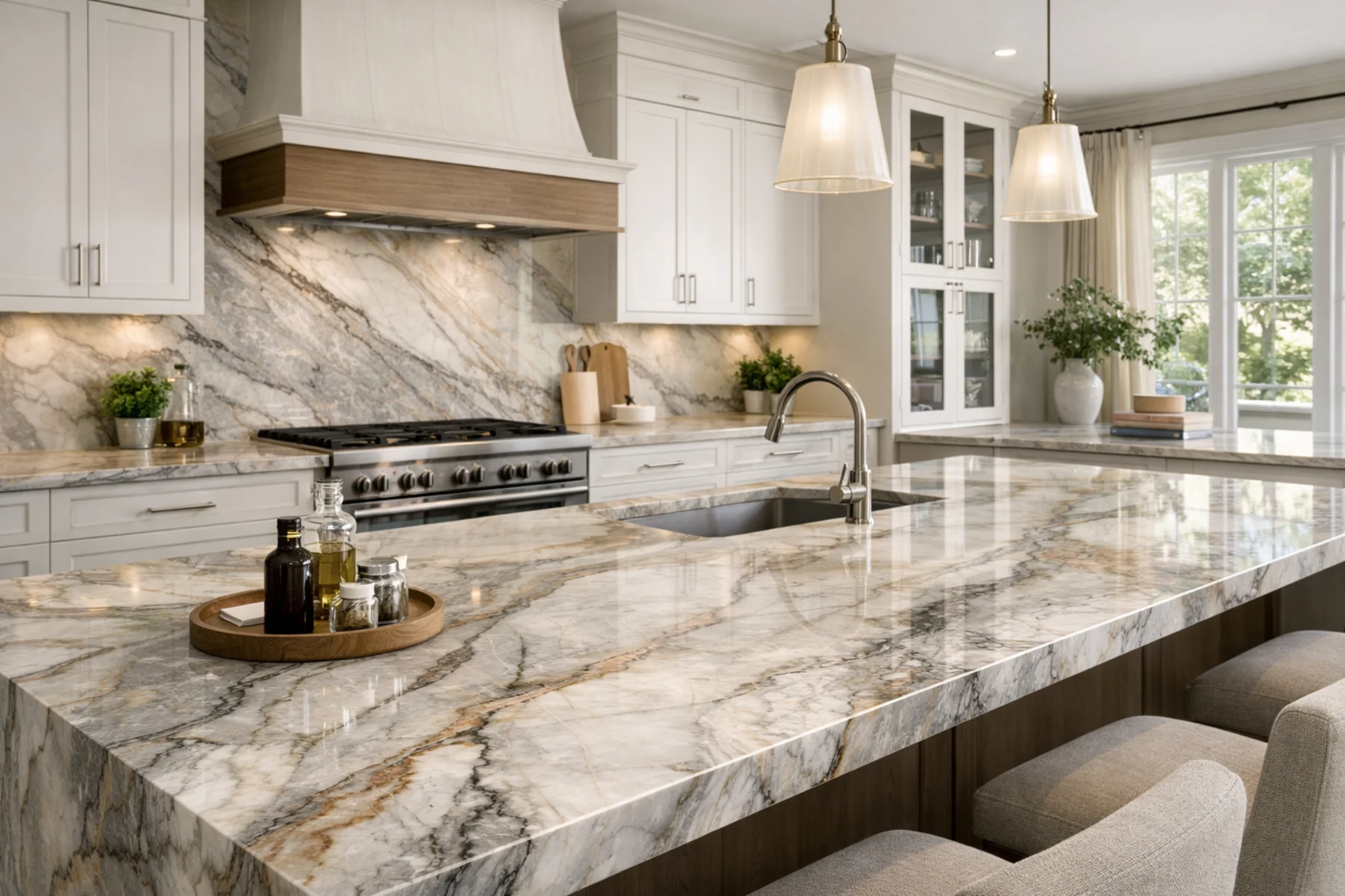
Natural stone with authentic movement, strong presence, and a premium fabrication posture that rewards careful slab selection.
Explore this page →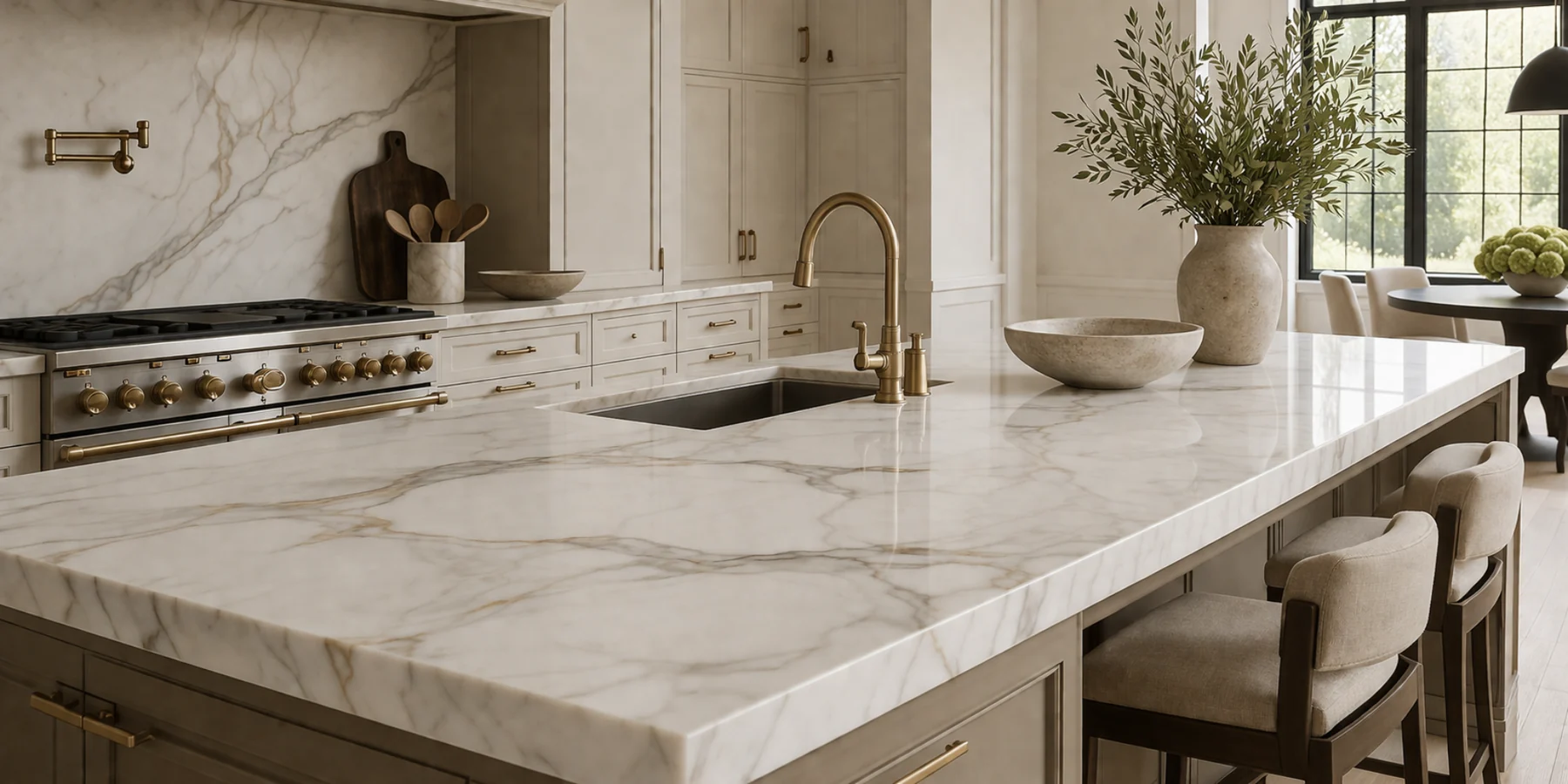
Luminous natural stone with timeless character, visible aging, and a maintenance profile that must be understood before selection.
Explore this page →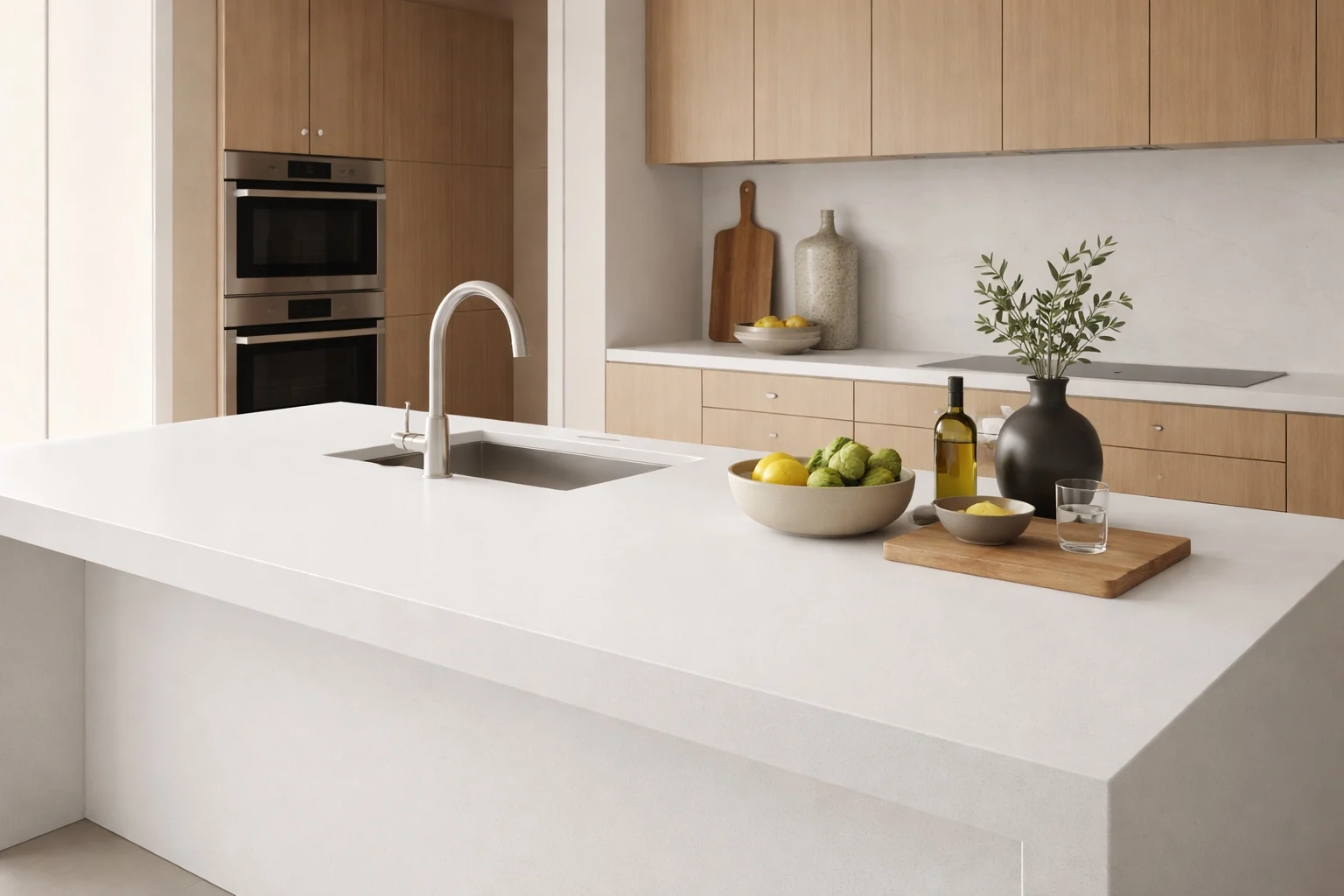
Crisp, nonporous slab material with a refined architectural look, strong stain resistance, and fabrication details that matter.
Explore this page →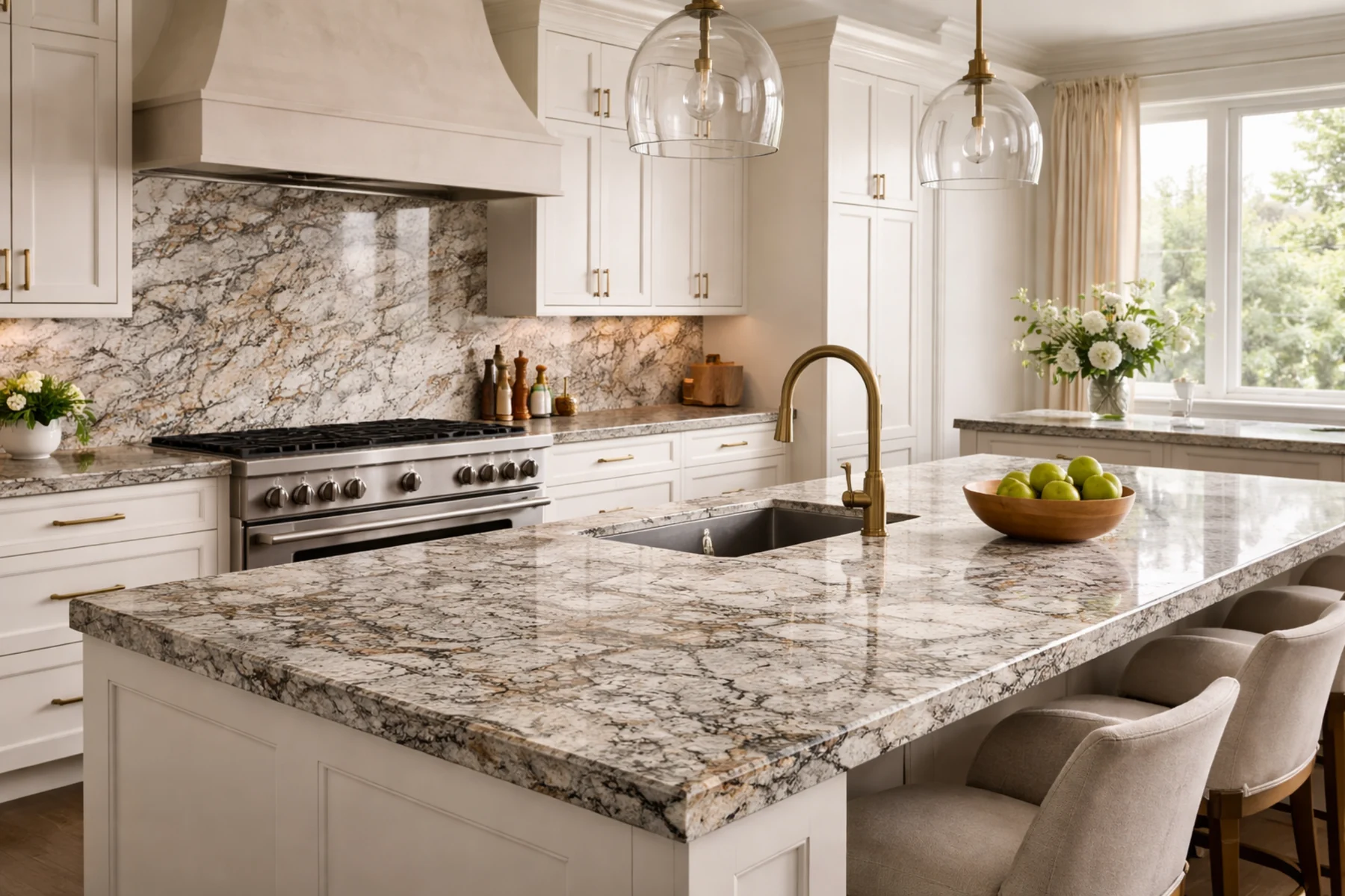
Durable natural stone with wide pricing range, real texture, and a current look when the slab is selected with discipline.
Explore this page →A countertop has to do two jobs at the same time: perform under real use and finish the design visually. Some projects need calm, controlled surfaces so the cabinetry and lighting can lead. Others need authentic natural movement so the room feels custom, layered, and less predictable.
The best selection starts by deciding what the countertop is supposed to contribute: quietness, drama, warmth, brightness, texture, durability, low maintenance, resale familiarity, or a very specific architectural line.
These are broad patterns. Exact performance still depends on the specific slab, finish, brand, fabrication quality, sealing, and how the surface is used.
Best for low-maintenance projects where controlled color, predictable pattern, and easy cleanup matter most. Watch heat exposure, overly artificial veining, and chip risk at hard-working edges.
Best for homeowners who want natural stone with stronger movement and a more elevated slab story. Watch porous stones, mislabeling, higher fabrication cost, and seam planning.
Best for timeless beauty, luminosity, and graceful aging. Watch etching, staining, scratching, and the expectation that the surface will stay perfect under heavy use.
Best for crisp architectural designs, stain resistance, heat resistance, UV stability, and thin or mitered looks. Watch edge durability, exposed cores, and installer experience.
Best for practical natural stone value, durability, and texture. Watch dated patterning, heavy movement, slab quality, sealing needs, and whether the stone supports the design direction.
The best surface is the one that fits the room’s use, the homeowner’s maintenance tolerance, and the design composition. A beautiful slab can still be the wrong answer if it adds stress or visual noise.
A lower slab price can disappear quickly if the pattern forces poor seams, the edge detail looks thin, the sink cutout needs more support, or the surface does not fit the room. Value is the combination of appearance, durability, maintenance, fabrication quality, and how confidently the selection supports the whole design.
For many projects, the smartest move is not the most dramatic material. It is the material that lets the cabinetry, hardware, lighting, tile, and flooring work together without fighting for attention.
Care requirements do not make a material good or bad. They simply determine whether the surface matches the way the home will be lived in. A homeowner who wants a stress-free kitchen should be steered differently than a homeowner who loves natural patina and character.
The most dependable everyday routine is simple: clean with a soft cloth, mild soap or a stone-safe cleaner, avoid harsh abrasives, use cutting boards, use trivets, wipe spills early, and follow the fabricator’s sealing guidance when a natural stone requires it.
Small samples can confirm general color, but they rarely show movement, veining scale, slab-to-slab variation, fissures, resin fill, finish behavior, or how the material will look across a large island.
Look at the actual slab under strong and soft light. Confirm veining, color temperature, resin fill, fissures, cloudy spots, and whether the material still works when viewed from a distance.
Seams should be placed intentionally, not discovered at install. Large islands, L-shapes, full-height backsplashes, and waterfall sides need seam planning early.
Edge thickness changes the entire read of the room. Thin, eased, mitered, ogee, waterfall, and built-up details all communicate different levels of formality and weight.
A dramatic countertop and a dramatic backsplash can compete. Decide whether the backsplash repeats the slab, supports it quietly, or introduces a separate design layer.
Undermount sinks, apron-front sinks, ledge sinks, and integrated drainboards all change cutout, support, reveal, and cleanup details.
Ask how to clean it, whether it needs sealing, what voids the warranty, what can chip or etch, and what routine will keep it looking right.
Black Label helps align material, cabinetry, hardware, sink details, backsplash direction, and daily use so the finished space feels intentional and livable.