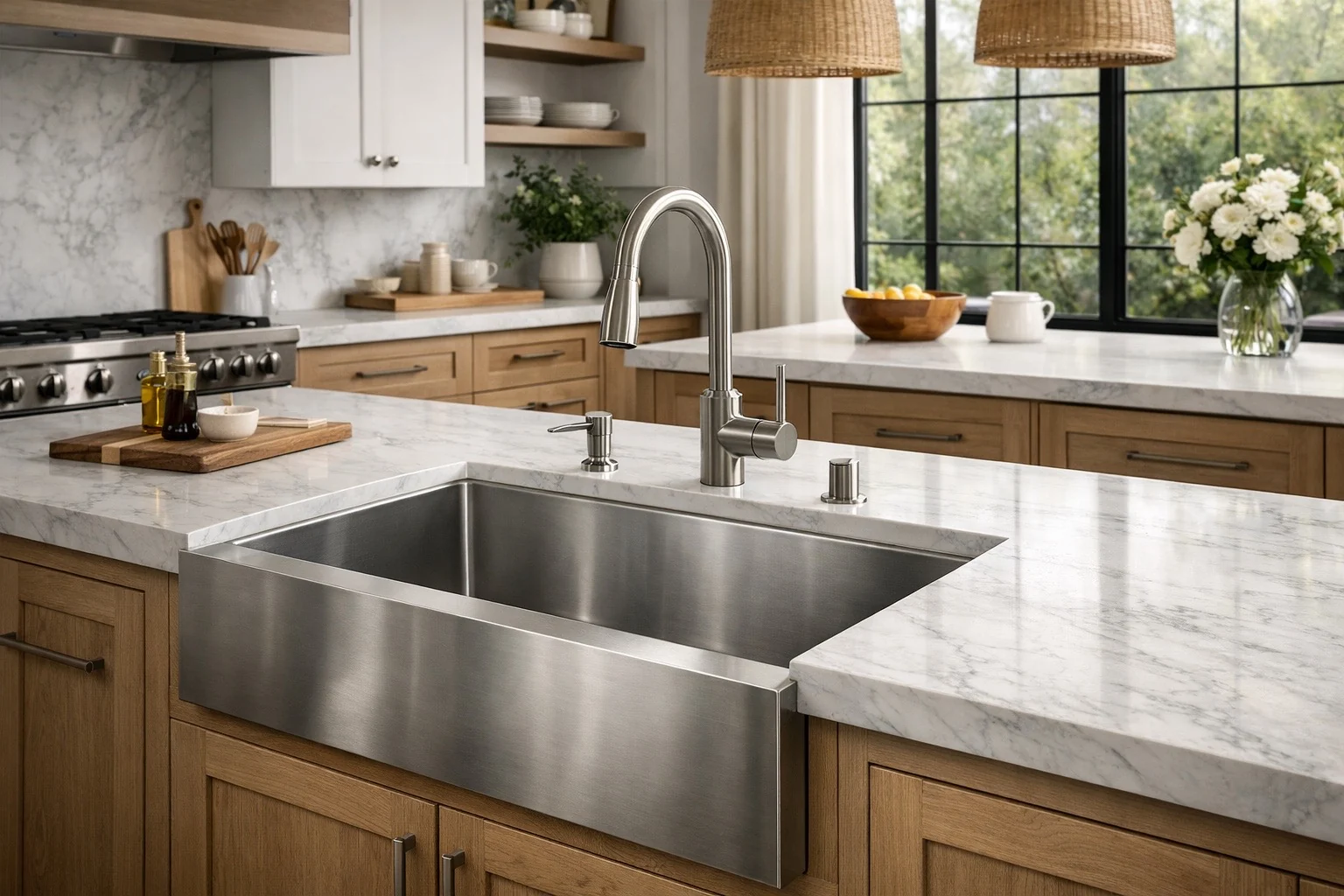
Kitchen Sinks
Installation styles, basin formats, materials, workstation systems, cabinet sizing, fabrication risk, and cleanup-zone planning.
Explore this page →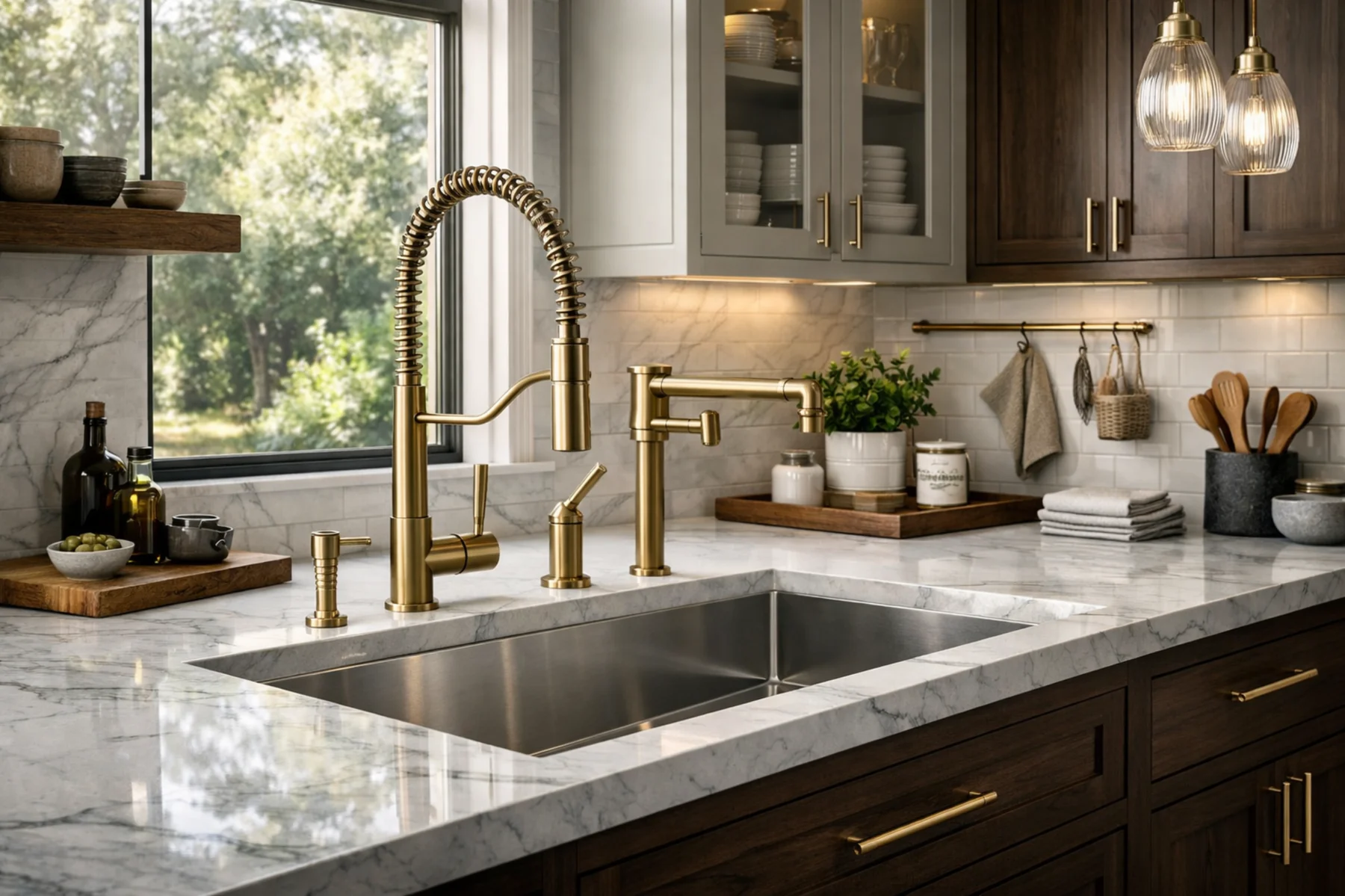
Sinks and faucets are not afterthoughts. They shape prep, cleanup, water delivery, countertop fabrication, storage below the sink, finish coordination, and how the room feels every time it is used.
A sink and faucet should be selected as a working system. The decision is not just stainless versus fireclay or brass versus chrome. It is bowl size, cabinet width, drain location, countertop cutout, spray reach, mounting holes, disposal needs, filtration, soap delivery, hand clearance, splash control, and how the fixture language connects to the cabinet hardware and lighting.
Fixtures improve daily routine when they reduce awkward movement, support cleanup, and keep water, waste, accessories, and storage planned in the right zone.
Cost moves with material, brand tier, finish, valve quality, size, accessory package, sensor technology, filtration, hot/cold systems, rough plumbing, and countertop fabrication.
The biggest misses are wrong cabinet sizing, faucet reach that does not land in the bowl, unplanned holes, poor splash control, forgotten air gaps, tight plumbing, and finish decisions made in isolation.
Every fixture has a care profile. Hard water, abrasive cleaners, standing moisture, food debris, soap residue, metal finish choice, and filter replacement all affect how the selection ages.
These pages are meant to be read together. Sink size affects faucet reach. Faucet holes affect countertop fabrication. Water filtration affects cabinet storage. Bathroom faucet style affects sink selection, drain choice, mirror clearance, and vanity proportion.
Installation styles, basin formats, materials, workstation systems, cabinet sizing, fabrication risk, and cleanup-zone planning.
Explore this page →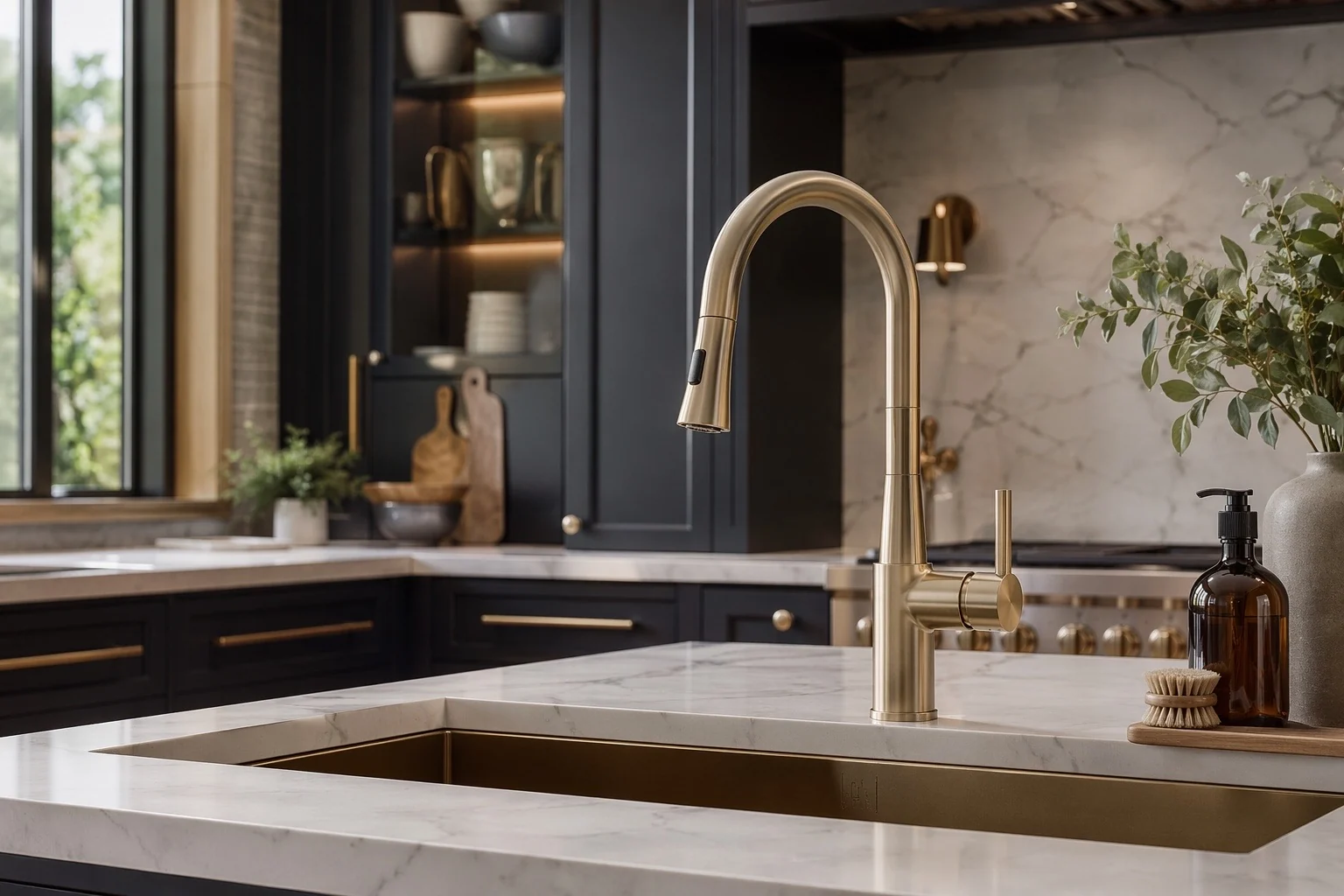
Pull-down, pre-rinse, bridge, bar, pot filler, filtered water, hot/cold dispensers, finish coordination, and everyday usability.
Explore this page →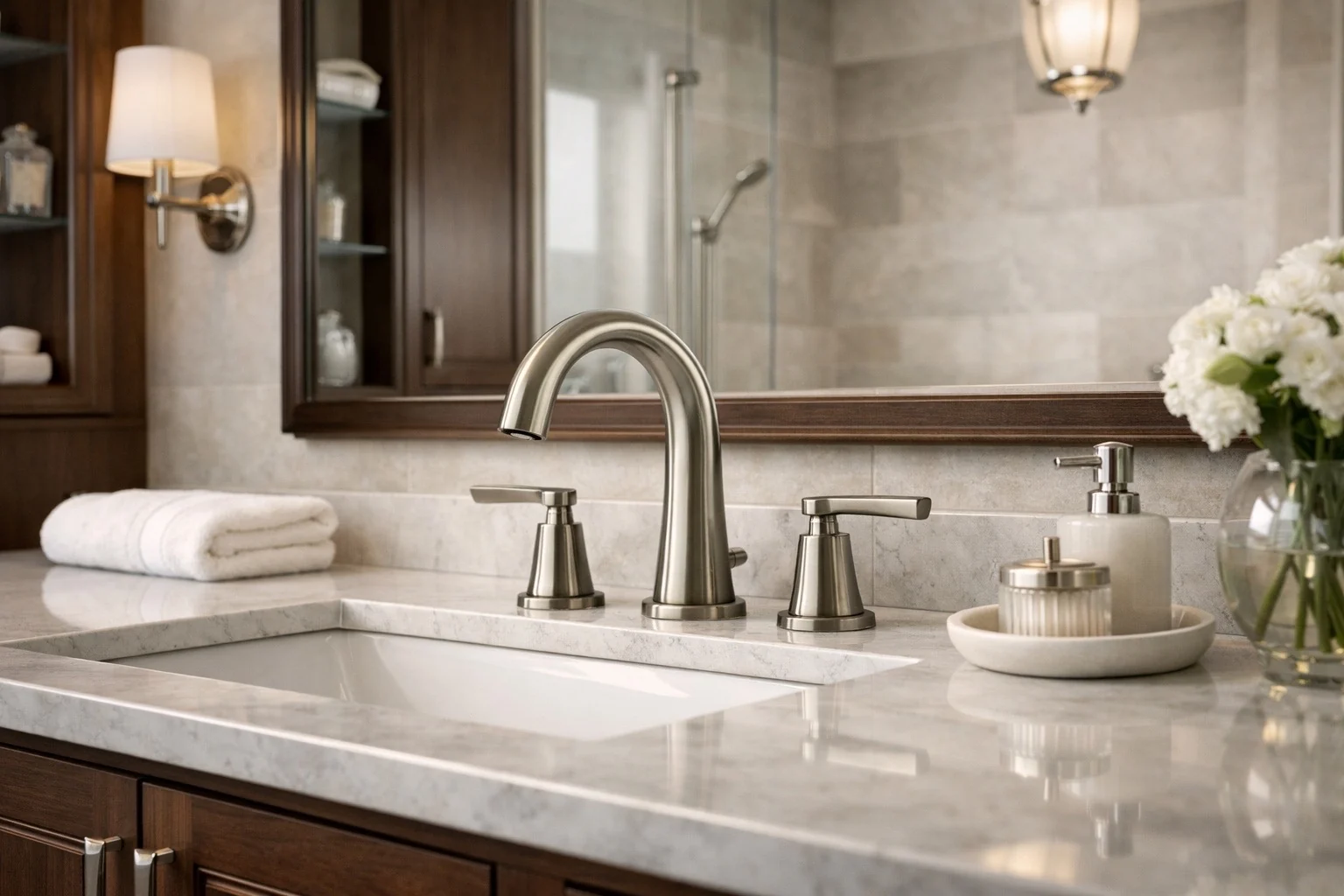
Single-hole, widespread, wall-mounted, vessel, centerset, shower trim coordination, splash control, and vanity-scale decisions.
Explore this page →A main cleanup sink, prep sink, bar sink, coffee station, filtered-water tap, pot filler, bath vanity faucet, and shower trim all solve different problems. The best rooms do not force one fixture type to do every job. They distribute water points according to how the room actually works.
The finish selection should then support the architecture. A quiet fixture can let stone, cabinetry, and lighting lead. A more sculptural fixture can give a simple vanity or kitchen elevation the final layer it needs. The goal is not to match every metal perfectly; it is to make the palette feel intentional.
Understanding the category helps a client compare value without getting lost in catalog language.
The hardest-working water point. It should be sized for the cabinet, cooking habits, cleanup routine, cookware, dishwasher location, and countertop fabrication plan.
A ledge-based sink that supports accessories such as cutting boards, drying racks, colanders, bowls, grates, and prep tools. It can consolidate prep and cleanup, but it needs enough counter and cabinet width.
A secondary sink can support coffee, beverage, entertaining, or prep. It is most valuable when placed where it prevents traffic from crossing the main cleanup zone.
The main delivery point for everyday water. Spout height, reach, docking, spray mode, handle clearance, finish, and hole count affect both use and appearance.
Dedicated filtered-water taps, reverse-osmosis faucets, hot-water dispensers, cold-only dispensers, and hot/cold systems add convenience but also require cabinet space, power, filters, and maintenance.
Bathroom faucets refine the vanity. Mounting style, spout projection, sink shape, backsplash, mirror, drain, finish, and shower trim coordination all matter because the room is visually compact.
A premium sink can be a strong investment when it changes daily workflow, protects the countertop edge, and supports how the client actually cooks. A premium faucet can be worth it when the valve, docking, finish durability, spray behavior, and proportions are better. A decorative fixture that looks expensive but splashes, stains, loosens, or fights the sink is not good value.
The most useful approach is to invest where touch, water control, durability, and visual weight are obvious every day, then keep secondary fixtures disciplined and coordinated.
Sinks and faucets affect drawings, cabinet openings, stone fabrication, plumbing rough-in, and accessory planning. Waiting too long creates avoidable compromises.
Cabinet width, sink-base style, drawer placement, face-frame or frameless construction, and under-sink storage determine what can realistically fit.
Choose installation type, bowl count, depth, drain location, accessory ledges, apron requirements, and disposal compatibility before countertop templating.
Check spout reach, height, handle swing, hole count, sprayer clearance, backsplash clearance, water delivery needs, and whether accessories require additional holes.
Plan filtered water, hot/cold dispensers, soap dispensers, air switches, disposal, air gaps, power, filter changes, and under-sink protection before installation.
Coordinate the fixture with cabinet hardware, lighting, appliances, shower trim, mirrors, and accessories. Exact matching is less important than intentionality.
Make sure the client understands hard-water behavior, filter changes, care instructions, living finishes, stainless care, enamel care, and what cleaners to avoid.
Most daily care is straightforward: rinse residue, wipe the fixture dry, clean with a soft cloth and mild soap, avoid harsh abrasives, and follow the manufacturer’s finish guidance. Hard water can leave mineral deposits on faucets, sink walls, drains, strainers, shower trim, and glass. Stainless, brass, chrome, matte black, enamel, fireclay, cast iron, copper, and composite materials age differently.
The client should know before final selection whether the product is meant to stay crisp, develop patina, show water spotting, require filter changes, or need special care to protect a decorative finish.
Black Label guides fixture decisions as part of the cabinetry, countertop, plumbing, and finish plan so the final room works as a system, not a collection of isolated selections.