Stone verification
Ask the supplier and fabricator how the slab has been identified and whether it behaves like true quartzite.
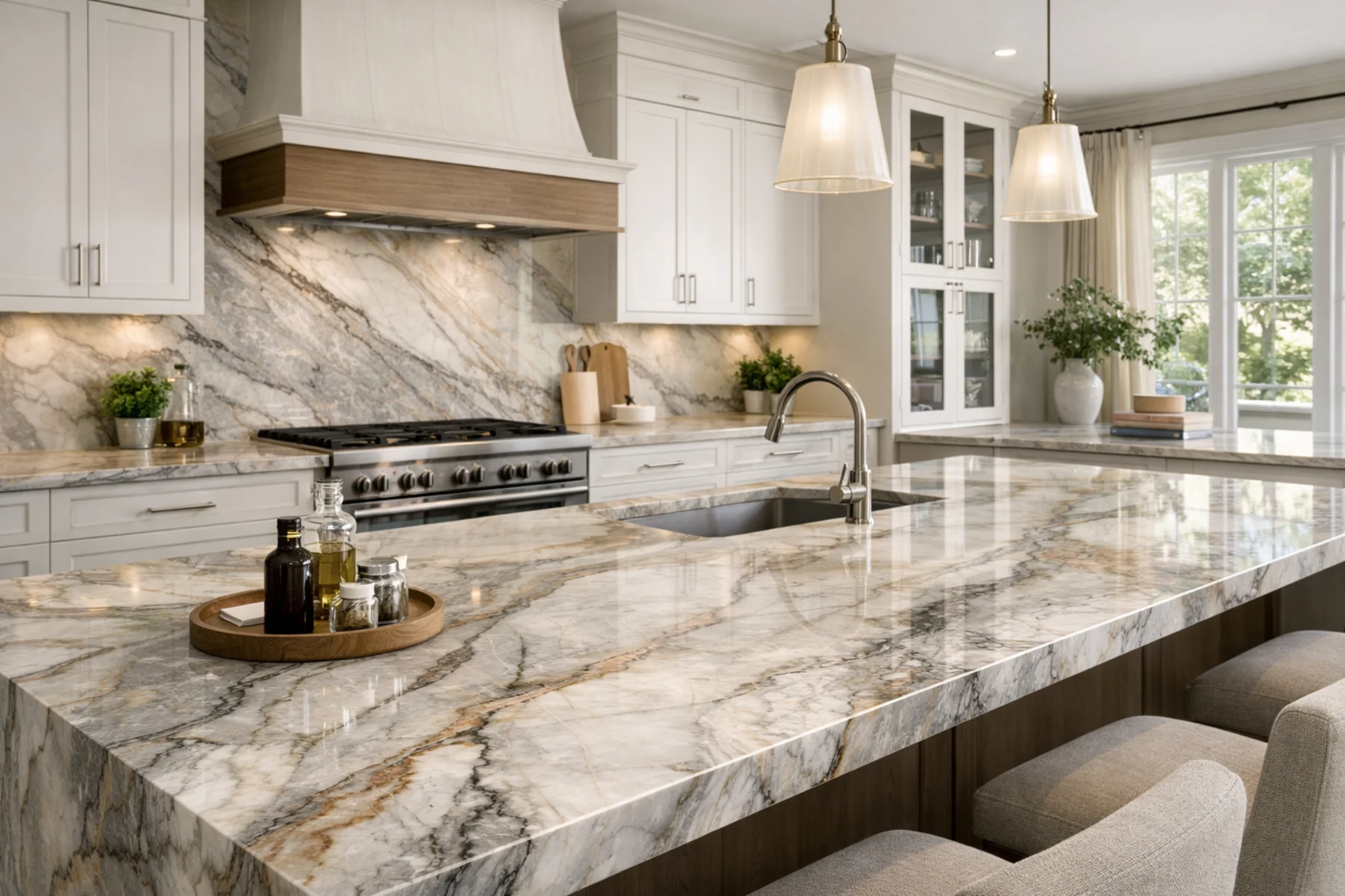
Quartzite is a natural stone often chosen for homeowners who want the drama of marble-like movement with a harder, more durable stone posture when the material is true quartzite.
The right quartzite can elevate a room dramatically. The wrong quartzite, or the right quartzite installed without discipline, can create unnecessary cost, visual noise, and care frustration.
Natural metamorphic stone. True quartzite forms under heat and pressure and is different from engineered quartz.
Often premium. Slab rarity, movement, thickness, waste, seaming, and harder fabrication can place it above many quartz and granite selections.
Usually benefits from sealing. Daily care should use mild soap or stone-safe cleaner and prompt spill cleanup.
Strong when the room needs authentic movement, natural depth, and a more elevated stone focal point.
Quartzite is often selected because it feels rare, dimensional, and authentic. Its value comes from the exact slab, not just the category name. Two quartzites can perform, price, and install very differently.
Cost is usually affected by rarity, slab yield, stone hardness, edge detail, full-height backsplash pieces, waterfall panels, and the amount of layout work needed to control the movement. Bookmatching and vein-matching can add significant fabrication time and waste.
A premium quartzite is worth considering when the countertop is expected to carry the design. If the room needs a quiet supporting surface, the added cost and movement may not be necessary.
The right maintenance expectation is part of the specification. A surface can be excellent and still be wrong for a household if its care profile does not match how the kitchen, bar, pantry, bath, or laundry area will actually be used.
A disciplined care routine protects the finish, the edges, the seams, and the homeowner’s confidence in the investment.
Because many quartzites have movement, the surrounding materials should be edited. A busy floor, strong backsplash, high-contrast hardware, and dramatic quartzite can compete if the composition is not controlled.
Quartzite can be excellent with warm whites, natural woods, greige palettes, soft taupes, deep stains, and restrained hardware. The key is reading undertones in the actual slab rather than assuming all light stone is neutral.
Large islands benefit from layout planning. The direction of the movement, seam location, and waterfall alignment can be the difference between a beautiful stone and a distracting installation.
These details should be settled before template, fabrication, and installation. They protect the final look and reduce surprises.
Ask the supplier and fabricator how the slab has been identified and whether it behaves like true quartzite.
Discuss water absorption, sealing schedule, and whether a penetrating sealer is recommended for the finish.
Mark island, perimeter, backsplash, and waterfall pieces before cutting so the movement lands intentionally.
Inspect the slab under natural and artificial light. Quartzite can shift color depending on lighting temperature.
Choose an edge that respects the stone’s weight. Overly decorative edges can fight more contemporary quartzite slabs.
Make sure the homeowner understands sealing, cleaner choice, spill cleanup, and the difference between stain and etch risk.
The strongest decision usually becomes clearer when the options are viewed side by side.
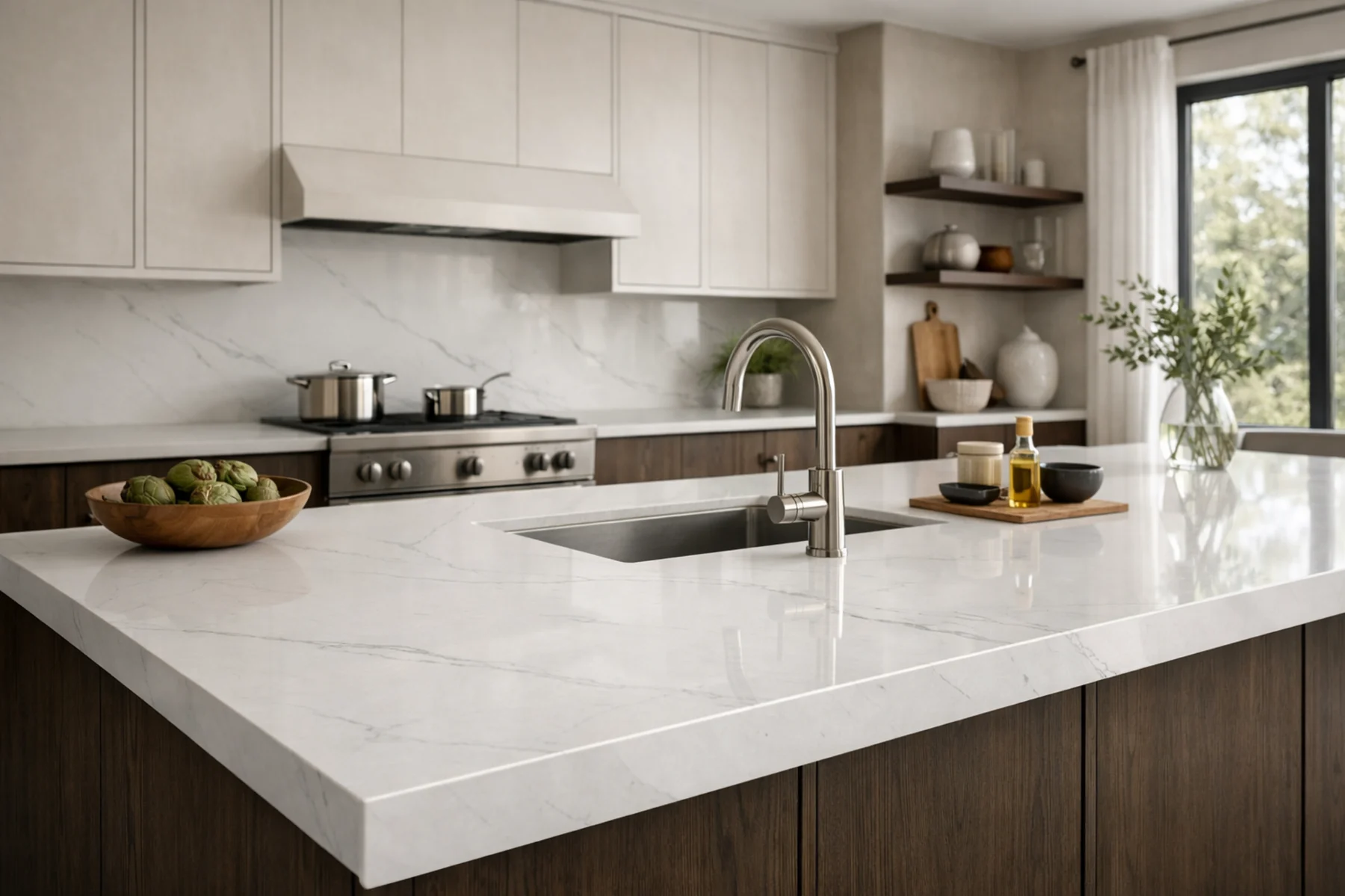
Engineered surface with controlled patterning, broad design range, and the easiest everyday care profile for many households.
Explore this page →Natural stone with authentic movement, strong presence, and a premium fabrication posture that rewards careful slab selection.
Current page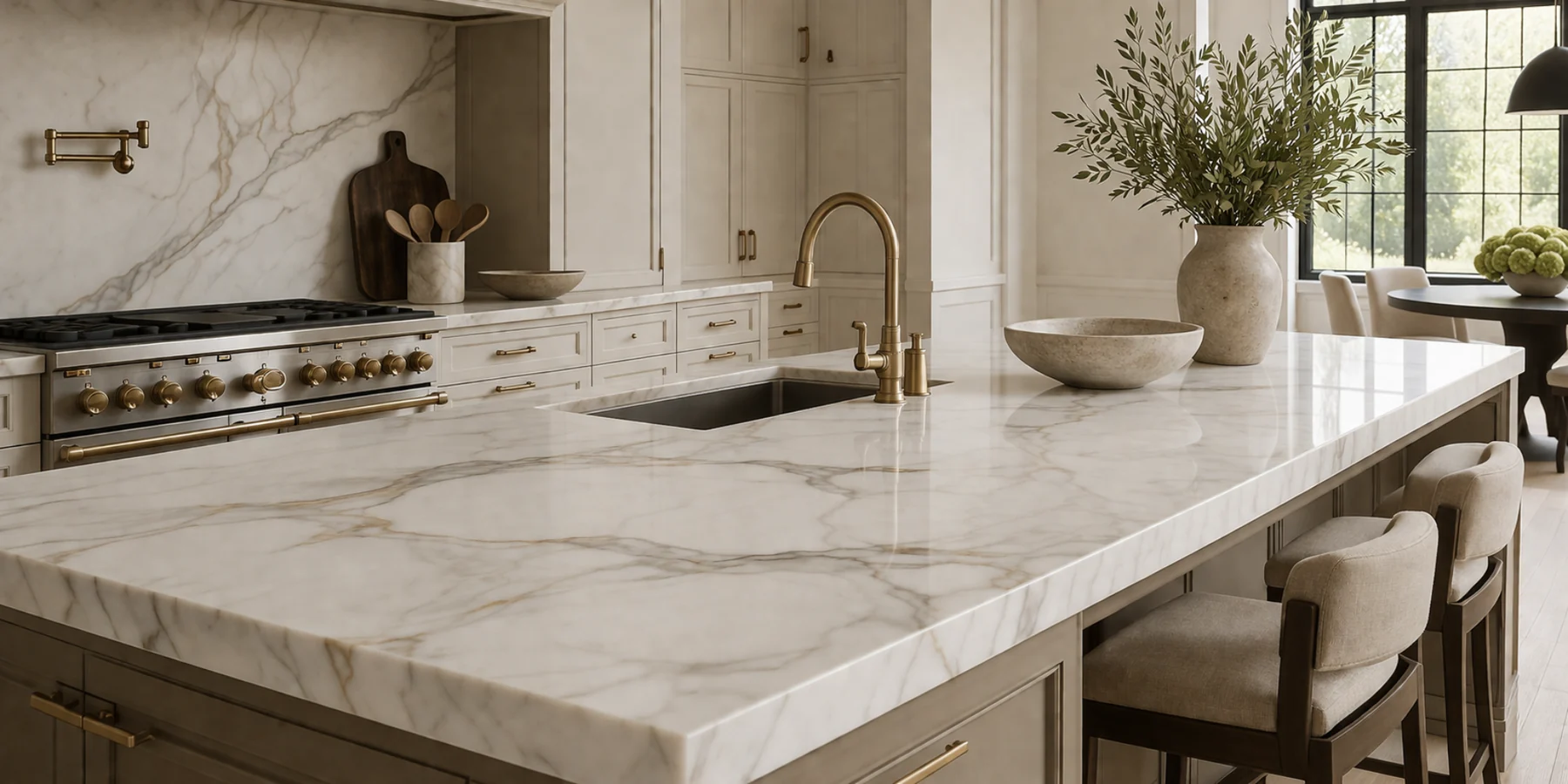
Luminous natural stone with timeless character, visible aging, and a maintenance profile that must be understood before selection.
Explore this page →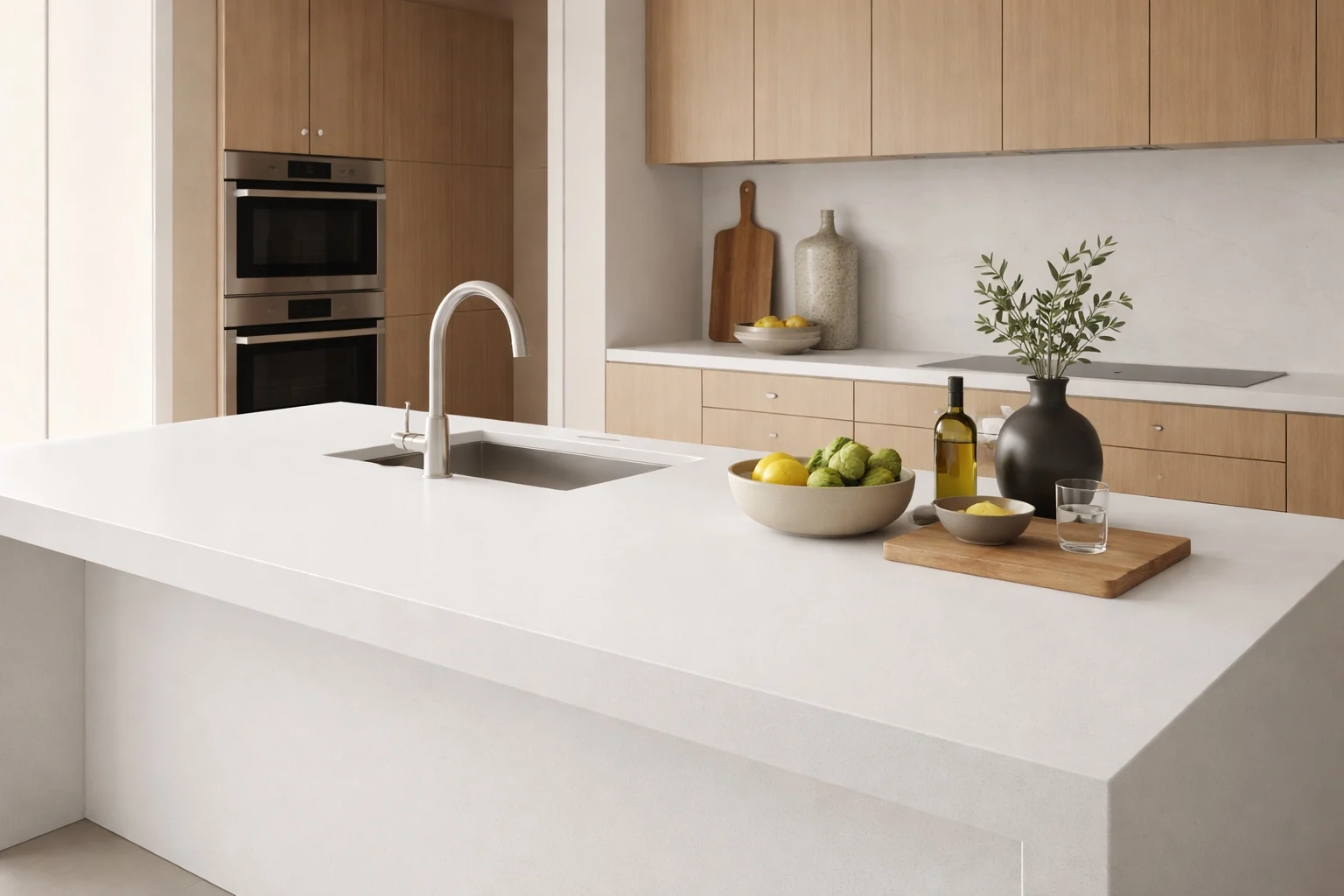
Crisp, nonporous slab material with a refined architectural look, strong stain resistance, and fabrication details that matter.
Explore this page →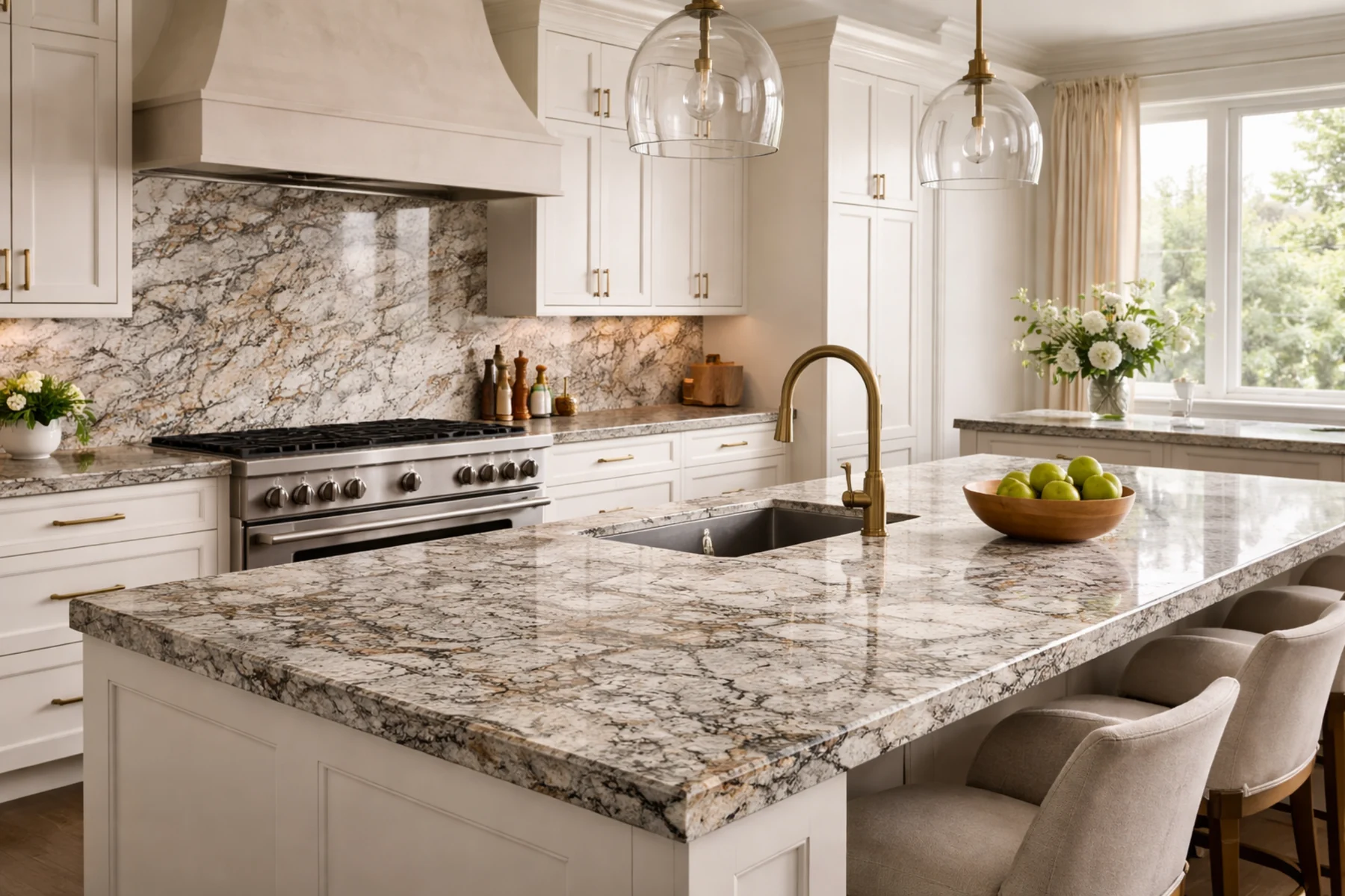
Durable natural stone with wide pricing range, real texture, and a current look when the slab is selected with discipline.
Explore this page →Black Label helps align quartzite slab selection, layout, seam planning, cabinet tones, backsplash choices, and care expectations so the stone feels intentional rather than overwhelming.