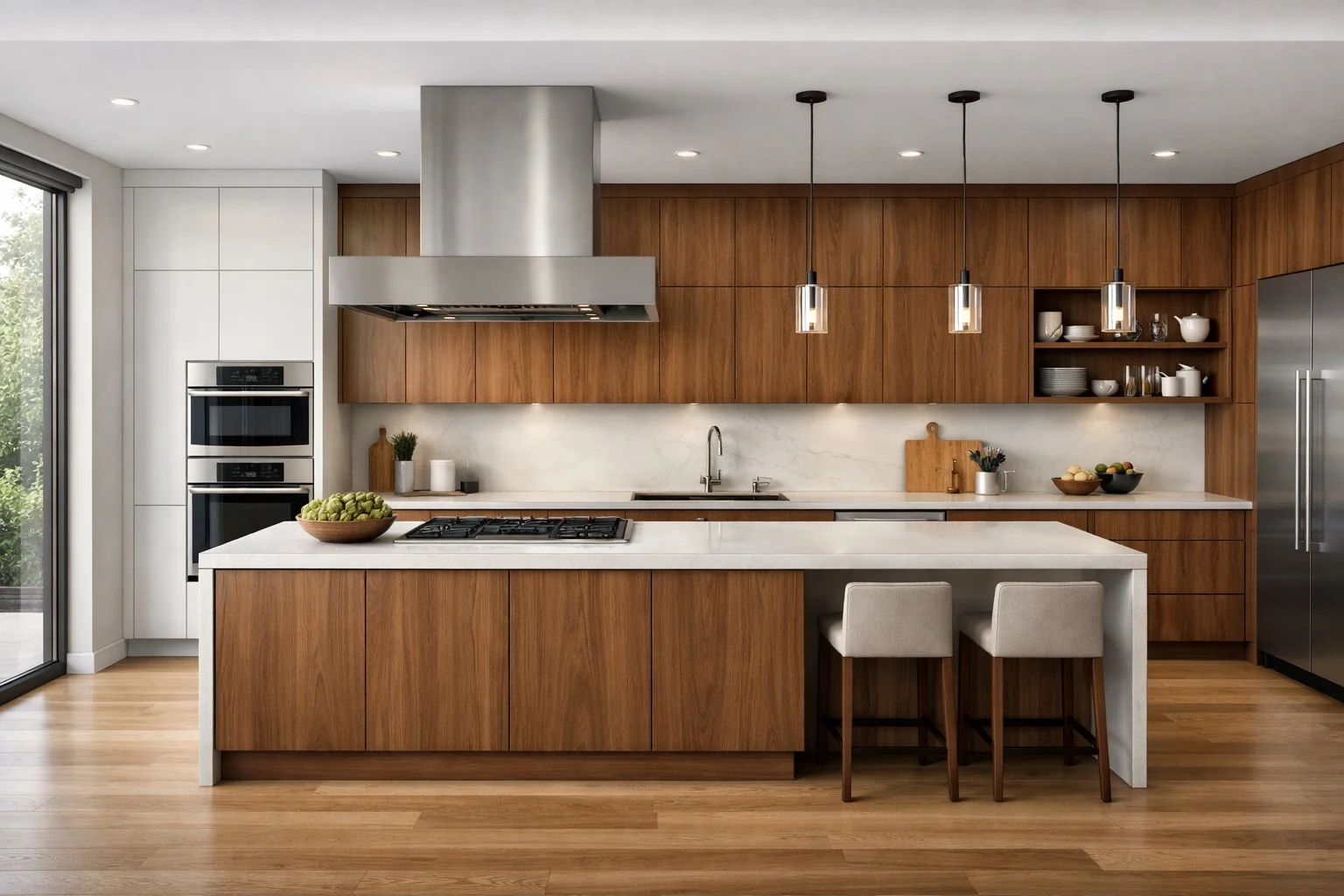
Frameless
Clean full-access cabinetry with minimal front interruption, strong storage access, and a modern-to-transitional design rhythm.
Explore this page →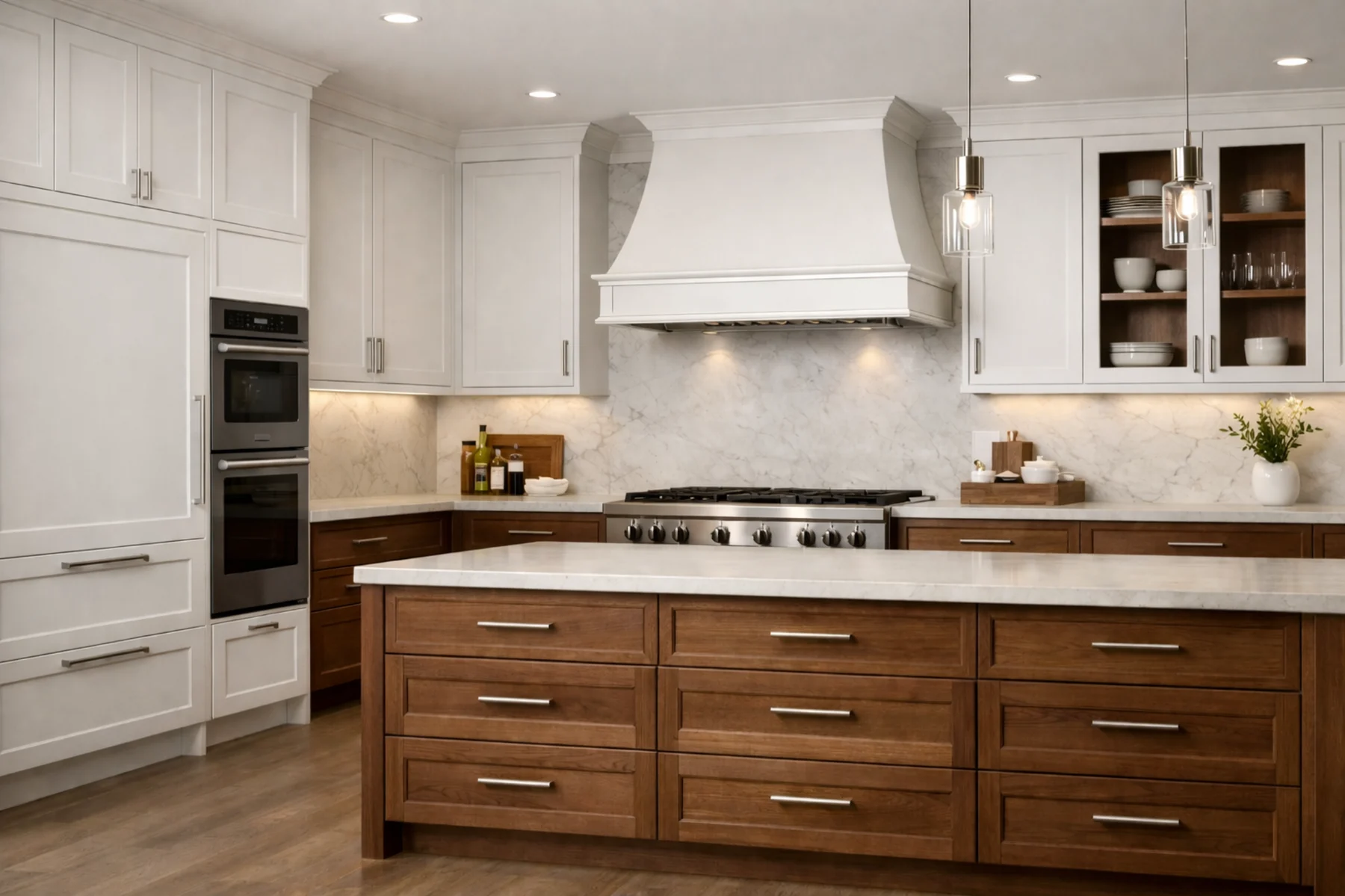
Frameless, face frame full overlay, and face frame inset cabinetry each create a different visual rhythm, access pattern, investment range, and level of refinement. The best choice is the one that fits the architecture of the room and the way the home will be used.
Before choosing a door style or finish color, it helps to understand the cabinet construction profile. The construction profile determines whether the cabinet has a face frame, how the doors and drawer fronts sit on that frame, how much reveal is visible, how refined the shadow lines become, and how much precision is required during fabrication and installation.
Construction controls the spacing between doors, drawers, and openings. Tight reveals feel cleaner and more tailored. Wider or more visible frame lines feel more traditional and structured.
Frameless cabinetry usually offers the widest interior access. Face frame styles add structure at the front of the cabinet and create a more traditional cabinet language.
Cost is affected by box construction, door and drawer tolerances, hinge systems, finish level, installer skill, and how demanding the reveal pattern is. More precision usually means more labor and less room for error.
All quality cabinetry benefits from gentle cleaning, humidity awareness, and occasional hinge or drawer adjustment. Inset cabinetry is usually the least forgiving because the reveal lines are intentionally exposed.
The broad term “framed cabinetry” is too general for a useful client decision. For a real project, the practical comparison is between frameless cabinetry, face frame full overlay cabinetry, and face frame inset cabinetry.
Clean full-access cabinetry with minimal front interruption, strong storage access, and a modern-to-transitional design rhythm.
Explore this page →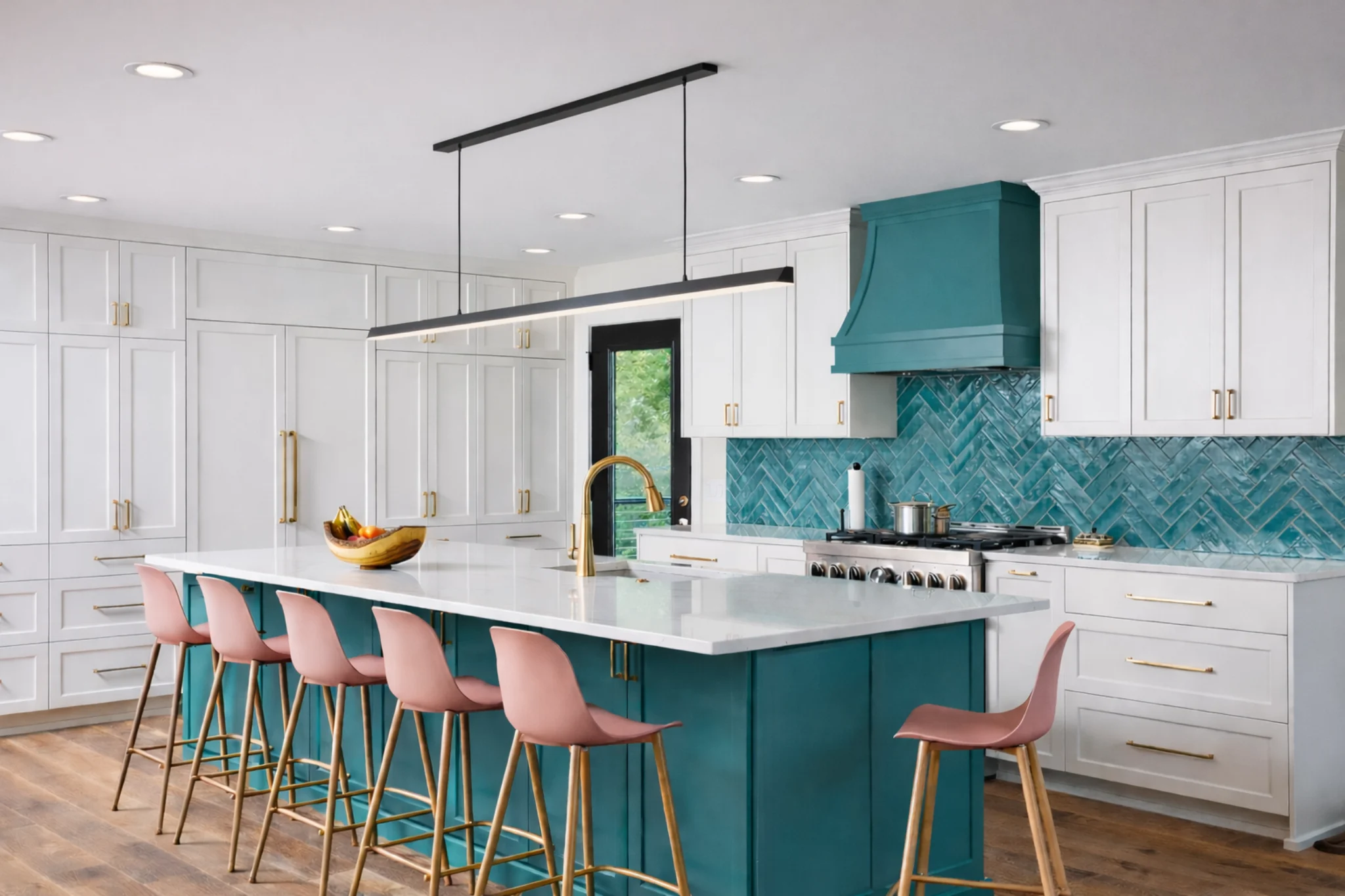
A refined face frame option with tighter spacing, less visible frame, and classic warmth without the formality of inset.
Explore this page →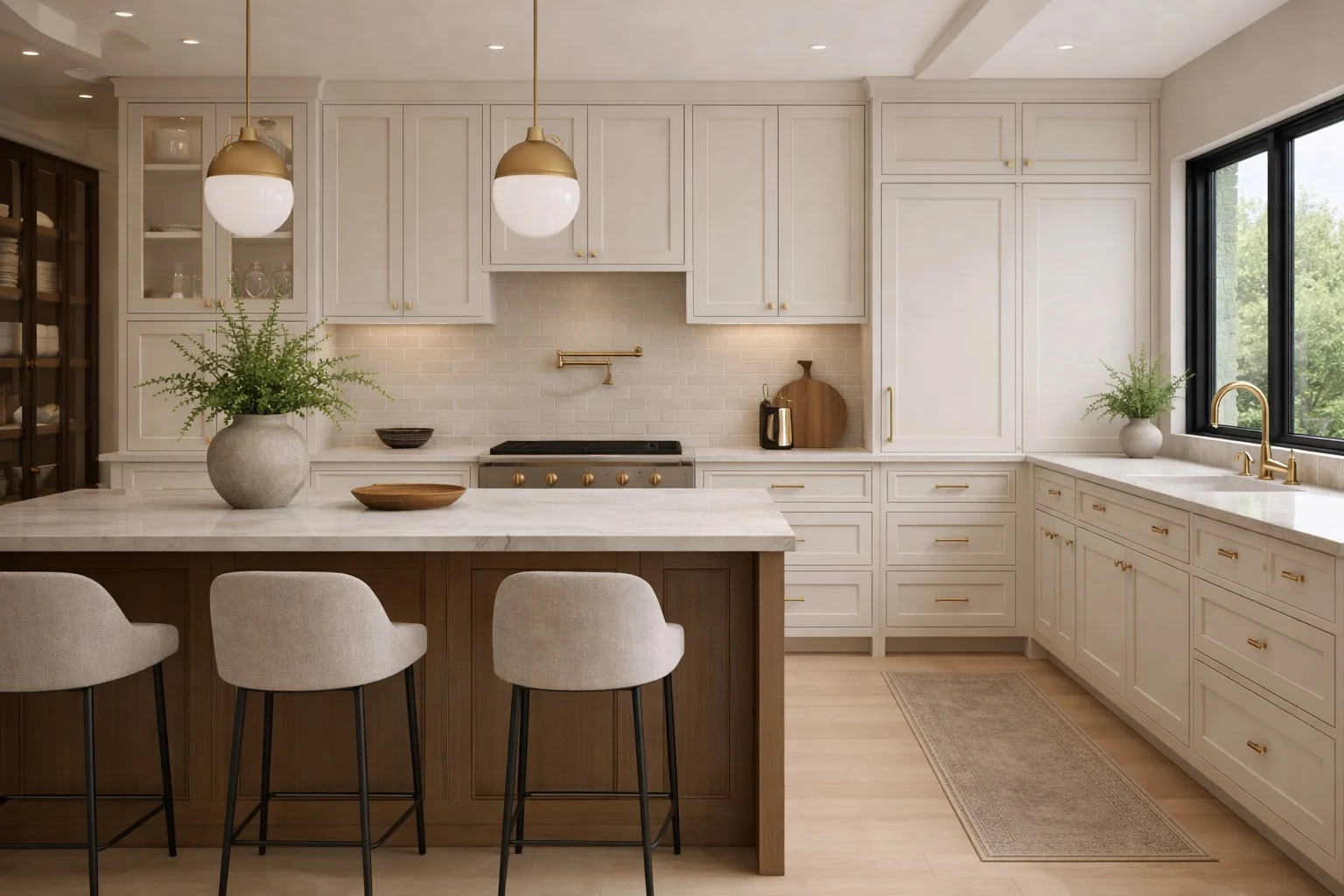
The most tailored face frame style, with doors and drawer fronts set into the frame for a furniture-grade, precision-built result.
Explore this page →None of these construction types is automatically better. Each one solves a different design and function problem.
Best when the room needs cleaner planes, efficient interior access, and less face-frame interruption. It can feel modern, European, transitional, or quietly minimal depending on the door style and finish.
Best when the room should feel classic but still clean. The cabinet has a front frame, but the doors and drawers cover most of it, creating a tighter and more polished face.
Best when the goal is a furniture-like cabinet face with exact shadow lines. It is highly refined, but it demands precise fabrication, precise installation, and realistic expectations about adjustment.
A construction profile should reinforce the whole design. A sleek kitchen may feel heavier than intended with too much visible frame. A traditional room may feel thin or overly contemporary if the cabinet face is too minimal. A highly tailored home may justify inset cabinetry, while a practical family kitchen may be stronger with frameless access or full overlay balance.
The right selection should answer the room’s visual problem and the household’s use pattern at the same time.
Inset cabinetry can be beautiful and highly refined, but it is not automatically the best answer for every home. Frameless cabinetry can be extremely elegant when the room needs clean continuity and efficient access. Full overlay can be the smartest balance when the client wants a framed cabinet story without a heavy or overly formal front.
The best value is the construction profile that makes the entire room feel intentional, supports the daily use case, and does not spend money on precision the design does not need.
Most cabinetry care is straightforward: wipe with a soft damp cloth, dry standing water quickly, avoid harsh abrasives, do not hang wet towels on doors, and keep steam-heavy appliances from repeatedly hitting cabinet faces. The larger ownership issue is adjustment. Doors and drawers may need minor tuning as a home settles or humidity changes.
Inset cabinetry exposes alignment more clearly because the doors and drawers sit inside the frame. Frameless and full overlay are generally more forgiving visually, though they still require quality hardware and careful installation.
Black Label helps align cabinet construction, door style, finish, hardware, storage, countertops, and installation detail so the finished space feels deliberate instead of over-specified.