Full-slab review
Review the full slab or a large image. Confirm veining scale, background tone, repetition, and how the pattern will sit on the island.
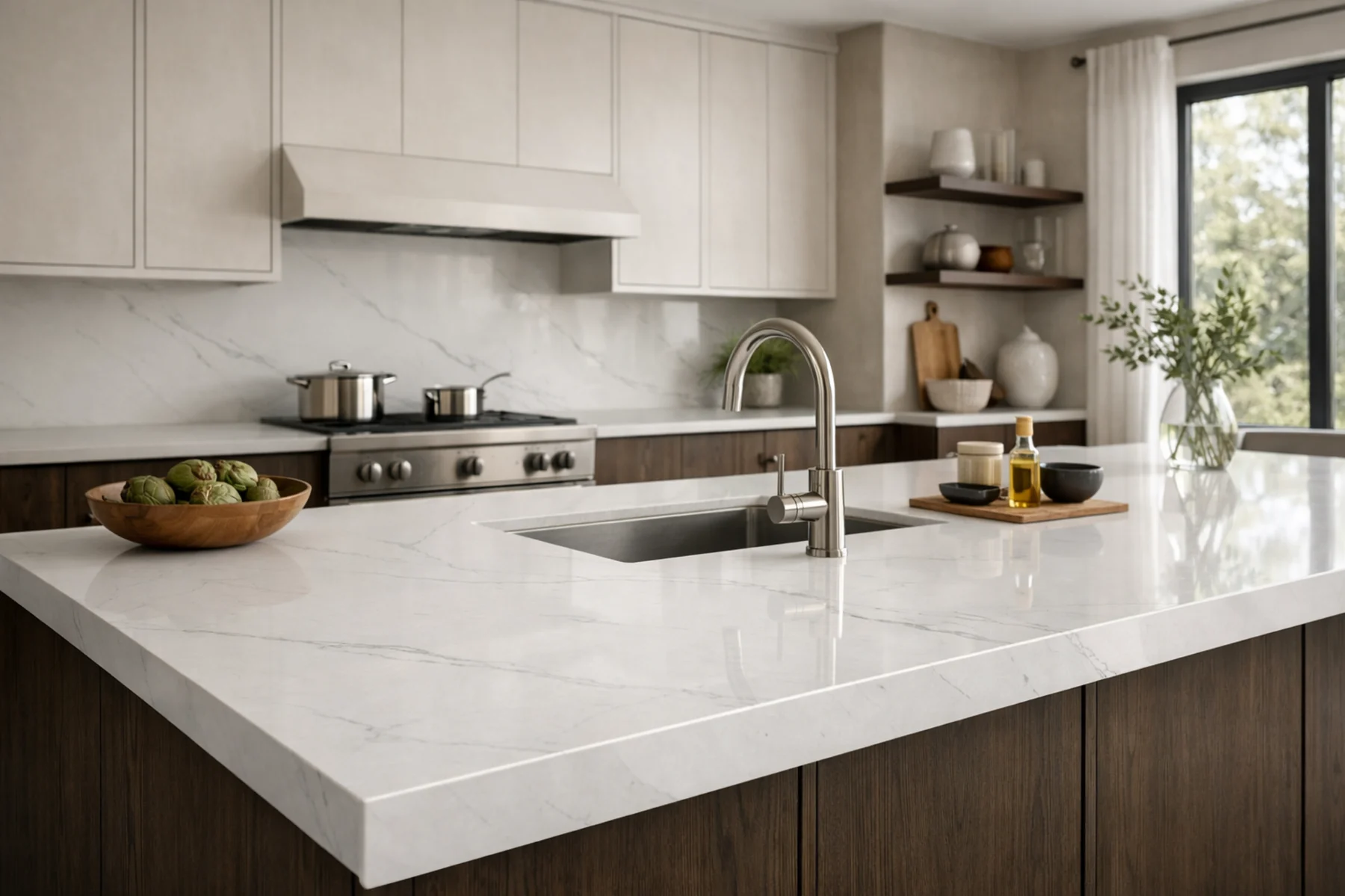
Quartz is an engineered surface that delivers broad color options, predictable patterning, and a low-maintenance routine without requiring natural-stone sealing.
The category is strongest for homeowners who want reliable performance, clean styling, and minimal upkeep. It is not the right answer for every design, but it is often the most balanced answer when daily use is a major factor.
Engineered surface made with quartz minerals, pigments, and binders. It is designed for consistent color, repeatable patterning, and residential durability.
Usually mid to upper range depending on brand, pattern, slab thickness, edge detail, and fabrication. Premium designs and large islands can increase cost quickly.
Nonporous and does not require sealing. Daily cleaning is simple, but trivets and cutting boards are still important.
Excellent when the room needs a calm, polished, controlled surface rather than unpredictable natural movement.
Quartz cost is not one number. Entry designs, premium brands, high-motion patterns, thickness, slab quantity, sink cutouts, edge build-up, backsplash decisions, and waterfall panels all affect installed pricing.
The best value is often a quartz that looks believable at full scale, coordinates cleanly with the cabinetry, and avoids unnecessary fabrication complexity. A quieter quartz can be more successful than a dramatic imitation stone if it keeps the room balanced.
Quartz is especially valuable when the homeowner wants a polished, durable surface but does not want to manage sealing, frequent stone care decisions, or visible patina.
The right maintenance expectation is part of the specification. A surface can be excellent and still be wrong for a household if its care profile does not match how the kitchen, bar, pantry, bath, or laundry area will actually be used.
A disciplined care routine protects the finish, the edges, the seams, and the homeowner’s confidence in the investment.
The safest quartz selections usually have believable scale, restrained contrast, and enough softness to avoid looking flat. In many kitchens, quartz should make the cabinetry look more resolved rather than competing for attention.
White and light quartz can brighten a kitchen, but the undertone must coordinate with cabinet color, wall color, flooring, and lighting. A cool white top against warm cabinets can feel disconnected if the palette is not planned.
Veined quartz can be excellent when the veining is scaled to the island and not chosen from a small sample alone. The full slab or large-format image matters.
These details should be settled before template, fabrication, and installation. They protect the final look and reduce surprises.
Review the full slab or a large image. Confirm veining scale, background tone, repetition, and how the pattern will sit on the island.
Decide where hot appliances will live and make sure the homeowner understands trivet use.
Eased edges feel clean and current. Built-up or mitered edges add weight but require excellent fabrication.
Confirm seam placement on large islands, long runs, L-shapes, and full-height backsplash pieces.
Polished quartz is usually easiest to clean. Honed, concrete, or matte finishes can show marks more readily.
Review sink reveal, faucet holes, cooktop cutouts, and support around narrow rails before fabrication.
The strongest decision usually becomes clearer when the options are viewed side by side.
Engineered surface with controlled patterning, broad design range, and the easiest everyday care profile for many households.
Current page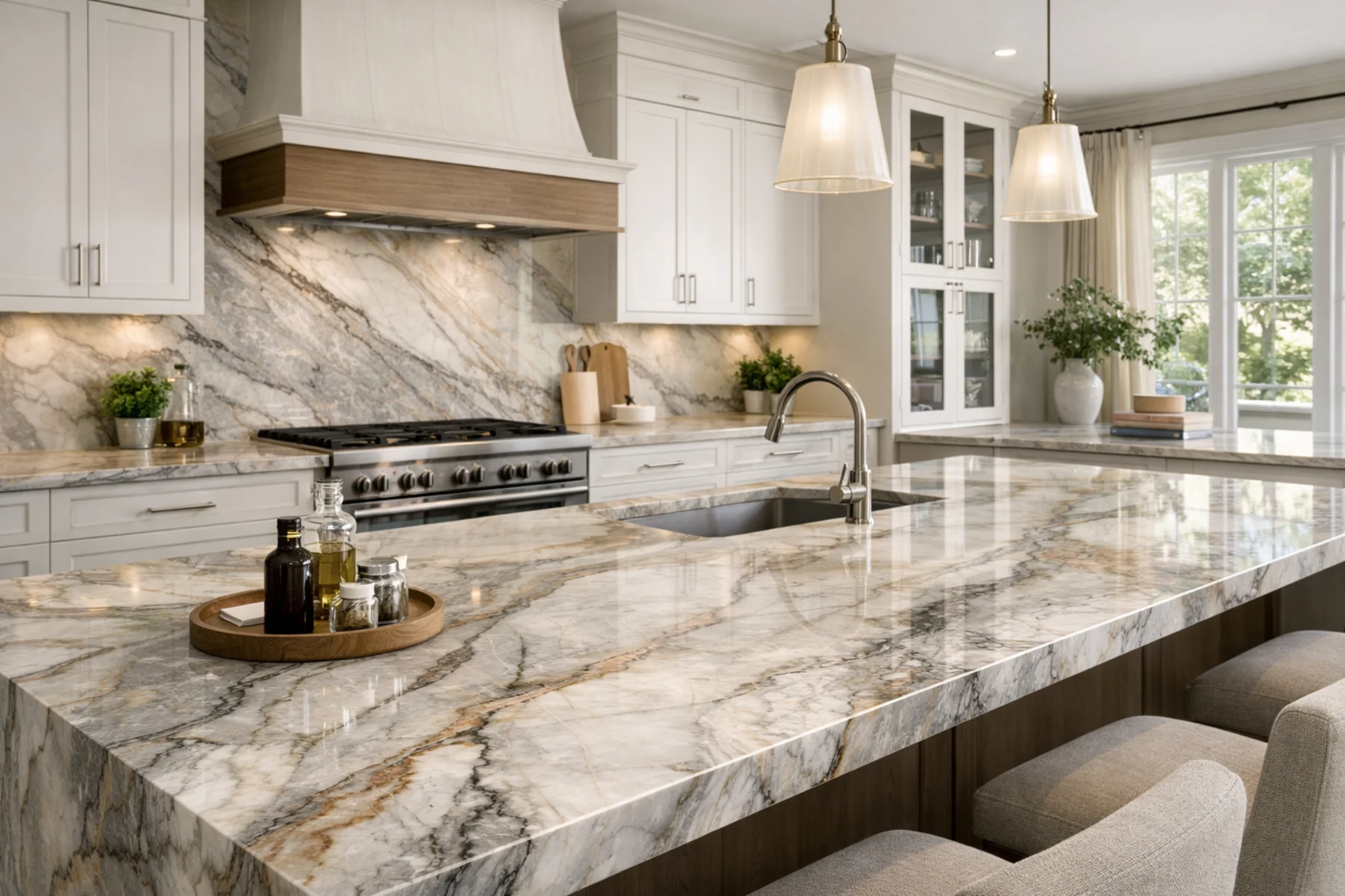
Natural stone with authentic movement, strong presence, and a premium fabrication posture that rewards careful slab selection.
Explore this page →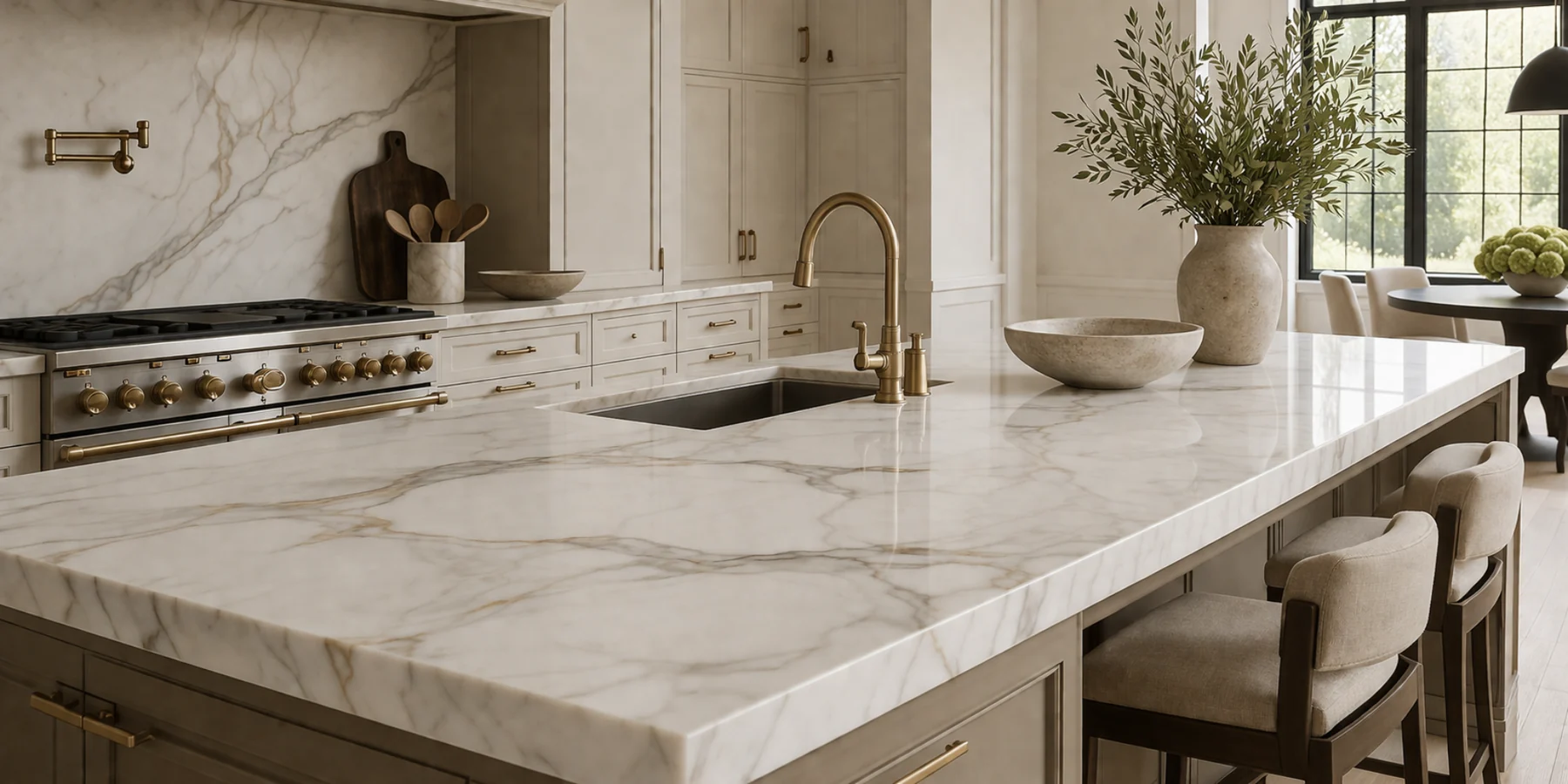
Luminous natural stone with timeless character, visible aging, and a maintenance profile that must be understood before selection.
Explore this page →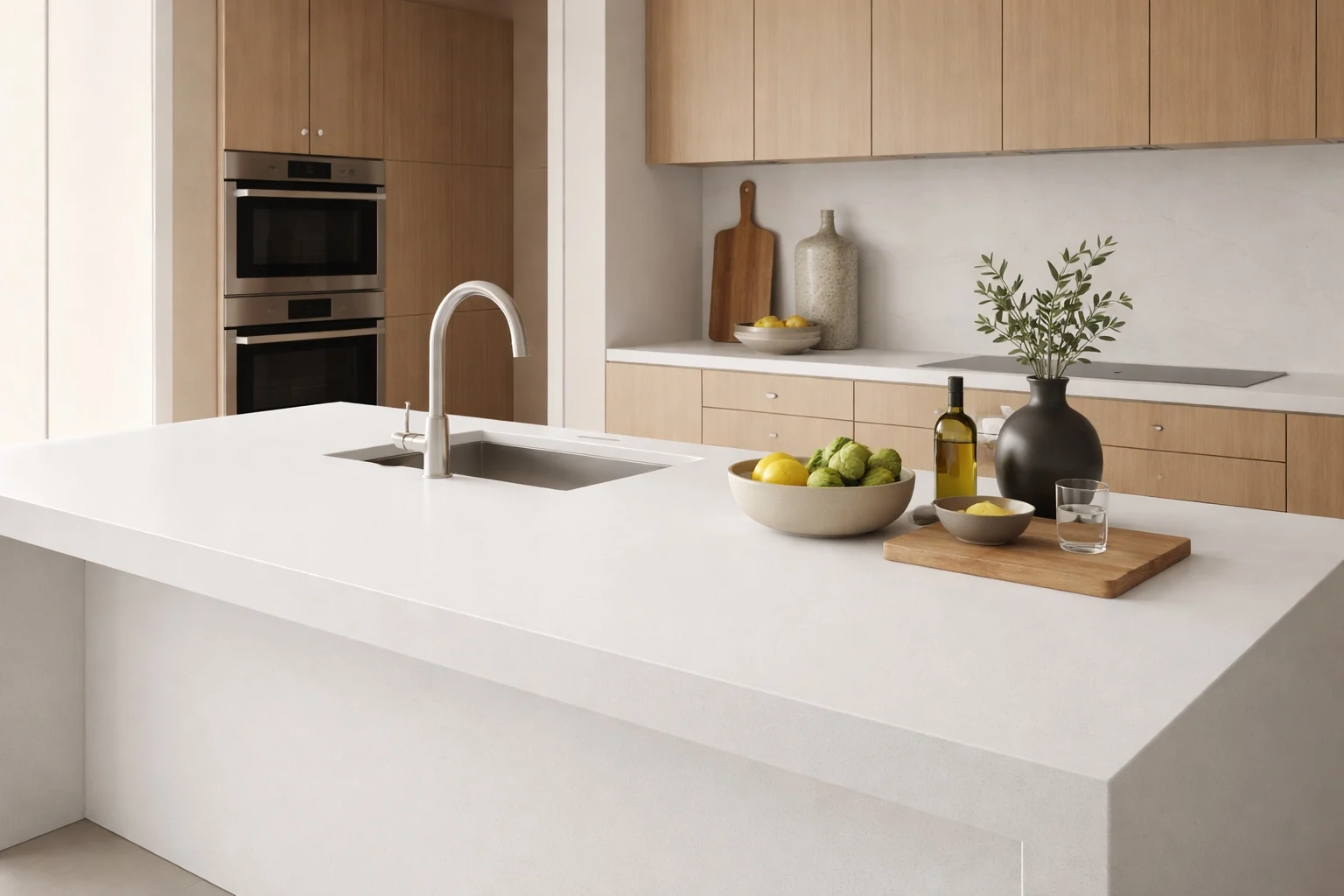
Crisp, nonporous slab material with a refined architectural look, strong stain resistance, and fabrication details that matter.
Explore this page →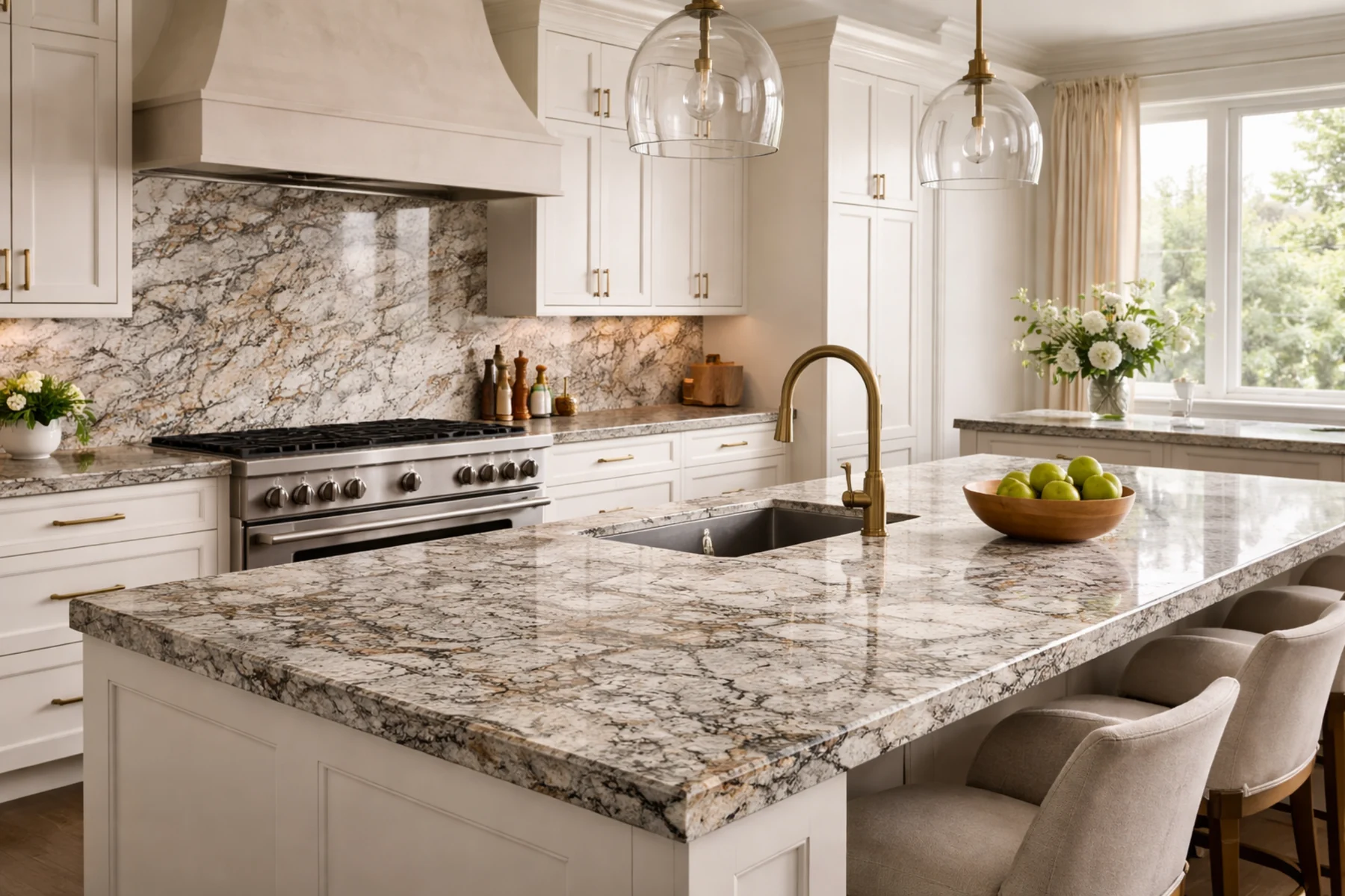
Durable natural stone with wide pricing range, real texture, and a current look when the slab is selected with discipline.
Explore this page →Black Label helps select quartz patterns, seams, edges, sink details, and finish direction so the surface supports the room instead of feeling like a showroom sample dropped into the design.