Fabricator qualification
Confirm the fabricator has direct porcelain slab experience, not only general countertop experience.
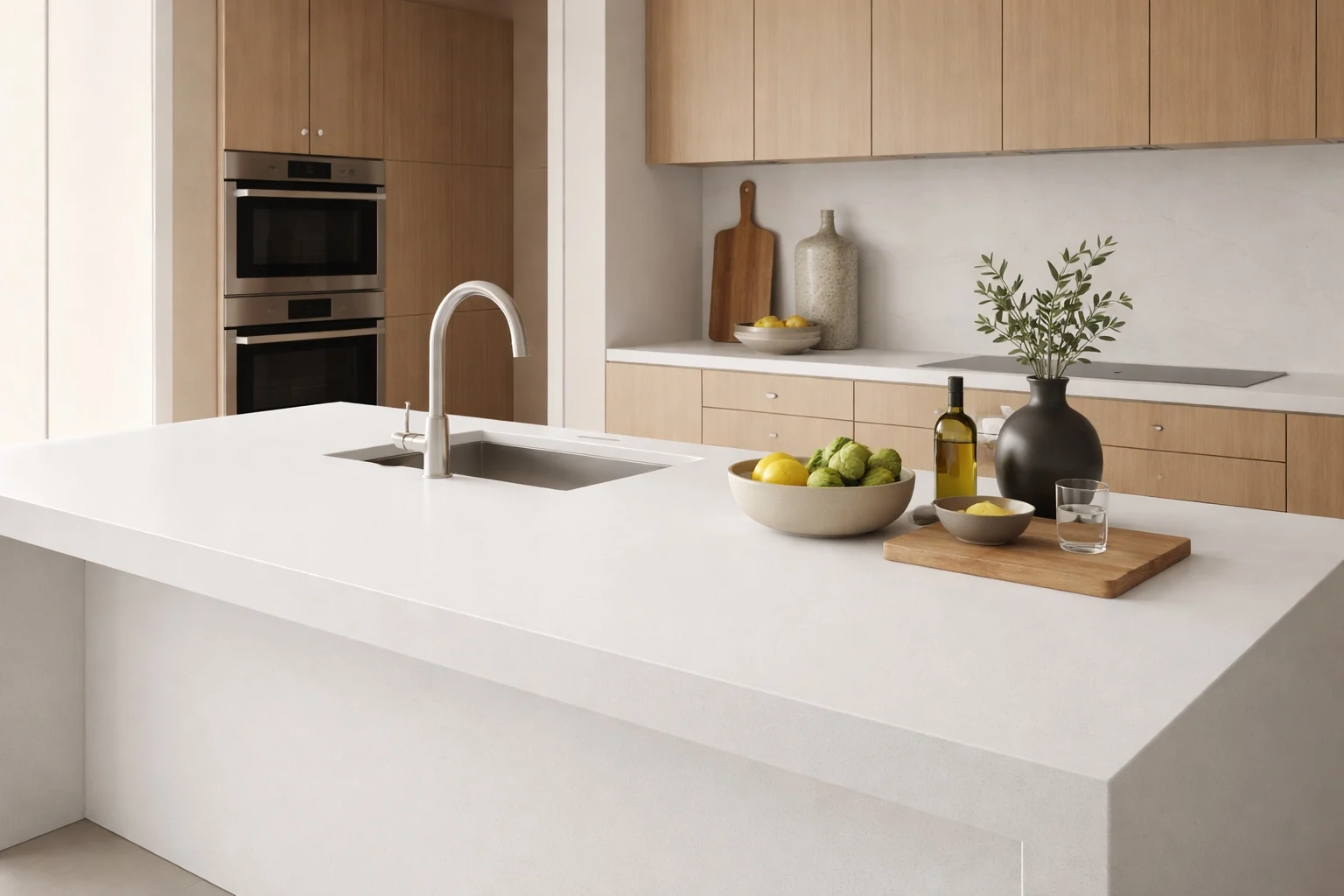
Porcelain slabs are nonporous, highly stain-resistant, heat-resistant, and visually precise, but the final result depends heavily on skilled fabrication, edge detailing, and pattern selection.
It can be one of the most practical and refined choices available, but only when the fabrication plan is treated as a major part of the design decision.
High-fired slab surface made from mineral-based materials. It is different from ceramic tile and is often fabricated as large-format slabs.
Often premium once fabrication is included. Material price, slab thickness, mitered edges, cutouts, waterfalls, and installer experience all affect cost.
Nonporous and easy to clean. Strong resistance to stains, heat, and UV exposure, with edge impact and fabrication details being key considerations.
Excellent for modern, transitional, architectural, and highly edited rooms that need precision rather than heavy natural movement.
Porcelain can look deceptively simple, but installed cost is often driven by skilled labor. Mitered edges, panel alignment, sink cutouts, large-format handling, and waterfall details require precision.
The best value is achieved when porcelain is used for what it does well: clean planes, low-maintenance surfaces, UV-stable applications, and refined modern lines. It is not always the cheapest way to make a countertop look like marble.
A porcelain selection should be priced with fabrication, edge treatment, cutout complexity, and installation risk clearly understood. The installer matters as much as the slab.
The right maintenance expectation is part of the specification. A surface can be excellent and still be wrong for a household if its care profile does not match how the kitchen, bar, pantry, bath, or laundry area will actually be used.
A disciplined care routine protects the finish, the edges, the seams, and the homeowner’s confidence in the investment.
Porcelain can make a room feel calm and highly designed, especially when used across countertops and backsplash planes. It is strong when the goal is architectural clarity instead of natural-stone drama.
Because porcelain can read crisp and cool, warmth often needs to come from cabinetry, wood tones, lighting temperature, metal finish, or styling. Without those layers, the room can feel sterile.
Bookmatched porcelain, marble-look porcelain, concrete-look porcelain, and solid porcelain each create a different room. Choose the specific visual role before choosing the pattern.
These details should be settled before template, fabrication, and installation. They protect the final look and reduce surprises.
Confirm the fabricator has direct porcelain slab experience, not only general countertop experience.
Decide whether the project needs a mitered edge, eased edge, built-up edge, or exposed core detail.
Plan sink, cooktop, faucet, outlet, and appliance cutouts carefully to reduce weak points and visual clutter.
Review vein direction on countertops, waterfall sides, and backsplash panels before cutting.
Confirm slab thickness and substrate/support requirements so the installed top feels appropriate for the room.
Confirm whether the specific porcelain product is suitable for outdoor, fireplace, wall, or high-sun applications.
The strongest decision usually becomes clearer when the options are viewed side by side.
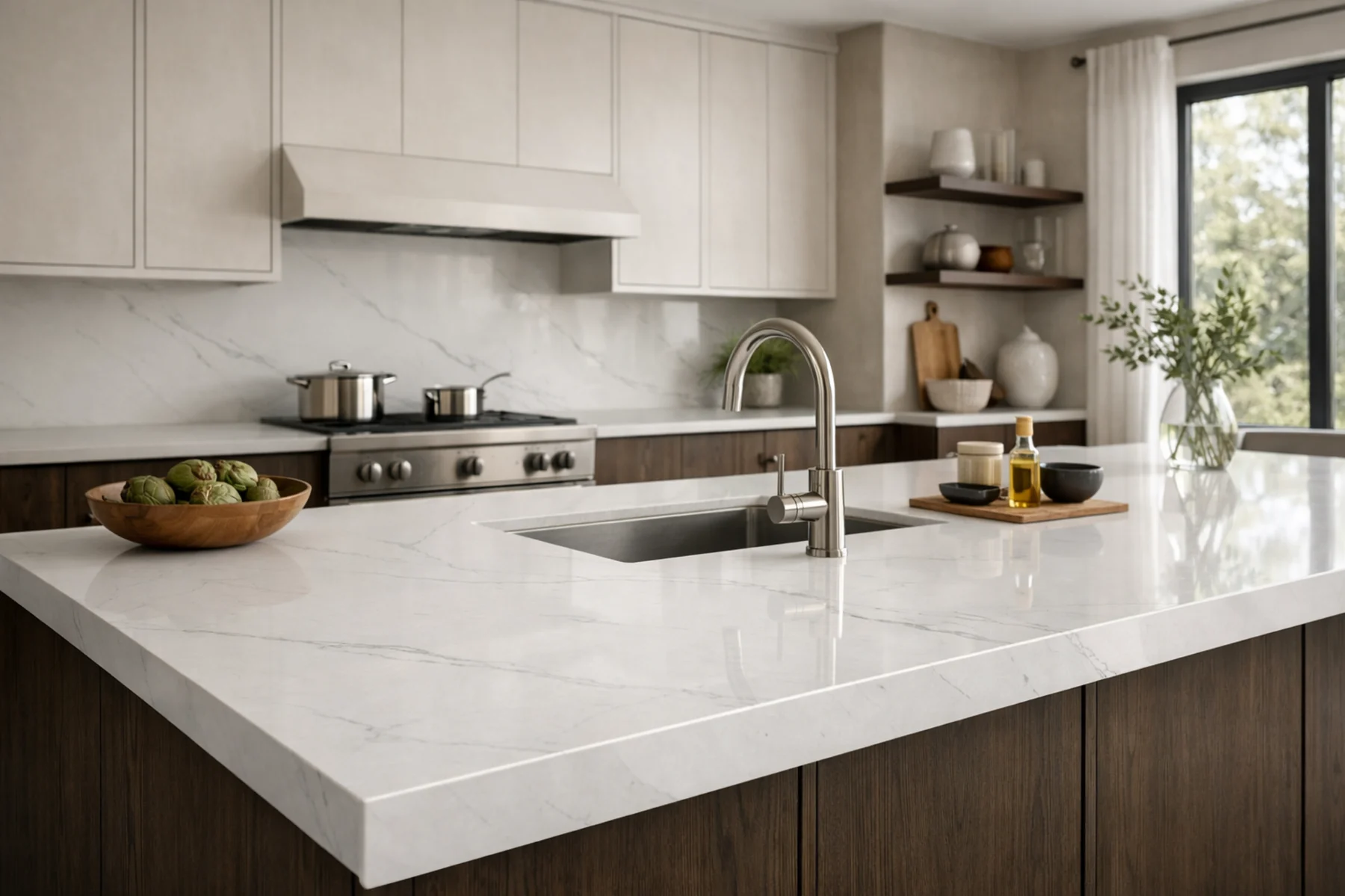
Engineered surface with controlled patterning, broad design range, and the easiest everyday care profile for many households.
Explore this page →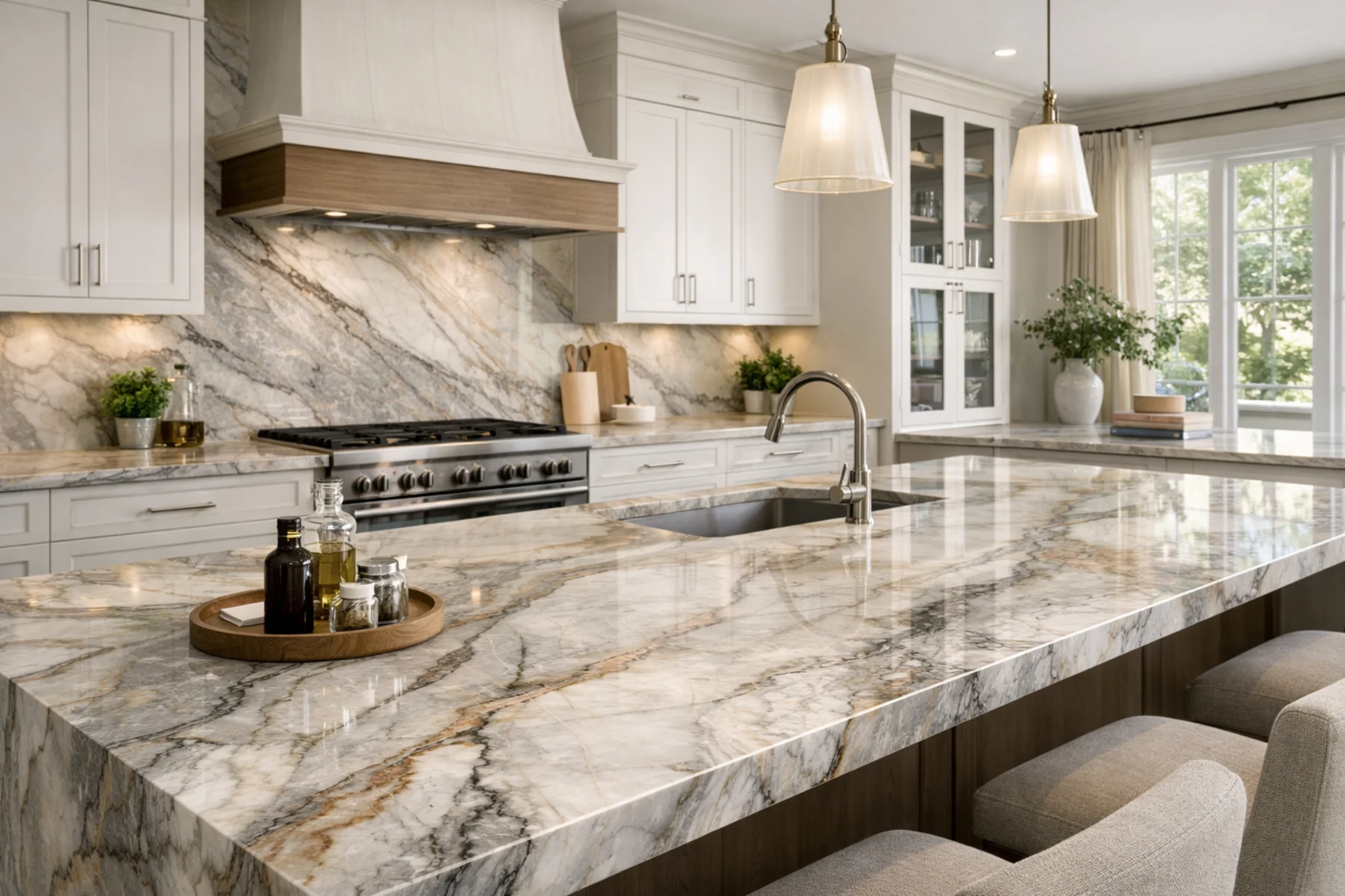
Natural stone with authentic movement, strong presence, and a premium fabrication posture that rewards careful slab selection.
Explore this page →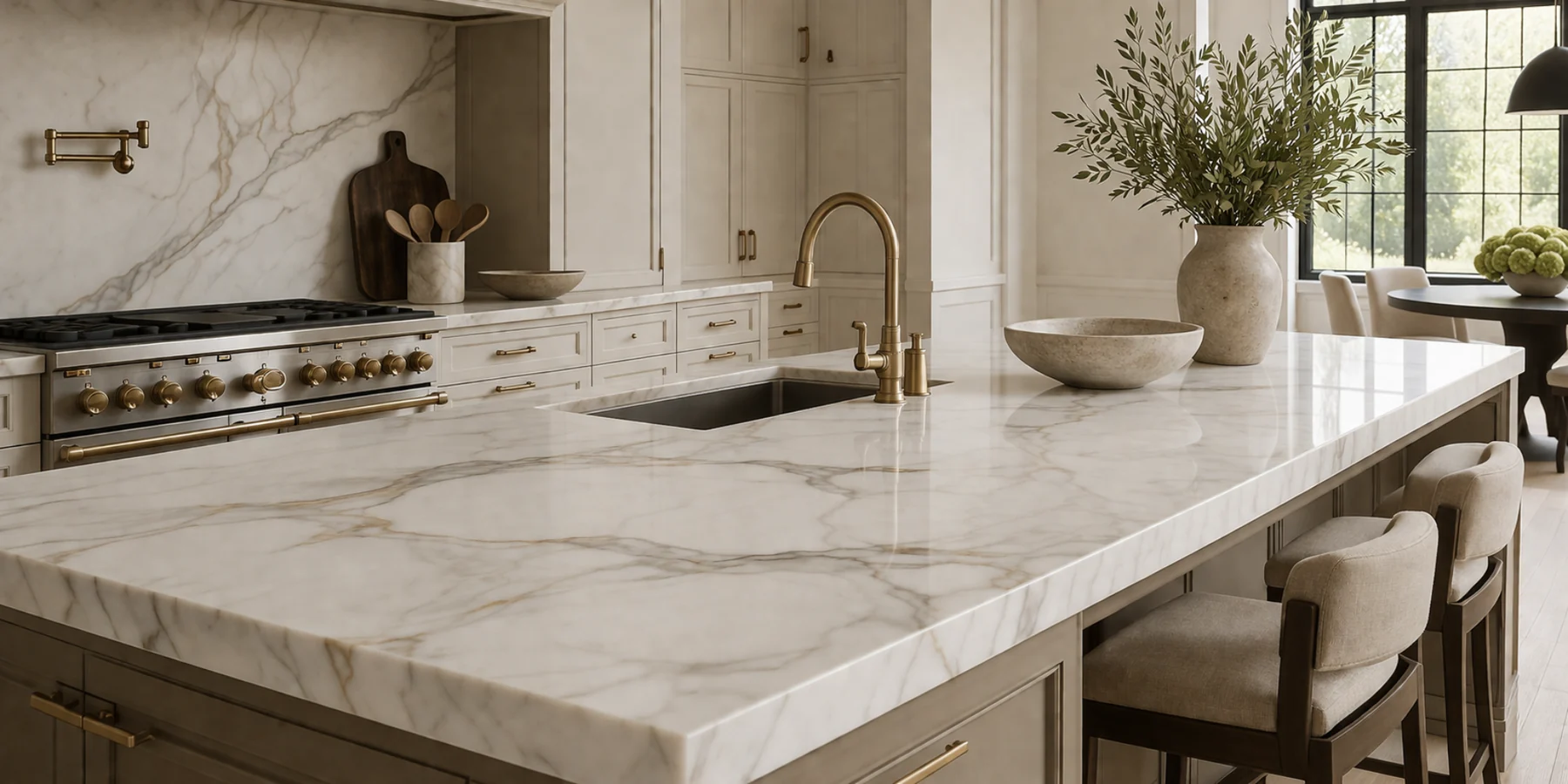
Luminous natural stone with timeless character, visible aging, and a maintenance profile that must be understood before selection.
Explore this page →Crisp, nonporous slab material with a refined architectural look, strong stain resistance, and fabrication details that matter.
Current page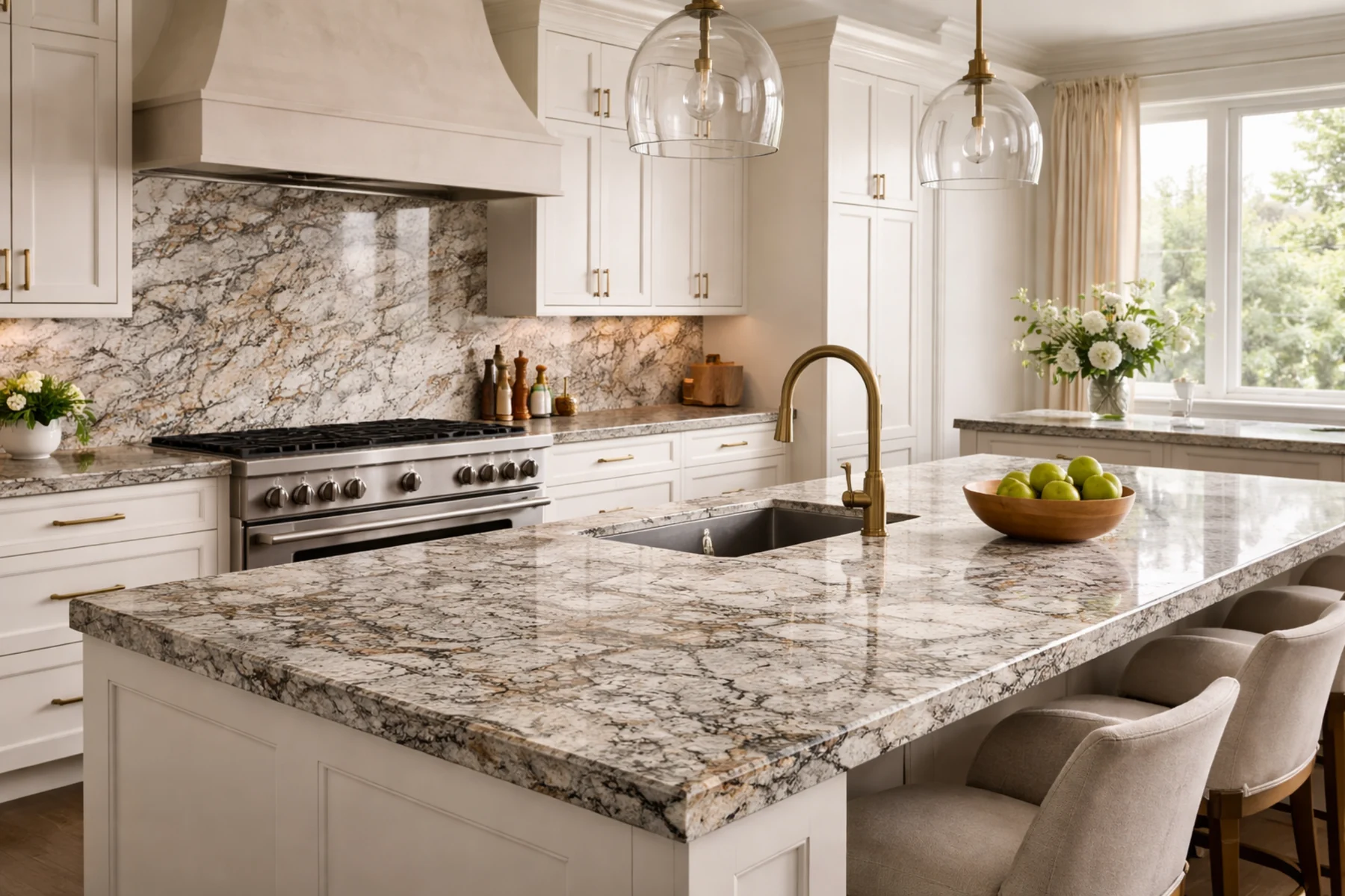
Durable natural stone with wide pricing range, real texture, and a current look when the slab is selected with discipline.
Explore this page →Black Label helps coordinate porcelain slab selection, fabrication detail, edge design, and room warmth so the surface feels refined instead of cold or overly technical.