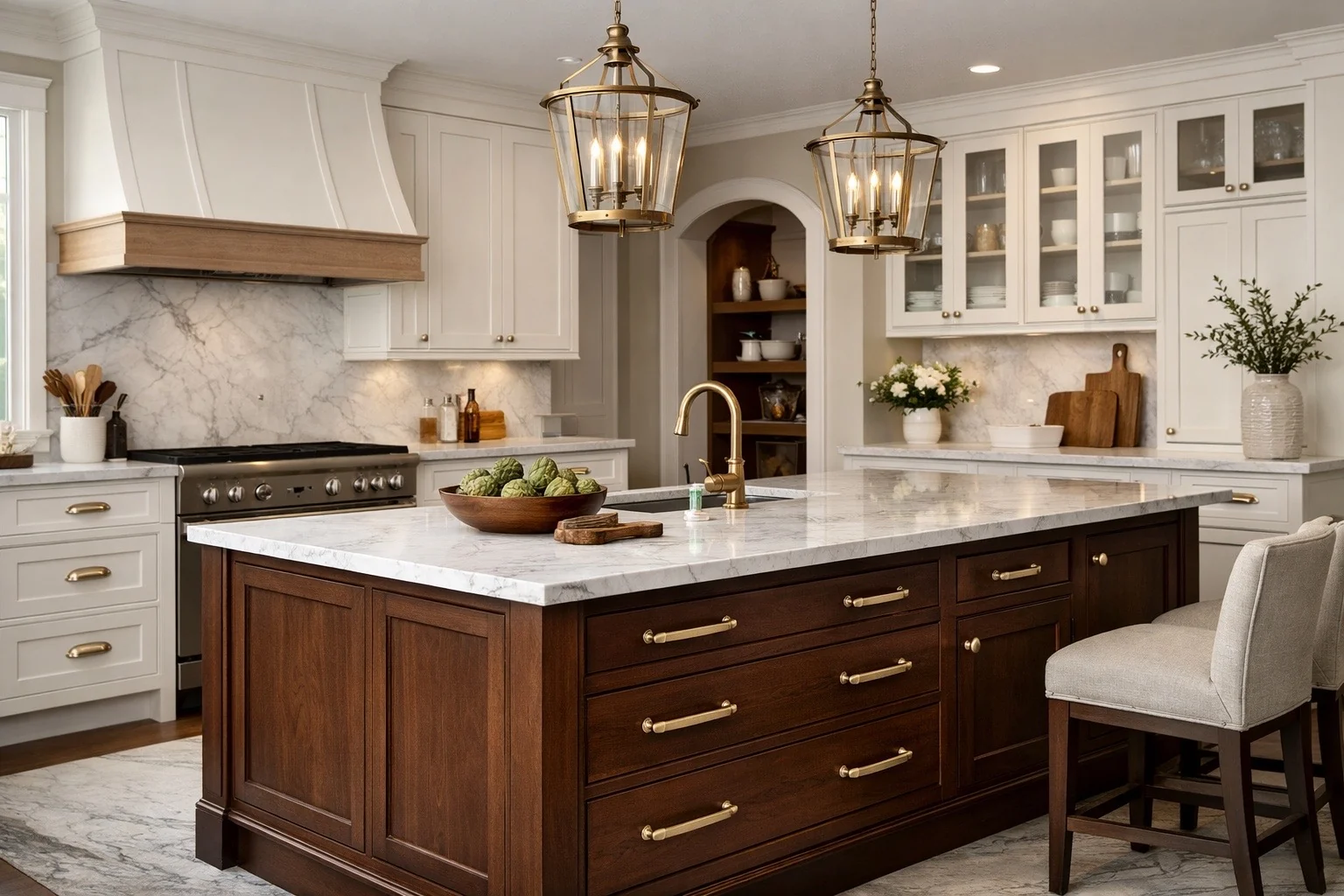
Decorative Hardware
Knobs, pulls, appliance pulls, latches, cup pulls, tabs, backplates, and visible hardware details that shape tone, scale, hand feel, and finish coordination.
Explore this page →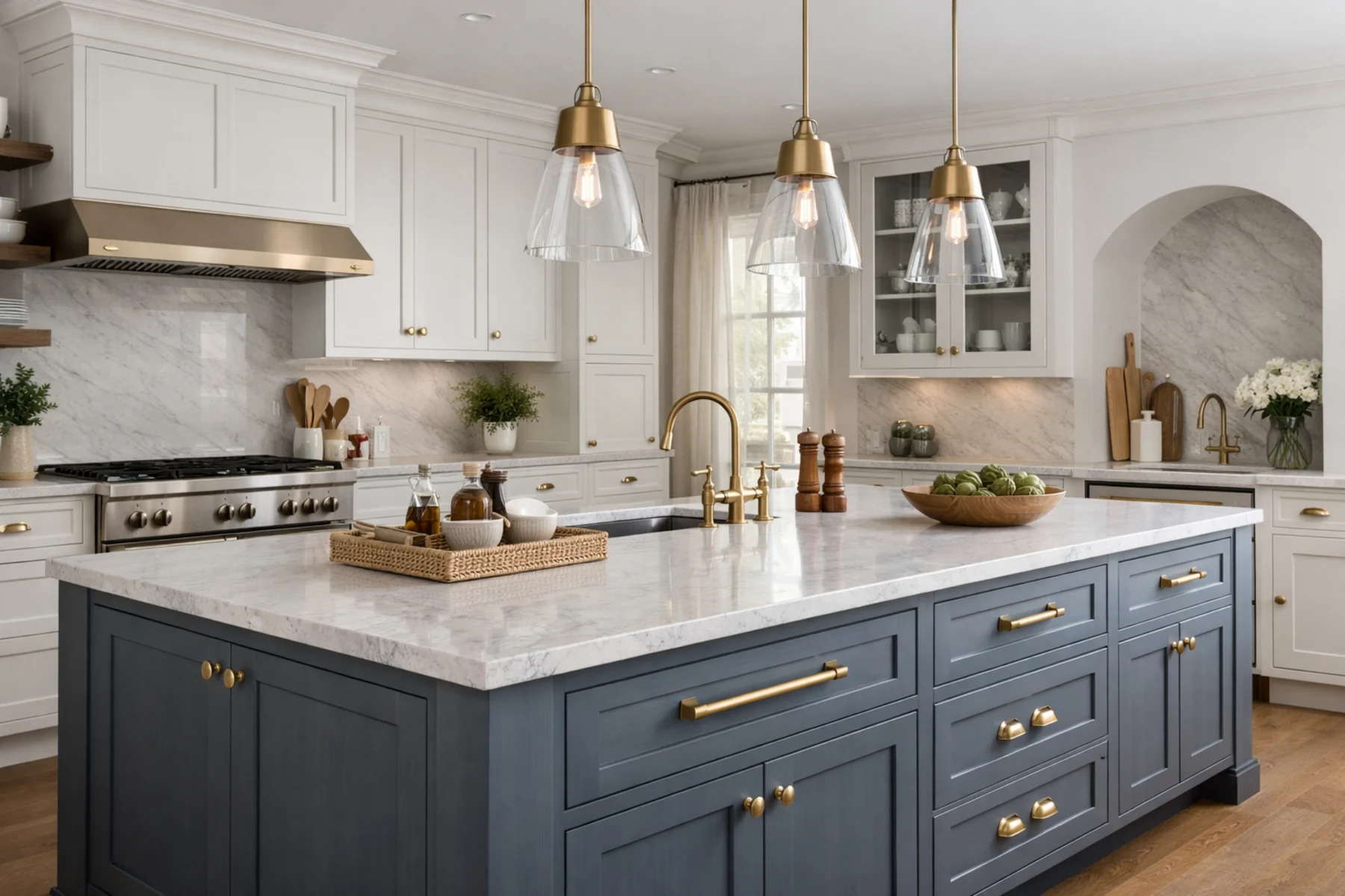
Decorative pulls, knobs, appliance pulls, hinges, slides, lift systems, and internal mechanisms all affect the room in different ways. The strongest hardware plan balances visual restraint, daily comfort, correct scale, reliable movement, and finish coordination across the full project.
Most clients think of hardware as the visible pull or knob on a door. That matters, but the complete hardware decision also includes hinges, drawer slides, opening systems, integrated waste pull-outs, lift mechanisms, latches, backplates, appliance pulls, and the clearances that let those parts operate properly.
Knobs, pulls, appliance pulls, cup pulls, latches, backplates, hooks, and tab pulls influence cabinet scale, style direction, finish rhythm, and how custom the cabinetry feels at first glance.
Hinges, drawer slides, soft-close systems, push-to-open devices, lift hardware, pocket systems, and specialty mechanisms determine how doors, drawers, and panels actually behave.
Good hardware feels natural in the hand. Projection, edge shape, grip clearance, pull length, cabinet height, drawer weight, and user reach all affect the daily experience.
Hardware finish should coordinate with the cabinet finish, countertop, faucet, lighting, appliances, and door style. It does not need to match everything, but it should look intentional.
Decorative hardware and functional hardware overlap in the final experience, but they answer different questions. One shapes what the room communicates. The other shapes how well the room functions when it is used repeatedly.
Knobs, pulls, appliance pulls, latches, cup pulls, tabs, backplates, and visible hardware details that shape tone, scale, hand feel, and finish coordination.
Explore this page →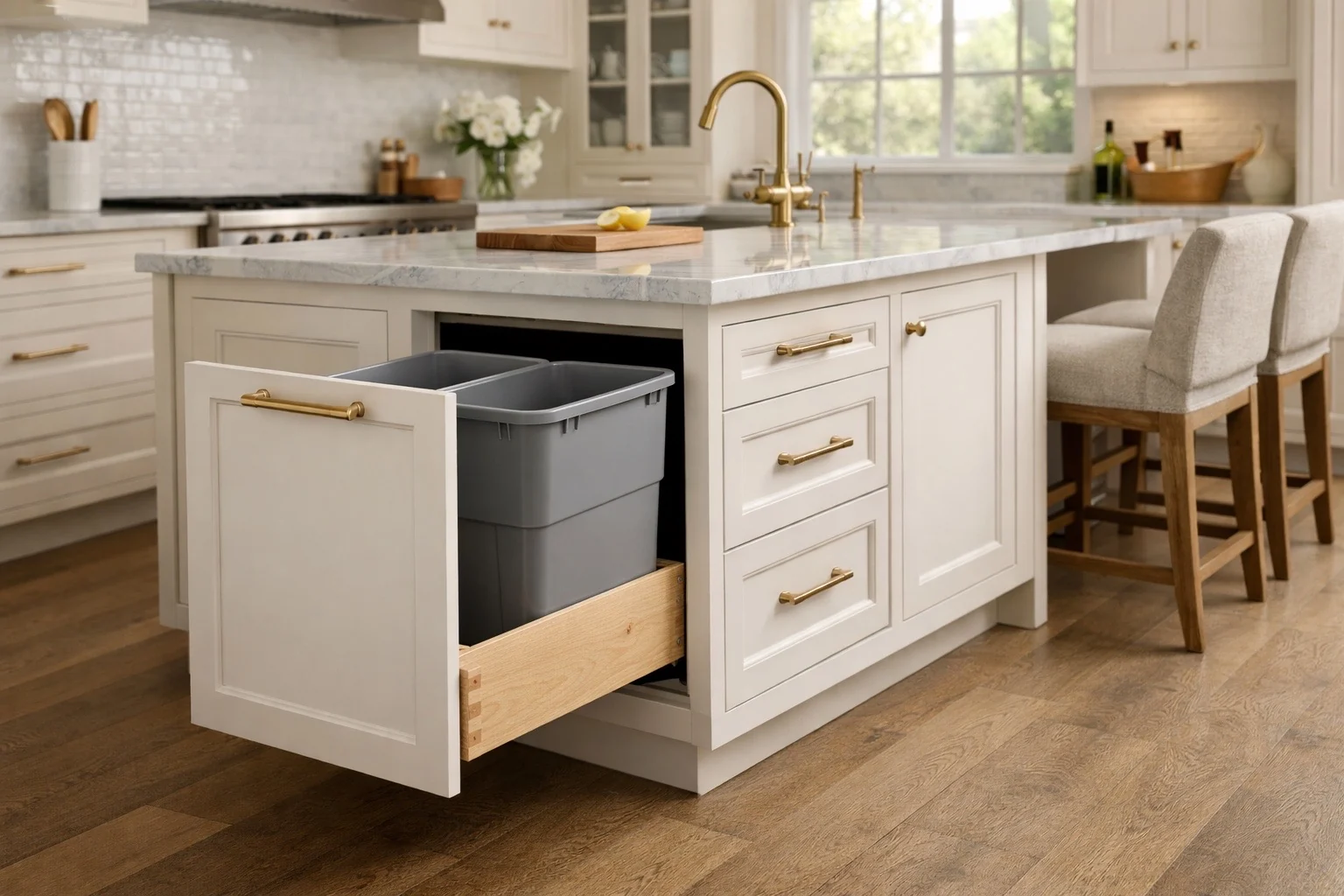
Hinges, slides, soft-close movement, lift systems, push-to-open hardware, pull-outs, drawer boxes, and internal mechanisms that improve daily use.
Explore this page →A room can look expensive and still feel wrong if the pull scale is off, the finish fights the faucet, the drawers feel light-duty, or the opening hardware was added without respecting cabinet clearances.
What should the cabinetry feel like visually? Quiet, tailored, classic, modern, furniture-grade, transitional, coastal, industrial, traditional, soft, or bold?
How should the cabinetry work? Soft close, full access, touch latch, lift-up, pull-out, heavy-duty, concealed, adjustable, child-friendly, or low-effort?
A 5-inch pull and a 12-inch pull can make the same door style feel completely different. Long drawers, tall pantry doors, appliance panels, and slab fronts often need larger hardware to look intentional.
Brass, bronze, black, nickel, chrome, pewter, stainless, and mixed-metal plans differ in warmth, contrast, maintenance, fingerprint visibility, and how strongly they announce themselves.
Door and drawer movement is one of the first ways clients feel the difference between a standard installation and a more considered one. Smooth, quiet, aligned movement makes the cabinetry feel resolved.
Once doors and drawer fronts are drilled, changing pull size or placement can require replacement fronts or visible repair. Scale and placement should be resolved before installation.
Decorative hardware cost is usually shaped by material, size, finish, brand, collection, availability, and whether the selection includes appliance pulls, backplates, or oversized lengths. Functional hardware cost is shaped by mechanism type, load rating, soft-close or touch-latch features, concealment, installation complexity, and whether the cabinet box has been designed around the hardware from the beginning.
The strongest value is not always the most expensive pull or the most complex accessory. A disciplined pull schedule with correctly scaled hardware can do more for the room than a scattered collection of expensive individual pieces. A well-placed pull-out can meaningfully improve daily use, while an unnecessary accessory can consume space and budget without solving a real problem.
The best hardware selections rarely feel like decoration placed on top of cabinetry. They feel built into the architecture of the room. Pull length should make sense for drawer width. Knobs should not feel undersized on tall doors. Appliance pulls should have enough presence to support panel weight visually. Finishes should connect to the room without creating accidental contrast.
A good hardware plan also understands restraint. Not every cabinet face needs a different treatment. Not every accessory improves function. Hardware should reduce friction, clarify the design, and make the finished cabinetry feel deliberate.
Poorly placed hardware can make excellent cabinetry look careless. Placement should respect door construction, drawer proportions, user reach, appliance panel requirements, reveal lines, and the visual rhythm across the full elevation.
Most door hardware should feel aligned with the rail, stile, or profile logic of the door. Placement that floats without reference to the door geometry can look unresolved.
Drawers need scale-aware decisions. Small drawers may use knobs or short pulls, while wide drawers often look and feel better with longer pulls or paired hardware.
Panel-ready appliances usually need appliance-rated pulls with enough scale and grip to visually and physically support the appliance face.
Pull center-to-center dimensions matter because drilled holes are permanent. Changing hardware later may expose holes or require new fronts if the new size does not match.
Hardware projection can interfere with walls, adjacent drawers, appliance handles, corner cabinets, pocket doors, or tight traffic paths. Clearance should be reviewed before order and installation.
Good installation relies on consistent drilling templates, level alignment, and field verification. Even premium hardware looks wrong when spacing and alignment drift.
Most cabinet hardware should be cleaned with a soft non-abrasive cloth and mild soap or clear water, then wiped dry so water, soap residue, oils, and minerals do not sit on the surface. Harsh cleaners, abrasive pads, polishes, waxes, and chemical residue can compromise protective finishes and accelerate wear.
Not every finish ages the same way. Polished finishes may show fingerprints and fine scratching more readily. Matte black can show oils, hard-water spotting, and edge wear. Brass and bronze can be offered as either protected finishes or living finishes depending on the product line. Living finishes are expected to patina; that is a design choice, not a defect.
The right sequence keeps hardware from becoming a late-stage scramble. It also protects against avoidable mistakes such as wrong pull scale, mismatched finishes, poor clearance, or accessory hardware that does not fit the cabinet design.
Door style, construction style, finish, and room architecture determine whether the hardware should read quiet, classic, tailored, modern, or more decorative.
Review hardware finish beside cabinet finish, faucet, lighting, appliances, countertop, backsplash, and flooring. Decide whether the room needs matching, contrast, or a controlled mix.
Assign knobs, pulls, appliance pulls, latches, tabs, or no visible hardware based on cabinet type, size, reach, and design hierarchy.
Specify hinges, slides, lift systems, pull-outs, waste units, drawer boxes, and specialty mechanisms before cabinet dimensions and clearances are finalized.
Review drilling height, center-to-center dimensions, grip clearance, appliance requirements, and corner conflicts before installation begins.
Use proper cleaning habits, avoid harsh chemicals, and understand whether the selected finish is designed to stay stable or develop natural patina over time.
Decorative hardware should support the room’s visual language. Functional hardware should support the way the room is actually used. The best result comes from treating both as part of one coordinated cabinetry specification.