Finish decision
Choose polished for formal shine or honed for a softer, more forgiving daily-life look.
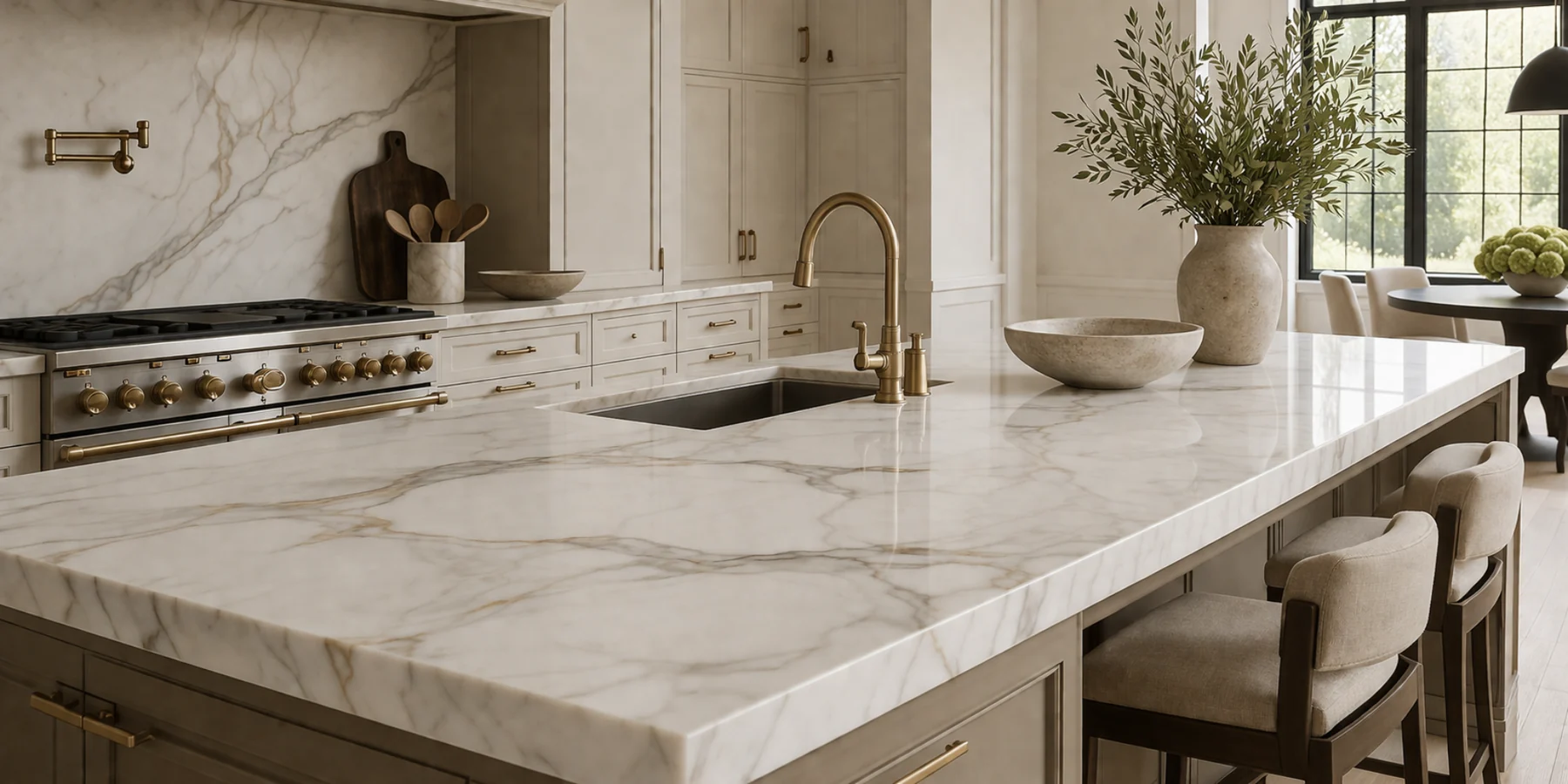
Marble brings luminosity, soft veining, and classic elegance, but it also requires clear expectations about etching, staining, scratching, sealing, and patina.
It should never be sold as a stress-free countertop. It should be selected because its beauty, patina, and timeless character are worth its care requirements.
Natural calcium-based stone. Most marble is softer and more acid-sensitive than granite, quartzite, porcelain, or quartz.
Ranges from mid-premium to very high depending on stone type, slab quality, thickness, waste, edge detail, and fabrication complexity.
Requires the most honest expectation setting. Sealing helps resist stains, but it does not prevent acid etching.
Ideal when the room calls for softness, luminosity, history, and graceful aging rather than perfect permanence.
Marble can be expensive because of slab quality, rarity, thickness, fabrication, vein layout, bookmatching, and waste. Some marbles are relatively accessible, while rare slabs can become a major design investment.
The value question is not whether marble is the easiest surface to own. It is whether the homeowner wants the particular beauty, softness, and aging character that marble brings to a room.
For homeowners who want a flawless-looking surface under heavy family use, marble may create frustration. For homeowners who love natural materials and patina, it can be one of the most rewarding choices available.
The right maintenance expectation is part of the specification. A surface can be excellent and still be wrong for a household if its care profile does not match how the kitchen, bar, pantry, bath, or laundry area will actually be used.
A disciplined care routine protects the finish, the edges, the seams, and the homeowner’s confidence in the investment.
Marble performs visually when the whole room is edited. It pairs well with quiet cabinetry, classic hardware, controlled backsplash choices, and lighting that enhances the stone instead of flattening it.
Cool marbles, warm marbles, creamy marbles, and gray-veined marbles behave very differently with cabinet color. Undertone coordination is critical, especially with white painted cabinetry.
A marble island can be the emotional center of a kitchen. The rest of the surfaces should usually support that decision rather than compete with another dramatic pattern.
These details should be settled before template, fabrication, and installation. They protect the final look and reduce surprises.
Choose polished for formal shine or honed for a softer, more forgiving daily-life look.
Decide whether visible aging will be acceptable before the slab is purchased.
Ask the fabricator what sealer is recommended and how often the selected marble should be tested or resealed.
Consider whether marble belongs on every surface or only on an island, baking area, vanity, or feature zone.
Make sure the home knows which cleaners to avoid and where stone-safe cleaner will be stored.
Review veining direction, seam placement, backsplash transitions, and whether bookmatching is worth the added cost.
The strongest decision usually becomes clearer when the options are viewed side by side.
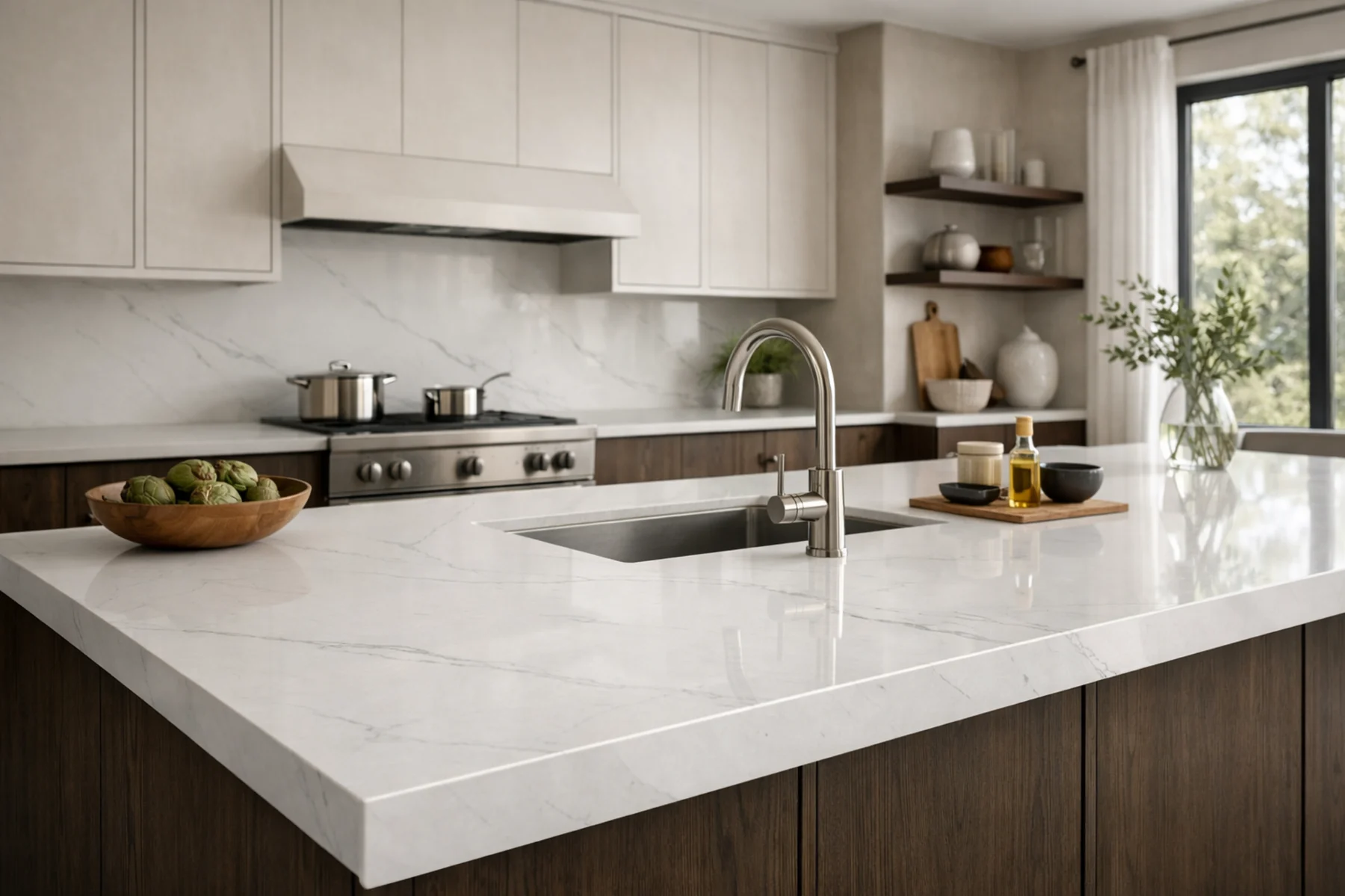
Engineered surface with controlled patterning, broad design range, and the easiest everyday care profile for many households.
Explore this page →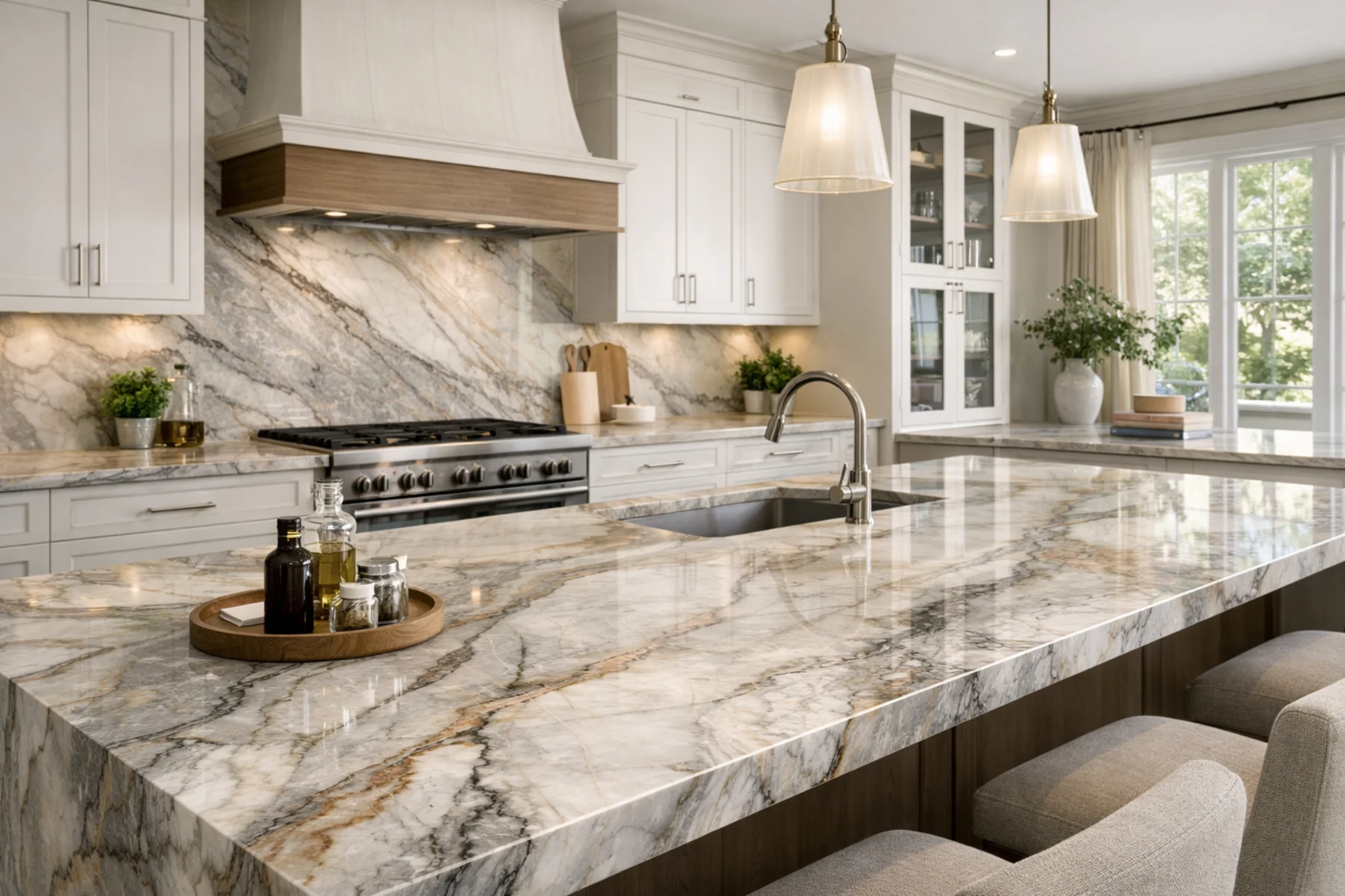
Natural stone with authentic movement, strong presence, and a premium fabrication posture that rewards careful slab selection.
Explore this page →Luminous natural stone with timeless character, visible aging, and a maintenance profile that must be understood before selection.
Current page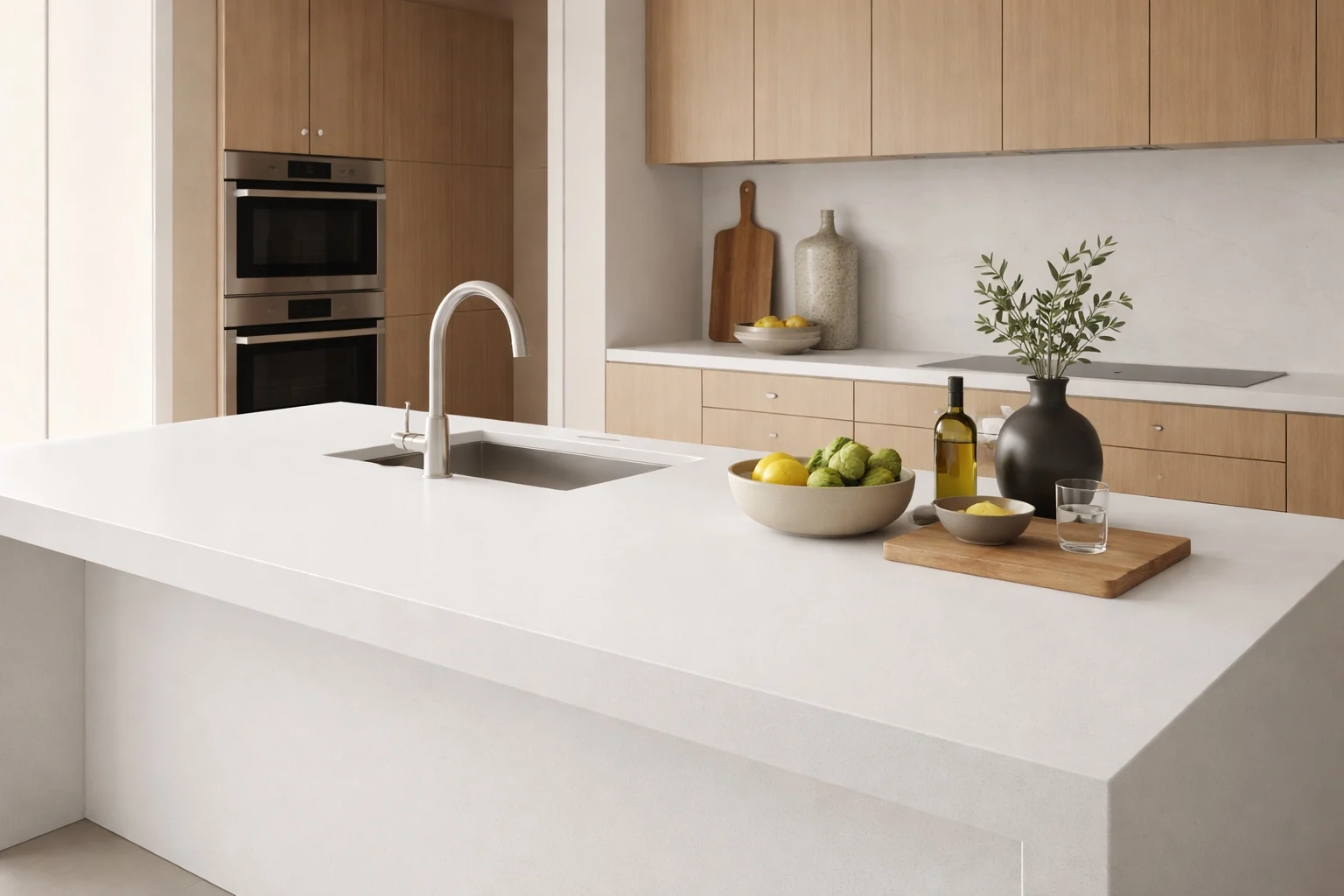
Crisp, nonporous slab material with a refined architectural look, strong stain resistance, and fabrication details that matter.
Explore this page →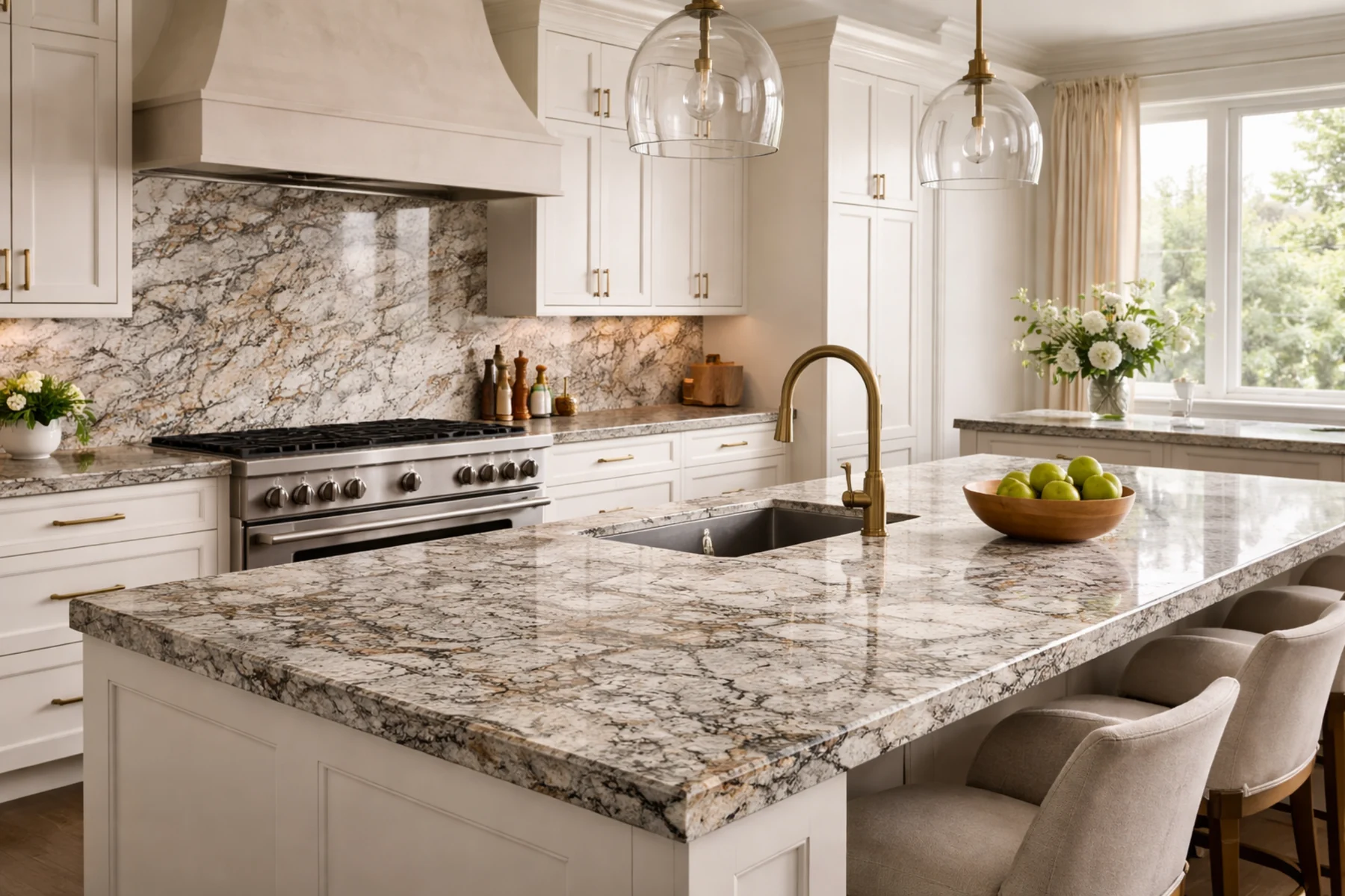
Durable natural stone with wide pricing range, real texture, and a current look when the slab is selected with discipline.
Explore this page →Black Label helps set the marble expectation early so the final selection is chosen for the right reasons and lived with confidently after installation.