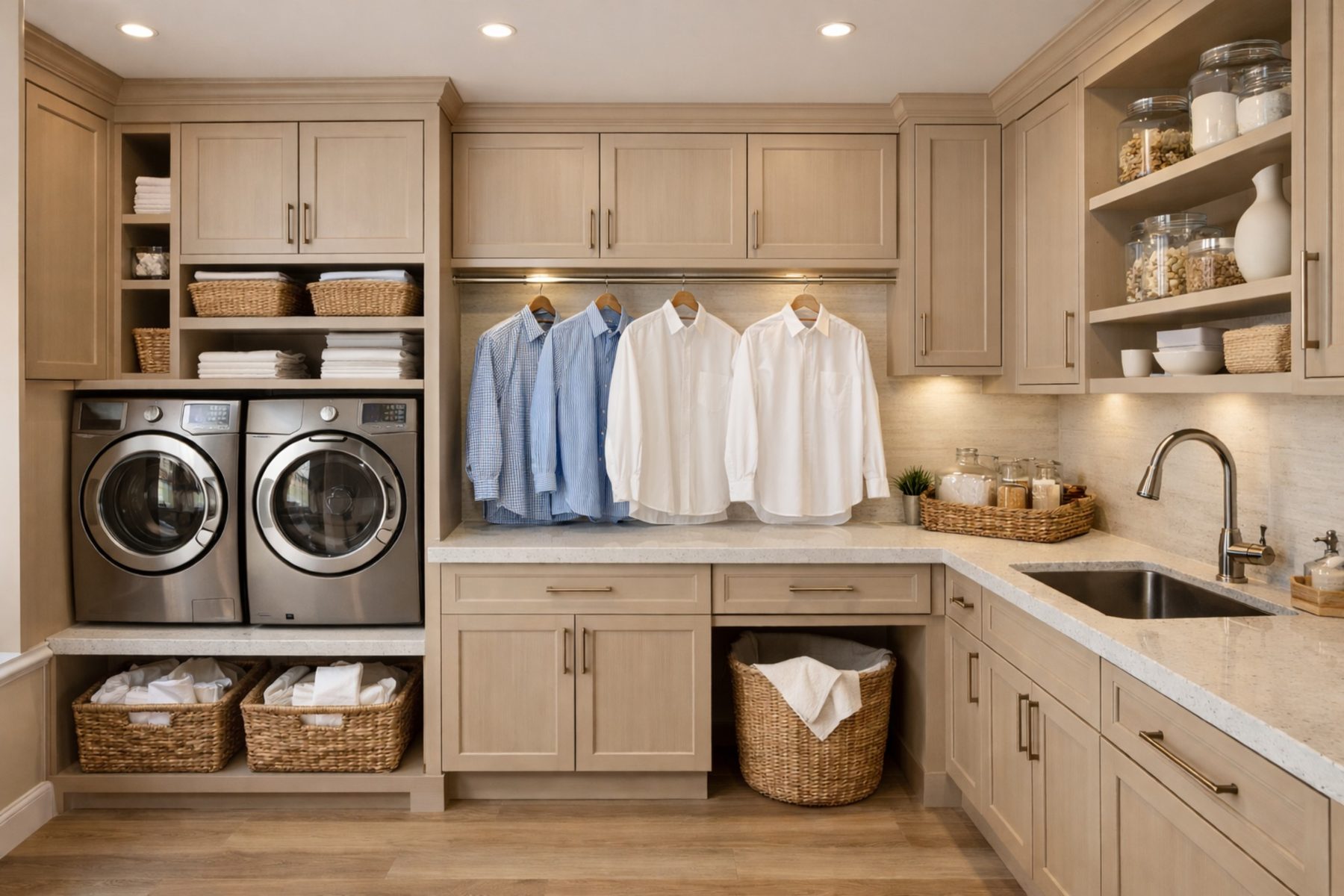
Use the image as a planning reference
Study the proportion, finish weight, storage visibility, lighting, and how the cabinetry connects to the surrounding room.
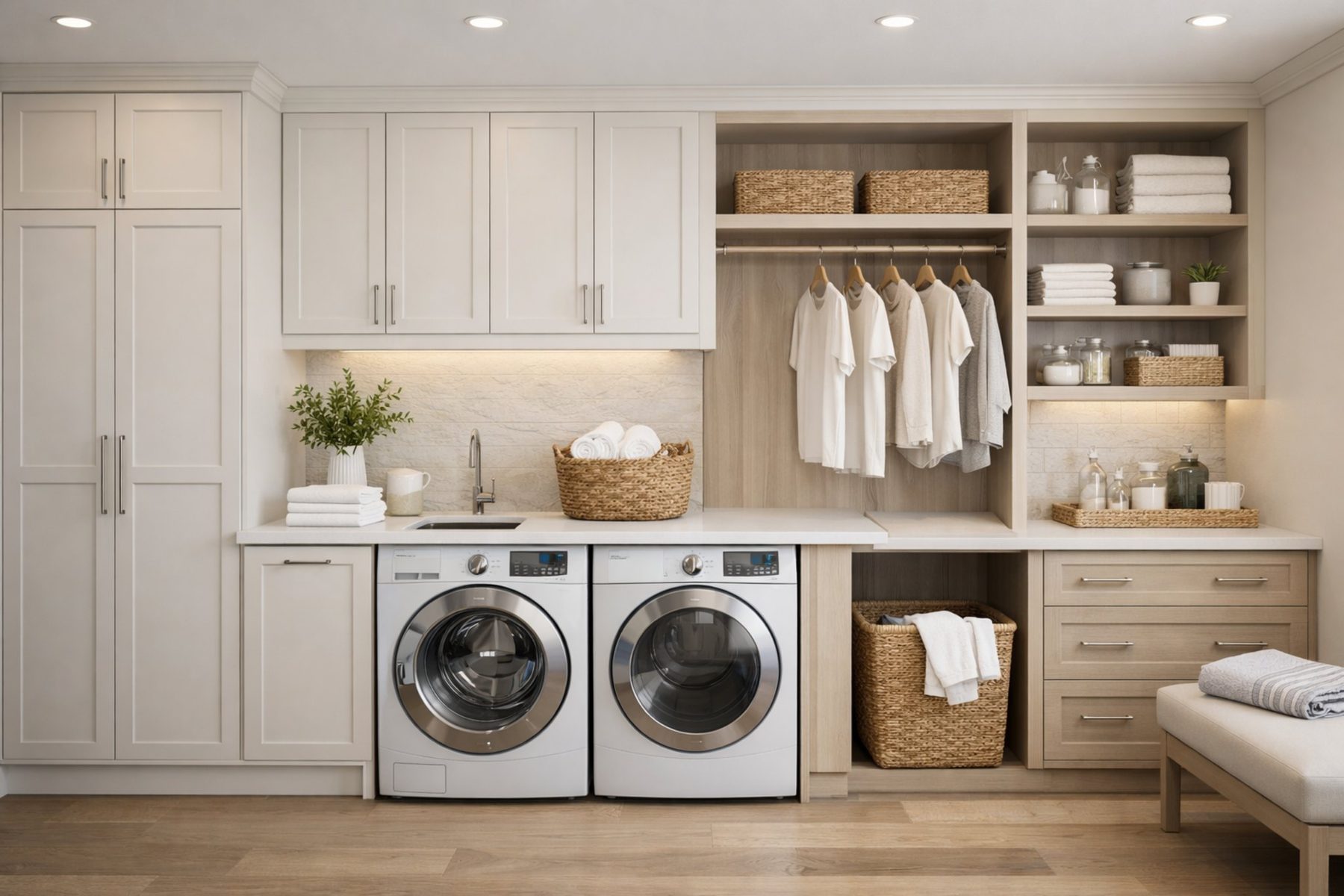
Laundry cabinetry works best when it handles sorting, hanging, folding, cleaning supplies, pet items, overflow storage, and appliance clearances without making the room harder to use.
Each space needs a different planning posture. The goal is to solve function, proportion, finish direction, storage behavior, and installation risk before the room becomes a set of disconnected selections.
Washer and dryer depth, door swing, service access, hoses, vents, and pedestals need to be settled before cabinetry is locked.
The best laundry rooms include zones for detergents, hampers, hanging, folding, ironing, cleaning tools, and household overflow.
Finishes, countertops, hardware, and flooring coordination should expect moisture, lint, cleaning products, and frequent use.
These are the details that typically shape cost, lead time, storage quality, and how finished the room feels after installation.
Study the proportion, finish weight, storage visibility, lighting, and how the cabinetry connects to the surrounding room.
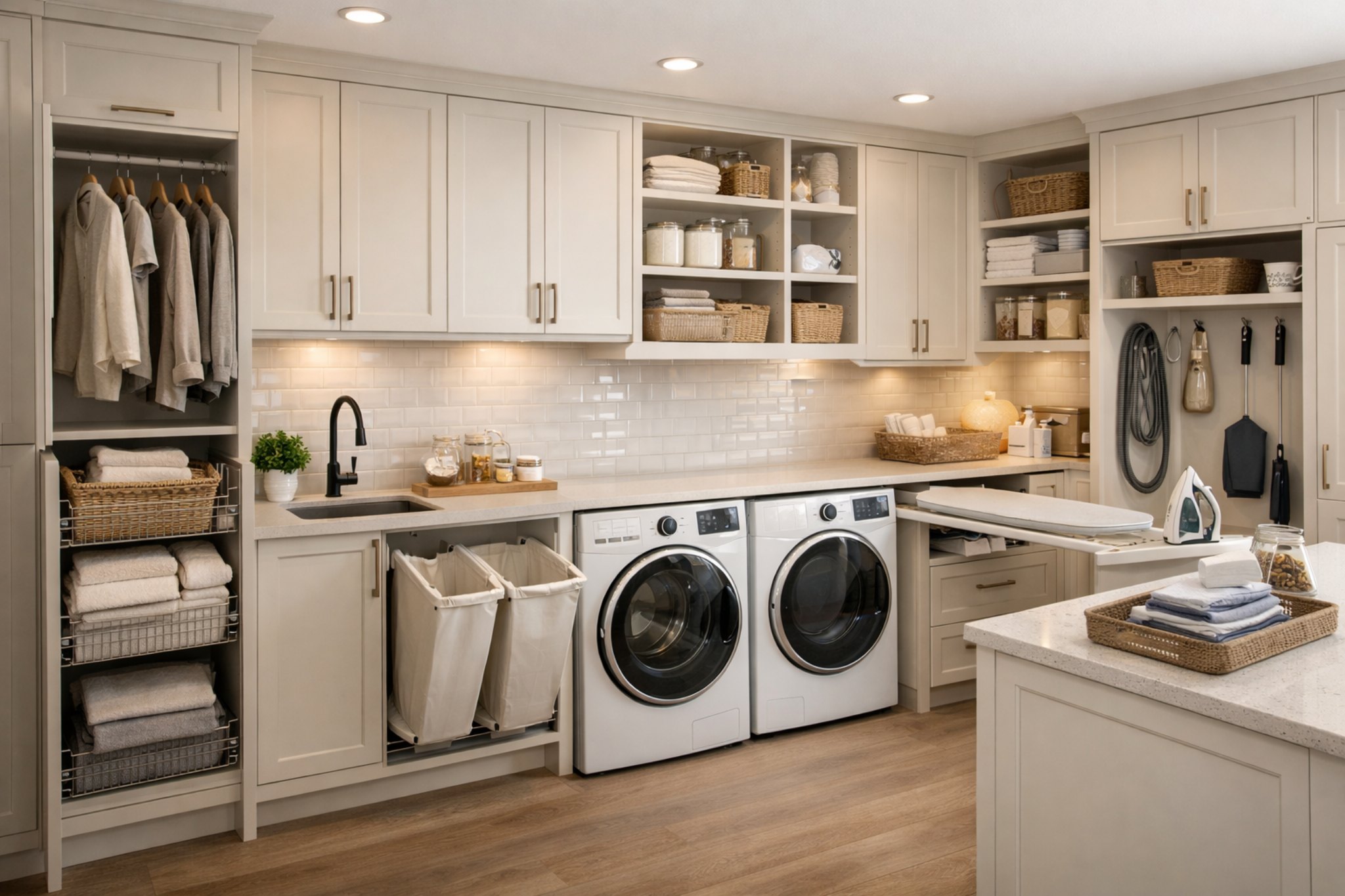
The space should support the rest of the home through material tone, architectural rhythm, and a level of function that feels intentional.
Start with what the space needs to solve, then shape the cabinetry, storage, materials, and details around that purpose.