
Drawer Organization
Cutlery, utensils, spices, knives, plates, wraps, containers, charging, grooming, and drawer-box planning.
Explore this page →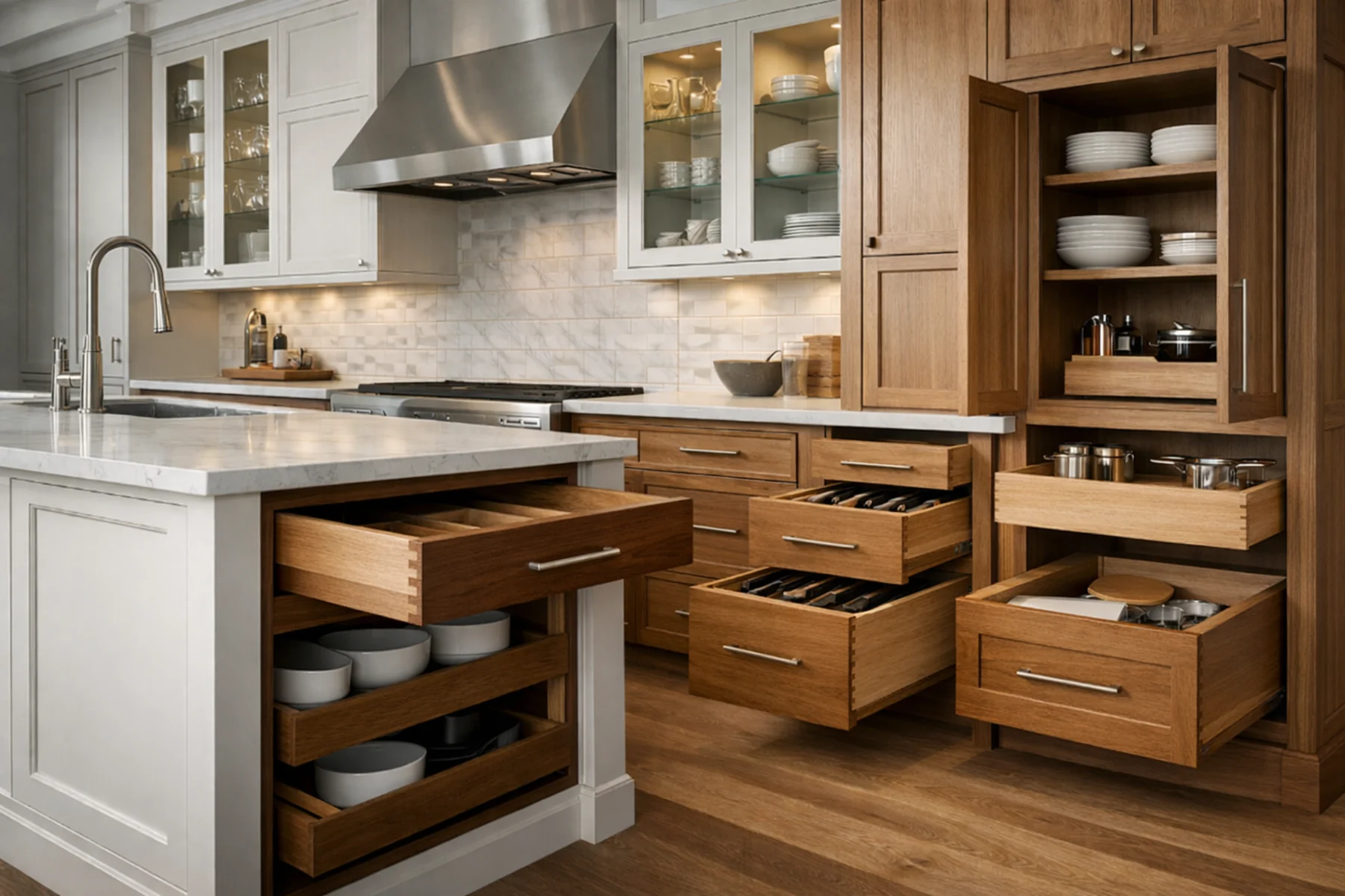
The best storage plans are built around daily routines: what gets used, where it gets used, how heavy it is, how often it moves, and whether the drawer box, guide system, and accessory hardware can support that use over time.
A strong storage plan starts with the way the room is used: prep, cooking, cleanup, serving, coffee, pantry access, entertaining, laundry, grooming, filing, or hidden utility storage. From there, the right solution might be a plain drawer, a deep drawer, a roll-out tray, a pull-out organizer, a door-mounted rack, a waste system, or no accessory at all.
The first storage upgrades should support the items used every day: utensils, prep tools, knives, cookware, spices, trash, recycling, coffee supplies, and cleaning items.
A cabinet that holds less but brings the contents forward can be more useful than a larger fixed-shelf cabinet where items disappear in the back.
Every moving storage accessory depends on guides, hinges, brackets, frames, clearances, and load limits. Storage is partly a hardware decision.
Bins, trays, dividers, roll-outs, and guides need cleaning and occasional adjustment. The easier they are to maintain, the better they age.
Good storage is not about adding every available accessory. It is about assigning the right type of storage to the right zone, then confirming that the cabinet, drawer box, guide system, and accessory hardware can support how the space will actually be used.
Cutlery, utensils, spices, knives, plates, wraps, containers, charging, grooming, and drawer-box planning.
Explore this page →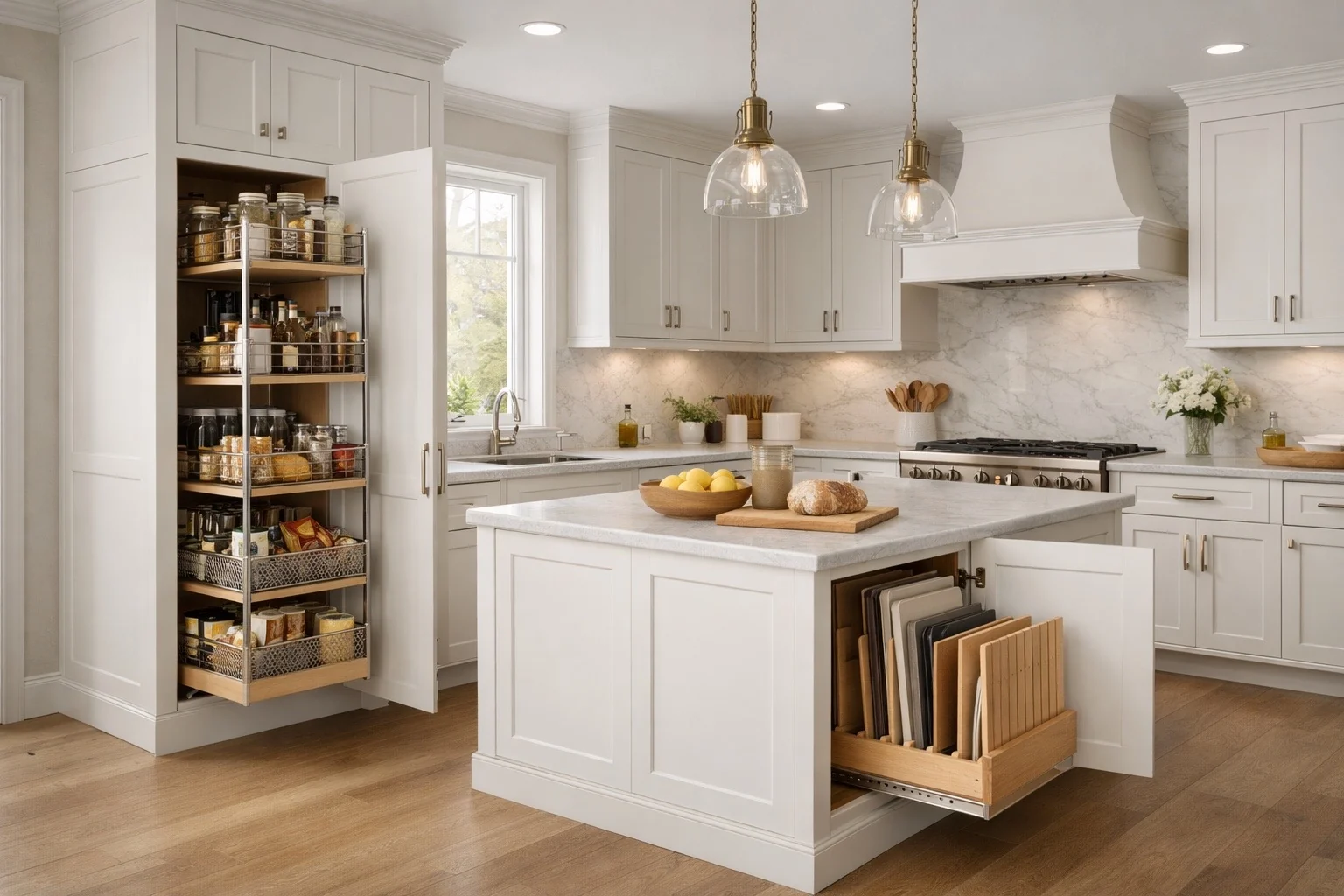
Roll-out trays, pantry pull-outs, spice units, tray dividers, mixer lifts, blind corners, and movement hardware.
Explore this page →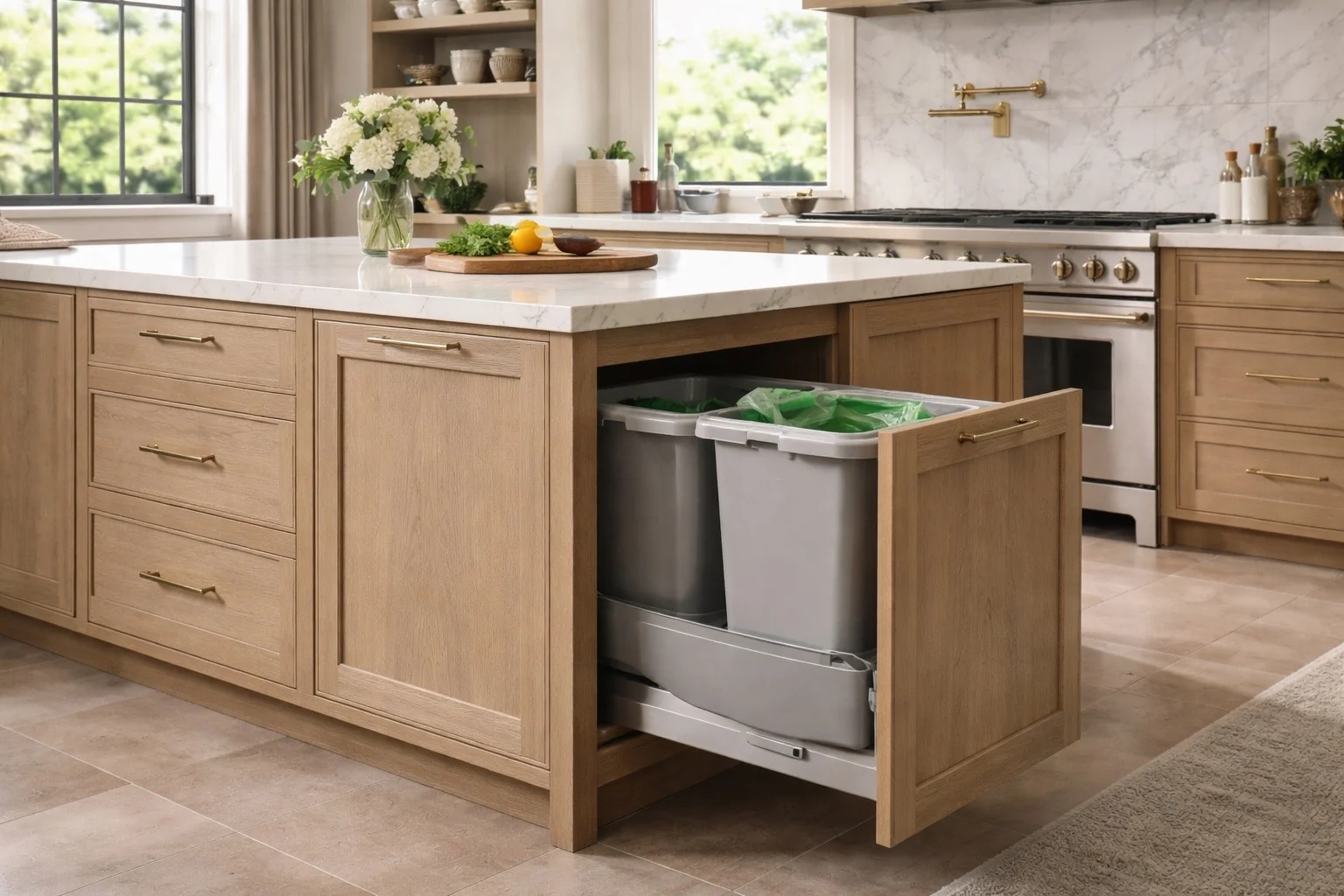
Single-bin, double-bin, recycling, compost, cleanup-zone placement, bin size, soft-close systems, and cleaning realities.
Explore this page →The visible drawer front is the finished face. The drawer box is the structure that carries the contents. When storage planning gets serious, the drawer box matters as much as the organizer because the organizer sits inside the box and adds its own weight, thickness, and clearance requirements.
A common premium cabinet drawer box uses solid maple sides with dovetail joinery, a clear or furniture-grade interior finish, and an undermount guide system. The benefit is strength, a clean interior, and a drawer that reads more finished when opened.
Frameless or full-access construction typically allows more usable drawer-box width because there is less face-frame structure around the opening. This can matter in utensil drawers, wide cookware drawers, and narrow accessory cabinets.
Face-frame cabinetry can still use strong dovetail boxes and full-extension undermount guides, but the face frame affects opening width and drawer-box sizing. The result is often a slightly different usable interior than full-access construction.
Shallow drawers work for cutlery, flat tools, wraps, and small accessories. Mid-height drawers work for utensils and containers. Deep boxes work for cookware, dishes, small appliances, bulk goods, and taller storage inserts.
A roll-out tray is a drawer-like shelf behind doors. It can improve access inside a base or tall cabinet, but it adds hardware, reduces a small amount of interior space, and usually requires enough cabinet depth for the guide system to operate.
Some projects use metal drawer box systems instead of traditional wood dovetail boxes. These can offer very clean sides, high load ratings, sleek modern styling, and coordinated organizer systems, especially in contemporary cabinetry.
Many quality cabinet lines use full-extension undermount soft-close guides. Some standard drawer-guide packages are rated around 75 pounds, while higher-capacity dovetail systems and heavy-duty concealed runners can move into higher ratings. For example, Blum MOVENTO includes 125-pound and 170-pound static-load programs, plus a waste/recycle application with its own rating. The practical takeaway is simple: cookware drawers, dish drawers, large pantries, mixer lifts, and waste pull-outs should be planned as load-bearing storage, not just empty cabinet openings.
The rating also needs context. A static rating describes a load at rest under a test standard. Daily use is dynamic: the drawer is pulled, pushed, extended, closed, sometimes leaned on, and sometimes loaded unevenly. The actual performance depends on drawer width, depth, box construction, fastener holding, cabinet anchoring, accessory weight, installation, and whether the weight is distributed evenly.
The strongest storage plan usually mixes several simple solutions instead of overloading the room with complex mechanisms. Some categories should be visible and fast. Others should be hidden, protected, or grouped by task.
Best for items that are small, flat, repeated, or easy to lose: flatware, utensils, knives, spices, wraps, lids, K-cups, charging cords, makeup, grooming tools, and office items.
Best for cookware, bowls, plates, food containers, linens, small appliances, pantry overflow, and bulkier items that are easier to lift from above than retrieve from a shelf.
Best for base or tall cabinets with doors where shelves would force clients to kneel, reach, or remove front items to access back items.
Best for spices, oils, tray storage, cutting boards, baking sheets, towels, wraps, and small vertical items that need a defined home.
Best when food storage needs visibility from top to bottom. A pull-out pantry, interior roll-outs, or drawer pantry can all work depending on reach and weight.
Best near prep and cleanup. Bin size, cabinet width, drawer guide strength, liner habits, odor control, and cleaning access matter more than hiding the bins at the edge of the room.
Best when a corner would otherwise become dead or awkward storage. Lazy Susans, half-moon shelves, swing-outs, and blind-corner systems all trade capacity for access differently.
Best for heavy appliances like mixers when counter space is limited. They need proper cabinet width, correct hardware, and realistic weight expectations.
Best for cleaning supplies, brooms, pet items, laundry supplies, hampers, towels, paper goods, and backstock when planned away from food and heat-sensitive items.
A knife insert away from the prep surface may look organized, but it adds unnecessary steps. A trash pull-out far from the sink can make cleanup feel clumsy. A spice pull-out beside the refrigerator is less useful than one near the cooking zone. A deep drawer for plates can be excellent near the dishwasher because unloading becomes easier.
The goal is to reduce repeated motion. Plan drawers and accessories by activity: prep, cook, clean, serve, coffee, pantry, laundry, grooming, and utility. Then review whether the storage solution supports the item’s weight, shape, frequency, and cleaning needs.
Cost is shaped by the accessory type, material, finish, guide system, bin size, load rating, whether the system is pre-installed or added during installation, and how much cabinet modification is required. The more the accessory moves, carries weight, or coordinates with a door panel, the more carefully it should be specified.
Cutlery trays, utensil dividers, spice inserts, peg systems, tray dividers, and simple roll-out trays are often efficient upgrades because they solve common problems without needing highly complex hardware.
Pull-out base organizers, double waste systems, deep drawer organization, food container organizers, and pantry roll-outs add meaningful utility but need more planning around size, clearances, and movement.
Mixer lifts, blind-corner optimizers, servo-assisted waste systems, tall pantry pull-outs, appliance storage, and specialty moving mechanisms require more exact specification and installation discipline.
Wood inserts feel warmer and more integrated. Metal, polymer, and wire systems can be easier to clean or more compact. Matching interiors and specialty finishes can raise the level of refinement.
Accessories occupy space. Dividers, rails, bins, frames, guide systems, and door-mount hardware all consume usable area. A simple drawer may hold more than an over-accessorized drawer.
A high-use accessory should be easy to clean, easy to adjust, and supported by a dependable guide system. Daily-use storage should not be treated as decorative filler.
The most common storage mistakes are predictable: placing accessories where they interrupt workflow, choosing bins that are too small, overloading drawers, using pull-outs where a drawer would work better, adding mechanisms to shallow cabinets, or assuming every modified cabinet can accept the same accessory.
Some accessories require minimum cabinet depth, specific cabinet widths, full-height doors, adequate side clearance, clear plumbing space, special guides, or a cabinet layout that has not been heavily altered. This is why storage should be reviewed before final cabinet ordering, not treated as an afterthought.
Wipe spills early, remove crumbs from drawer inserts, clean bins regularly, avoid harsh cleaners on finished wood accessories, avoid forcing a misaligned pull-out, and do not use drawer boxes or waste pull-outs beyond their intended load. If a drawer begins to rack, bind, scrape, or close unevenly, it should be adjusted rather than forced.
Clean with a soft cloth and mild soap only when needed. Dry immediately. Avoid soaking wood organizers or leaving damp items in the drawer.
Wipe with a non-abrasive cloth. Keep tracks clear of crumbs and sticky residue. Avoid corrosive cleaners that can damage finishes.
Remove bins for cleaning when possible. Watch for leaks, liner tears, odor buildup, and residue along the cabinet bottom.
Use the accessory within its intended range. Do not slam, force, hang on, or overload moving parts. Movement should remain smooth and controlled.
The most reliable storage decisions happen after the plan confirms cabinet widths, appliance locations, sink placement, door style, construction type, and primary work zones. This prevents an accessory from fighting the layout or consuming space the room needs for something more important.
Define what needs to be stored: plates, cookware, trays, knives, spices, food containers, small appliances, cleaning supplies, trash, recycling, or pantry goods. The item category determines the right box and accessory.
Decide whether the storage should open as a drawer, pull out from behind doors, swing out from a corner, lift up, rotate, or remain on an adjustable shelf. Movement changes cost, maintenance, and daily feel.
Drawer stacks, door sizes, panel reveals, hardware placement, and appliance panels should still look intentional. Storage should improve function without making the cabinet elevation feel random.
Sink plumbing, disposers, outlets, charging components, water filtration, appliance cords, and future cleaning access should be considered before the accessory is locked in.
High-value storage upgrades belong in daily-use zones. Low-frequency items often do better with flexible shelves or drawers than expensive specialty hardware.
Bins need to come out. Inserts need to be cleaned. Guides may need adjustment. Specialty systems should remain accessible enough to maintain.
Drawers, roll-outs, fixed shelves, and specialty accessories each have a different value profile. Selecting the right form protects budget, cabinet volume, and long-term usability.
The item is used often, should be accessed in one motion, needs organization from above, or benefits from full-width visibility. Cookware, utensils, plates, containers, and daily tools are strong drawer candidates.
You want the visual look of doors but need better access inside the cabinet. This works well in pantries, utility cabinets, and base cabinets where fixed shelves would bury items in the back.
The items are light, infrequently used, broad, decorative, or flexible. Fixed and adjustable shelves are still valuable because they preserve capacity and are simple to maintain.
The use case is specific and repeated: a mixer lift for a client who bakes often, a blind-corner optimizer for otherwise poor access, or a charging drawer where devices collect daily.
The storage category is messy, removable, or consumable. Waste, recycling, pet food, laundry, cleaning supplies, and kids’ items often benefit from bin-based planning.
The client’s habits may change. One flexible drawer or shelf in each zone can be more valuable than every inch being assigned to a permanent insert.
The best feedback after installation is not “look how many accessories we added.” It is “everything has a place and I know exactly where to reach.” That result comes from restraint, correct drawer box planning, strong hardware, and a clear understanding of how the room will be lived in.
A storage plan should feel calm, not mechanical. The client should not have to learn a complicated system to use the room well. The best accessories disappear into the daily routine.
Storage accessories are not all built from the same material. Wood inserts, metal baskets, polymer bins, dovetail trays, chrome wire systems, and solid shelves each feel different and behave differently under daily use. Material choice should consider cleaning, visibility, durability, noise, appearance, and whether the organizer is meant to be seen.
Warm, tailored, and cabinet-like. Best for cutlery, utensils, knives, plates, interior roll-outs, pantry trays, and areas where the client wants an integrated furniture feel.
Practical, visible, and often strong for baskets, blind corners, pantry pull-outs, cleaning storage, and waste frames. Best where wipeability and structure matter.
Useful for waste, recycling, laundry, pet storage, cleaning items, and messy categories. The advantage is easy removal and cleaning.
Still valuable when flexibility matters more than access hardware. Adjustable shelves can outperform pull-outs for tall, irregular, or changing categories.
Polished and highly usable in pantries or tall cabinets. They improve visibility but require the door-open-then-drawer-open sequence.
Mixer lifts, blind-corner pull-outs, assisted waste systems, and appliance storage are valuable when the use case is real and the hardware is properly rated.
Good storage uses correctly sized drawers, logical shelves, a primary waste pull-out, and a few well-placed dividers. Better storage adds roll-out trays, plate drawers, tray dividers, spice organization, and pantry access where the layout benefits from it. Best storage selectively adds specialty systems such as mixer lifts, blind-corner optimizers, integrated charging, assisted waste movement, and custom interior organization only where those choices improve repeated daily use.
The highest-end storage plans are disciplined. They do not overfill the room with mechanisms. They use strong drawer boxes and pull-out hardware where load and access matter, and they preserve open flexible storage where the client’s needs may change.
The best storage decisions are made before the cabinet order is locked. That is when drawer box sizing, guide systems, cabinet depth, waste location, pull-out clearances, and accessory value can be coordinated cleanly.