Actual slab approval
Review the exact slab for color, movement, pits, fissures, resin fill, and whether it still looks current at full scale.
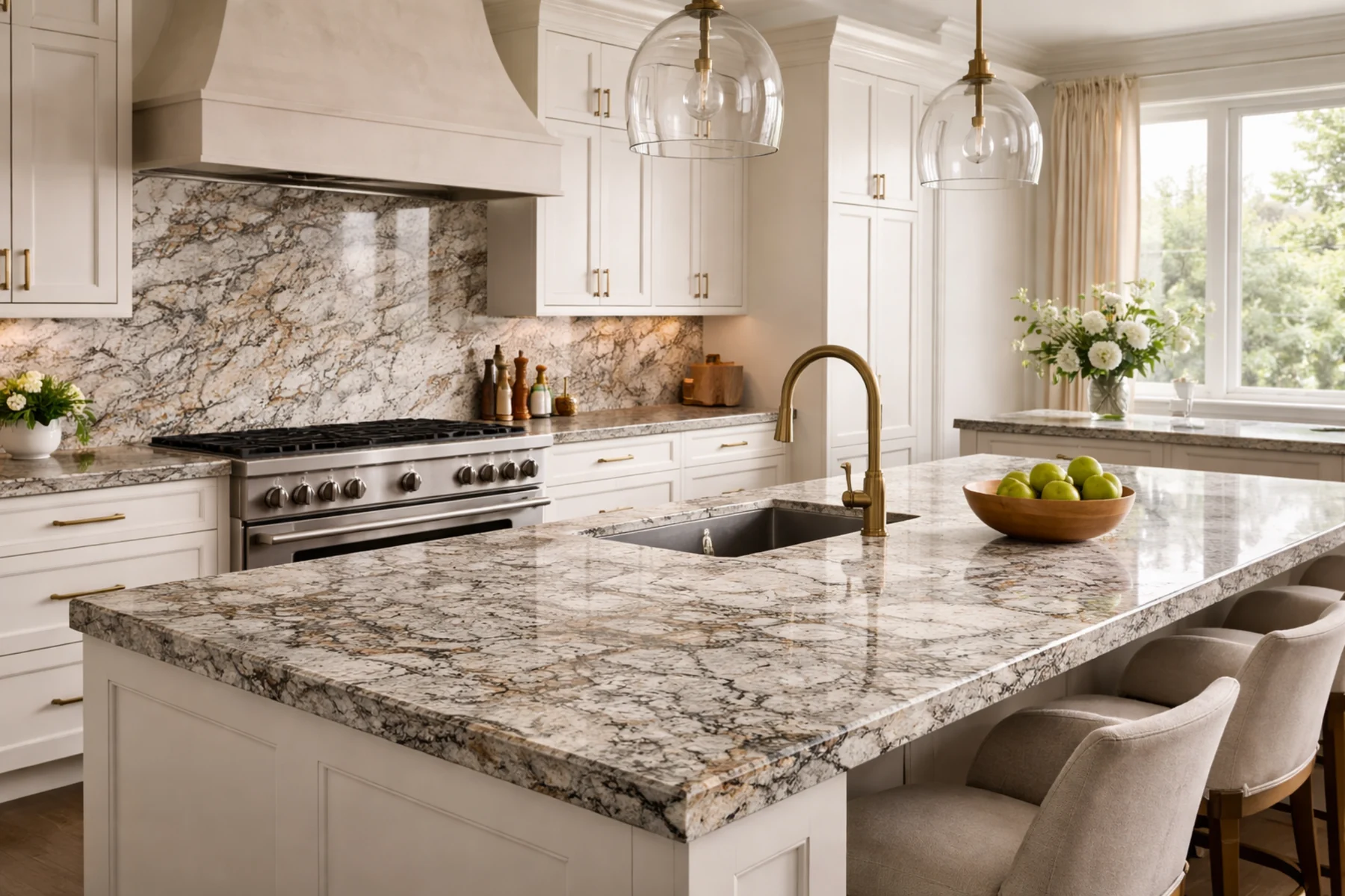
Granite remains a practical and valuable countertop option because it combines real stone variation, broad pricing, good durability, and a familiar residential performance profile.
The category still offers excellent durability and value, but the specific slab must be chosen with the cabinetry, backsplash, lighting, and long-term style direction in mind.
Natural igneous stone available in a wide range of colors, movement levels, finishes, and price tiers.
One of the broadest ranges. Some granite is value-oriented, while rare or exotic slabs can price into premium territory.
Durable and heat-resistant compared with many surfaces, but most granite should be sealed as recommended for the specific slab and finish.
Excellent when the room needs natural texture, practicality, and a grounded stone presence without necessarily going ultra-luxury.
Granite can be one of the strongest value plays in natural stone because the category includes a large supply range. Some slabs are cost-effective; others become premium because of rarity, movement, color, thickness, and fabrication details.
A disciplined granite choice can look timeless and expensive. A poor granite choice can date the entire room. The difference is usually undertone, movement scale, finish, edge, and whether the stone supports the cabinet and hardware direction.
Granite is worth considering when the homeowner wants natural stone, practical durability, and a cost posture that can often be more flexible than quartzite or rare marble.
The right maintenance expectation is part of the specification. A surface can be excellent and still be wrong for a household if its care profile does not match how the kitchen, bar, pantry, bath, or laundry area will actually be used.
A disciplined care routine protects the finish, the edges, the seams, and the homeowner’s confidence in the investment.
Granite can be quiet, speckled, linear, dramatic, earthy, cool, warm, polished, honed, or leathered. The design challenge is not whether granite is good. It is whether the exact slab fits the room’s current material language.
Many dated granite installations fail because the stone is too busy, too warm, too speckled, or paired with competing backsplash and cabinet tones. A modern granite selection usually has a clearer palette and more intentional movement.
Granite pairs well with wood cabinetry, painted cabinetry, classic hardware, and natural textures when undertones are coordinated. It can add weight and credibility without needing to be the most expensive surface in the room.
These details should be settled before template, fabrication, and installation. They protect the final look and reduce surprises.
Review the exact slab for color, movement, pits, fissures, resin fill, and whether it still looks current at full scale.
Ask whether the selected granite needs sealing and how often it should be tested.
Compare polished, honed, and leathered finishes for glare, texture, maintenance, and style.
Busy granite usually needs a quieter backsplash. Let one surface lead.
A clean eased or subtle bevel edge often keeps granite more current than overly ornate profiles.
For outdoor kitchens, confirm the stone, finish, adhesive, support, and sun exposure plan with the fabricator.
The strongest decision usually becomes clearer when the options are viewed side by side.
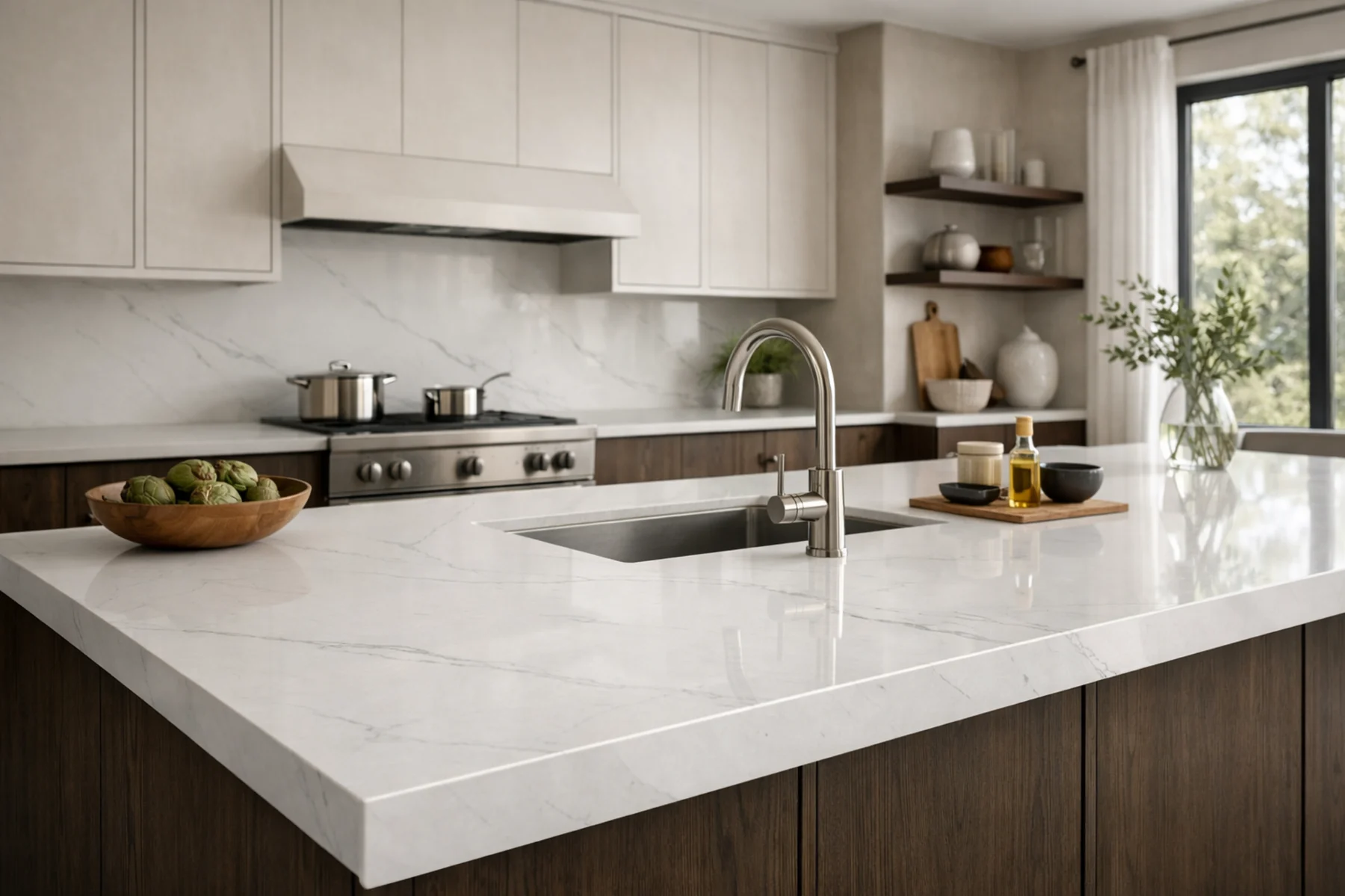
Engineered surface with controlled patterning, broad design range, and the easiest everyday care profile for many households.
Explore this page →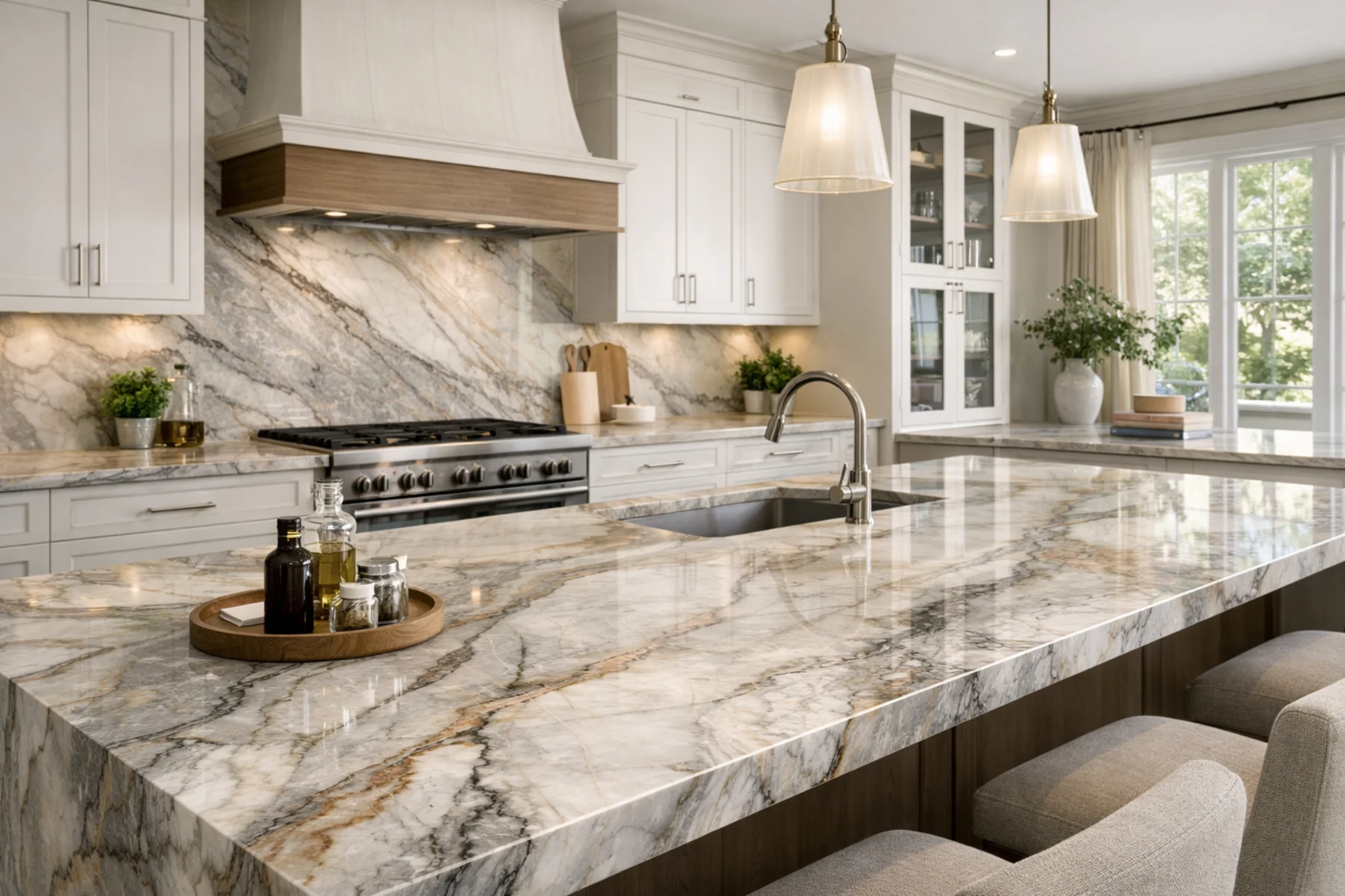
Natural stone with authentic movement, strong presence, and a premium fabrication posture that rewards careful slab selection.
Explore this page →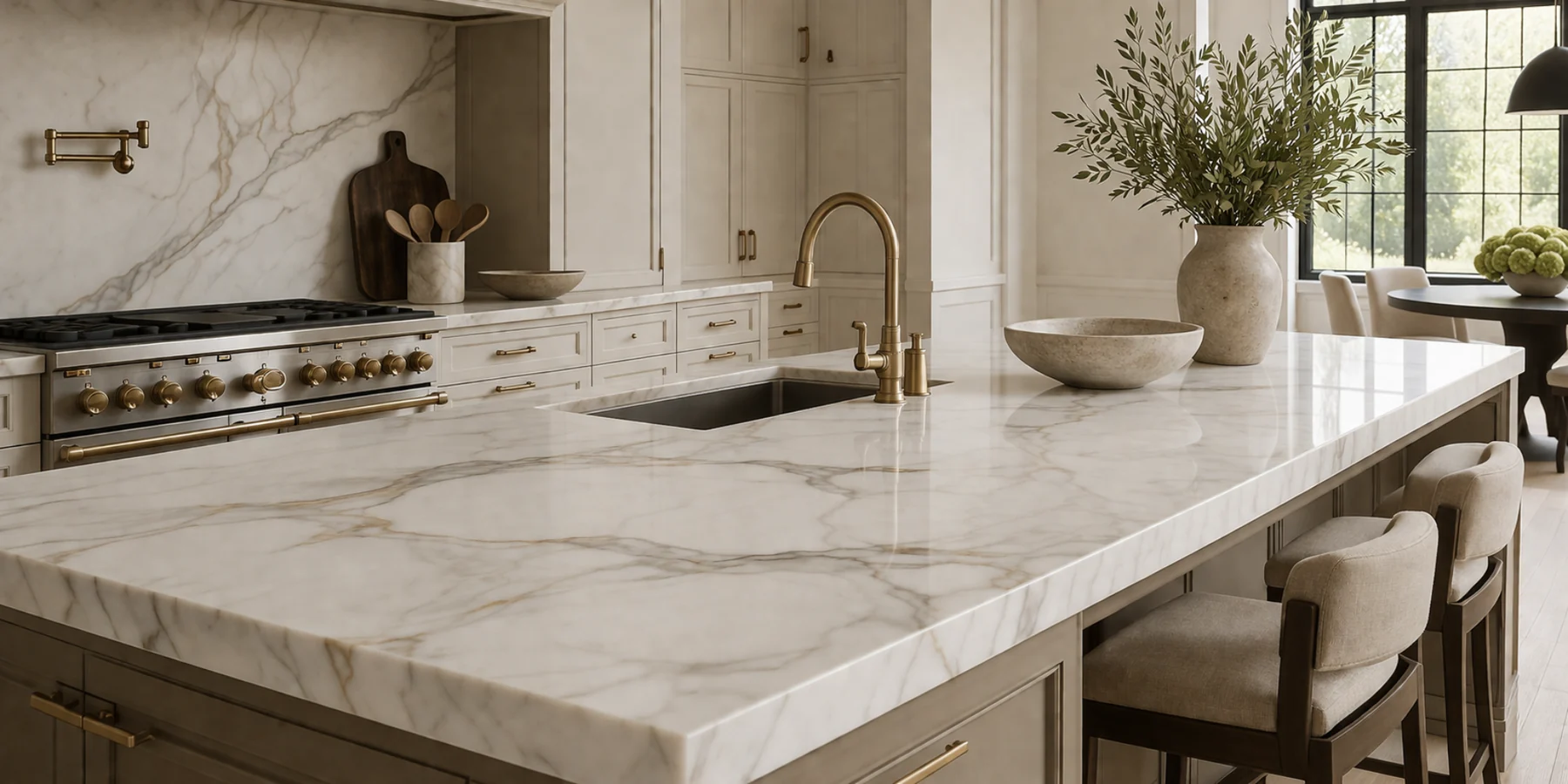
Luminous natural stone with timeless character, visible aging, and a maintenance profile that must be understood before selection.
Explore this page →
Crisp, nonporous slab material with a refined architectural look, strong stain resistance, and fabrication details that matter.
Explore this page →Durable natural stone with wide pricing range, real texture, and a current look when the slab is selected with discipline.
Current pageBlack Label helps filter granite selections by movement, undertone, finish, edge, and room fit so the material feels current rather than dated.