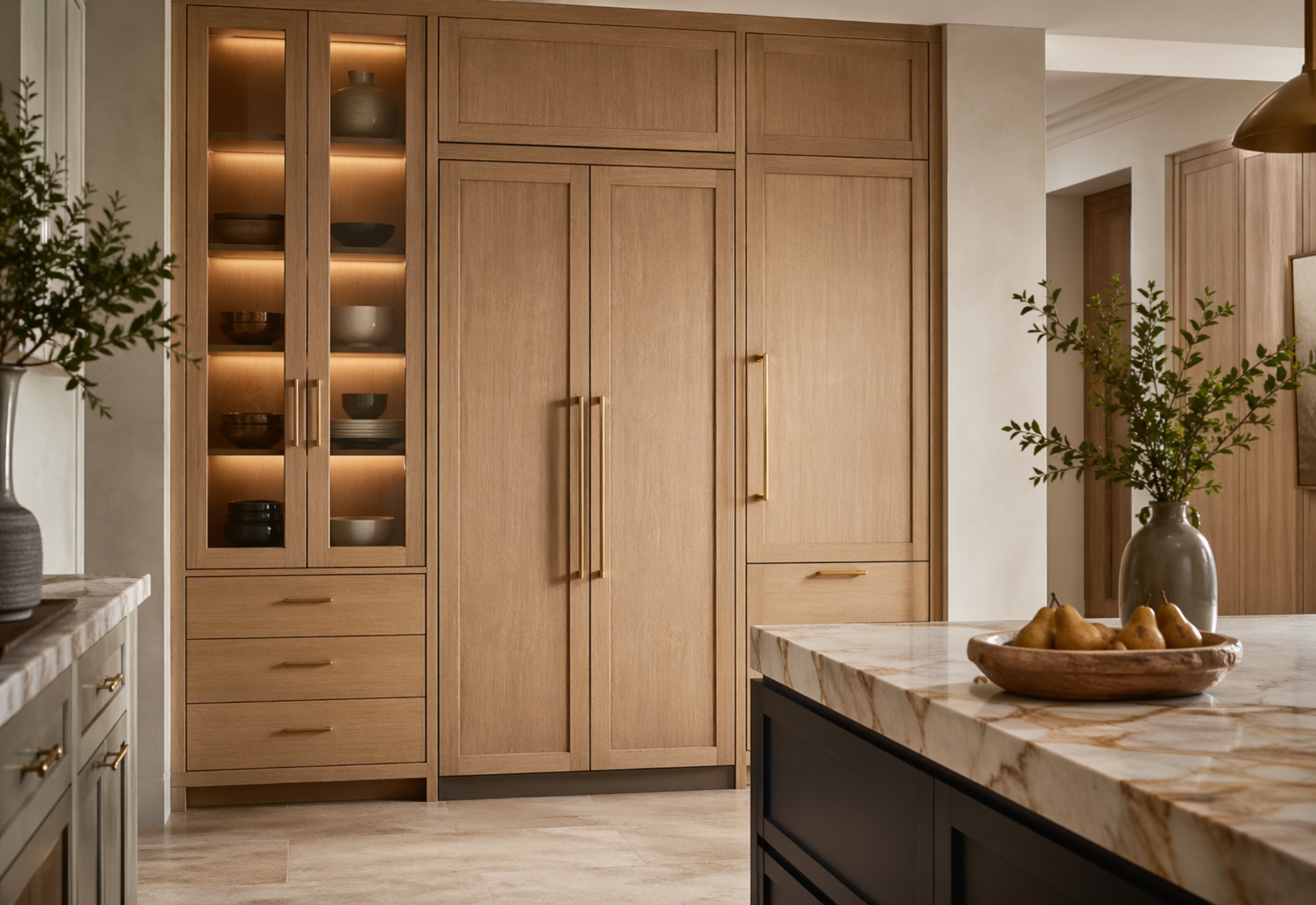
Refrigeration
Built-in refrigerators, refrigerator columns, freezer columns, panel-ready units, wine storage, beverage cooling, and food-storage planning.
Refrigeration planning guide →
Refrigeration, cooking, ventilation, cleanup, laundry, and specialty appliances drive cabinet sizing, clearances, electrical, plumbing, panel details, ventilation, storage, and how the room works every day.
Appliances affect the bones of the design. A refrigerator column changes panel proportions. A range changes hood width and makeup-air planning. A dishwasher changes cleanup flow. A coffee maker, ice maker, or beverage center changes plumbing, power, ventilation, service access, and storage around it. The earlier these decisions are coordinated, the cleaner the final room becomes.
Appliances improve the room when they support cooking, cleanup, food storage, laundry, entertaining, and daily routine without interrupting cabinetry, circulation, or visual balance.
Cost moves with brand tier, built-in versus freestanding construction, panel-ready requirements, size, fuel type, ventilation, specialty functions, installation complexity, and rough-in work.
The biggest misses are late appliance decisions, wrong openings, missing panel specs, poor ventilation, unplanned water or power, door-swing conflicts, tight service access, and mismatched design language.
Every appliance has a care profile. Filters, coils, seals, stainless finishes, glass, grease capture, drains, ice systems, laundry venting, and service access all affect long-term performance.
These categories should be selected as a system. Refrigeration affects pantry planning. Cooking affects ventilation. Dishwashers affect sink placement. Beverage and coffee zones affect secondary storage. Laundry appliances affect cabinetry depth, counter height, venting, and utility workflow.
Built-in refrigerators, refrigerator columns, freezer columns, panel-ready units, wine storage, beverage cooling, and food-storage planning.
Refrigeration planning guide →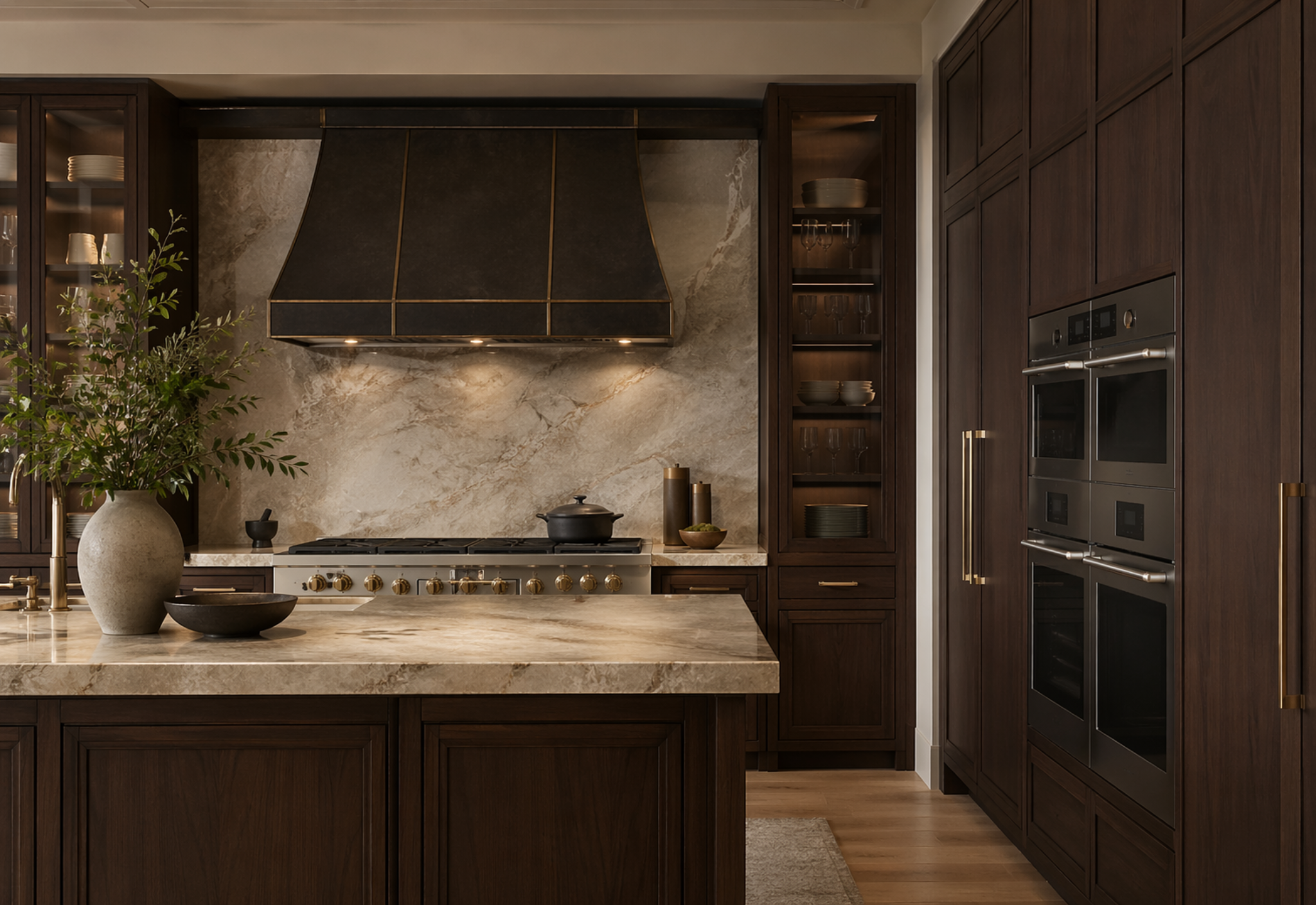
Ranges, cooktops, rangetops, wall ovens, speed ovens, microwaves, warming drawers, and the cooking-center layout.
Cooking appliance planning guide →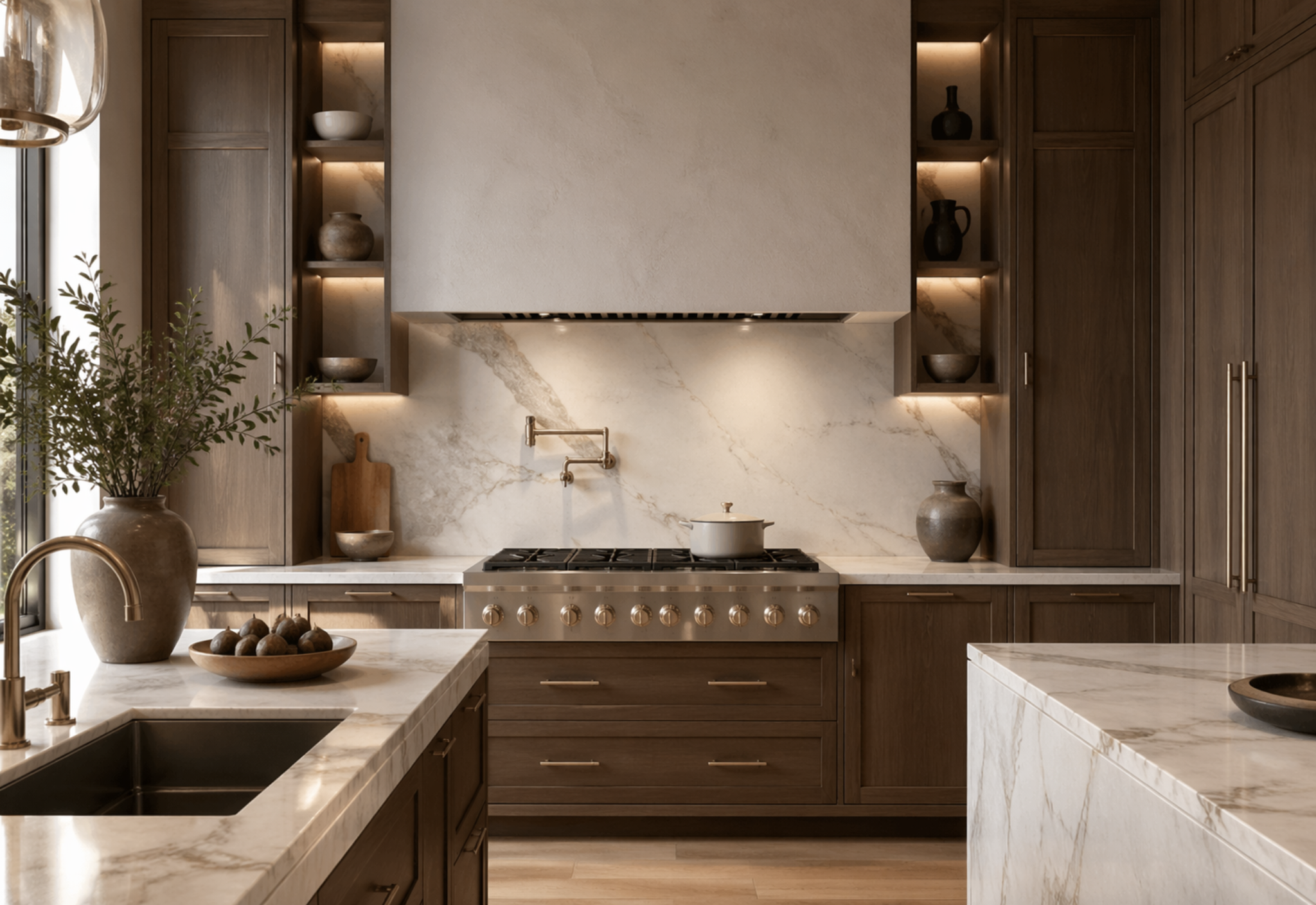
Range hoods, liners, inserts, blower strength, capture area, hood width, ducting, cabinet clearance, and makeup-air awareness.
Ventilation planning guide →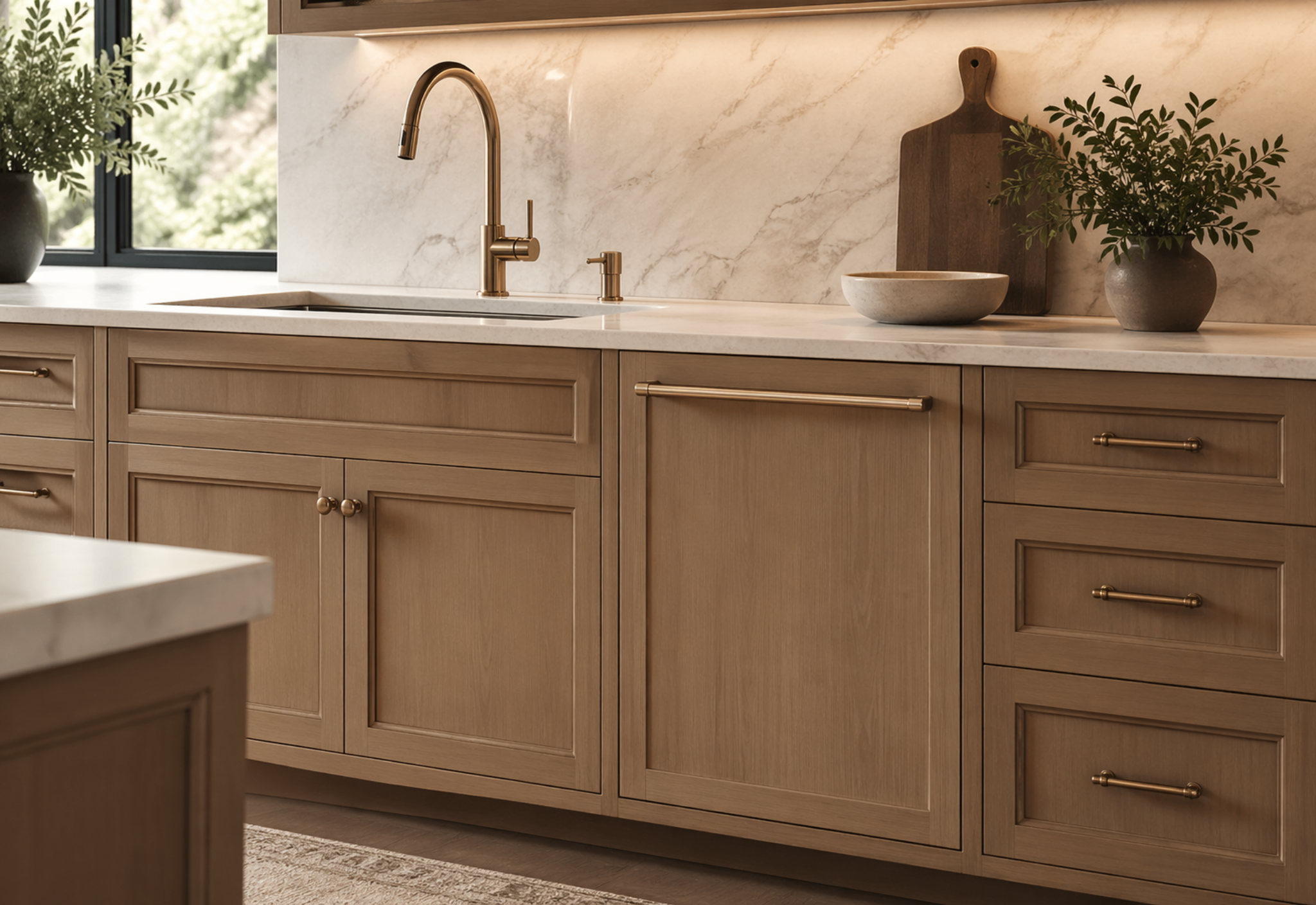
Standard dishwashers, panel-ready dishwashers, dishwasher drawers, sink adjacency, landing space, and cleanup-zone workflow.
Cleanup appliance planning guide →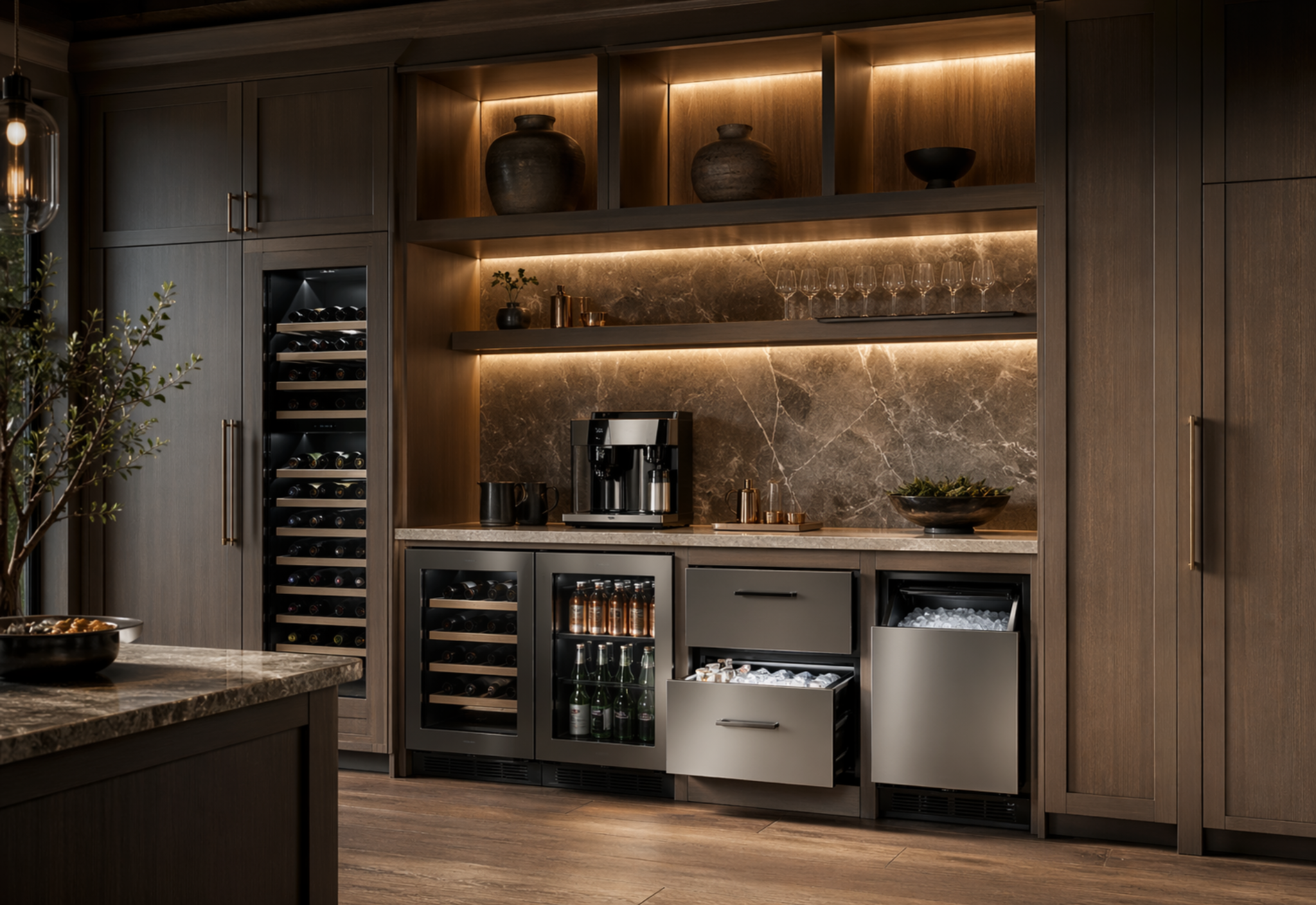
Wine coolers, beverage centers, ice makers, coffee makers, undercounter refrigeration, kegerators, and entertaining appliances.
Beverage appliance planning guide →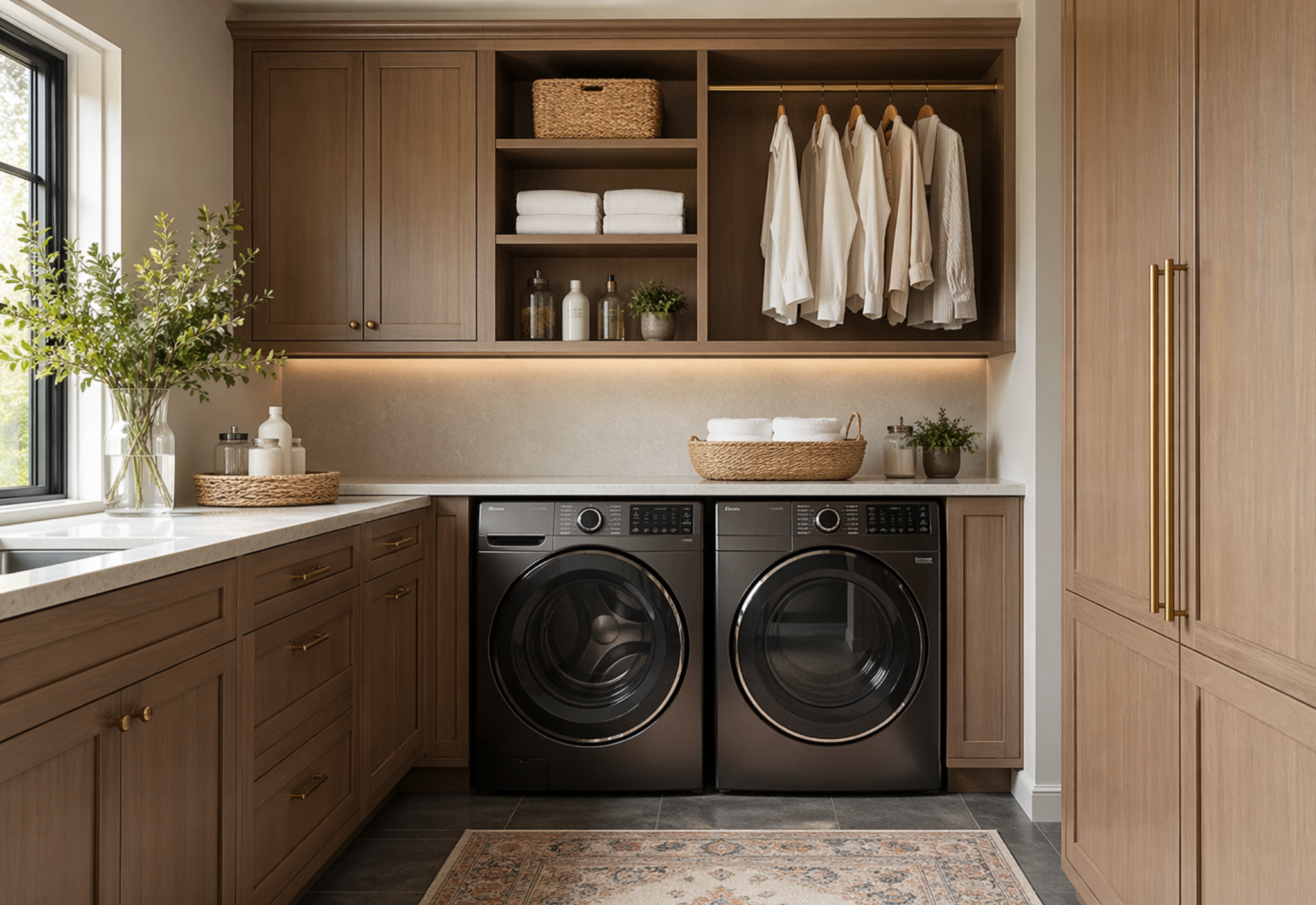
Washers, dryers, stacked units, side-by-side layouts, folding counters, utility sinks, hampers, venting, and service clearance.
Laundry appliance planning guide →Appliance planning is not just selecting a brand. It is deciding what each room needs to do, then confirming exact appliance models, dimensions, installation guides, door swings, rough-ins, trim kits, panels, fillers, reveals, ventilation, and service access before cabinetry is released.
Panel-ready and built-in appliances can make a room feel calmer and more architectural, but they demand tighter coordination. Freestanding appliances can be more flexible, but they still need the correct opening, landing space, clearances, and visual alignment.
Understanding the appliance family helps a client compare value without getting lost in product catalogs.
Built-in refrigerators and columns create a more architectural kitchen, but require precise openings, panel coordination, toe-kick planning, anti-tip requirements, and service clearances.
Panel-ready units can reduce visual noise and strengthen the cabinetry composition. They require correct door panel size, weight, thickness, reveal, handle, hinge, and opening specifications.
Ranges, rangetops, cooktops, ovens, and speed ovens should be planned around cooking habits, landing zones, hood capture, fuel type, heat clearance, and cabinet protection.
Ventilation must be designed around appliance output, cooking style, hood width, capture depth, duct route, blower location, noise, and local code or makeup-air requirements.
Dishwashers work best when coordinated with the sink, trash pull-out, dish storage, glass storage, countertop landing space, and a clear path that does not block the main prep zone.
Coffee makers, ice machines, wine units, beverage centers, outdoor grills, and specialty appliances are most successful when they are placed where they support real routines.
A premium appliance is only good value when the client feels the improvement every day. That may mean quieter refrigeration, stronger dishwashing, better cooking control, a more useful beverage zone, a laundry room that works cleanly, or a panel-ready appliance wall that lets the cabinetry carry the design.
The goal is not to overbuy. The goal is to invest where performance, integration, durability, and daily routine matter most, then keep the rest of the package disciplined.
Appliance decisions affect drawings, cabinet construction, door panels, hardware placement, electrical, plumbing, gas, ventilation, countertop planning, and field readiness. Waiting too long creates avoidable redesign.
Identify every kitchen, pantry, bar, laundry, outdoor, and specialty appliance before cabinetry dimensions are locked.
Use exact model numbers and manufacturer installation guides. Category-level assumptions are not enough for final cabinet release.
Check width, height, depth, toe kick, ventilation, trim, side clearance, hinge clearance, and handle projection against the cabinet plan.
For panel-ready units, confirm panel size, thickness, weight, reveal, hinge behavior, appliance pulls, and whether panels are supplied by cabinetry.
Coordinate power, gas, water, drains, shutoffs, outlets, dedicated circuits, ventilation ducting, and service access before install.
Clarify who receives, inspects, installs, panels, connects, tests, and services each appliance so the field handoff is clean.
Most appliance issues are easier to prevent than repair. Confirm ventilation, filters, drain paths, leveling, clearances, air movement, water quality, and cleaning requirements before and after installation. Panel-ready appliances also need correct adjustments so cabinet panels align and operate cleanly.
The client should understand which items require regular filter changes, coil cleaning, grease-filter cleaning, water-line maintenance, ice-machine care, laundry vent cleaning, and manufacturer-specific cleaning guidance.
Black Label guides appliance planning as part of cabinetry, layout, ventilation, electrical, plumbing, and finish coordination so the final room works as a system.