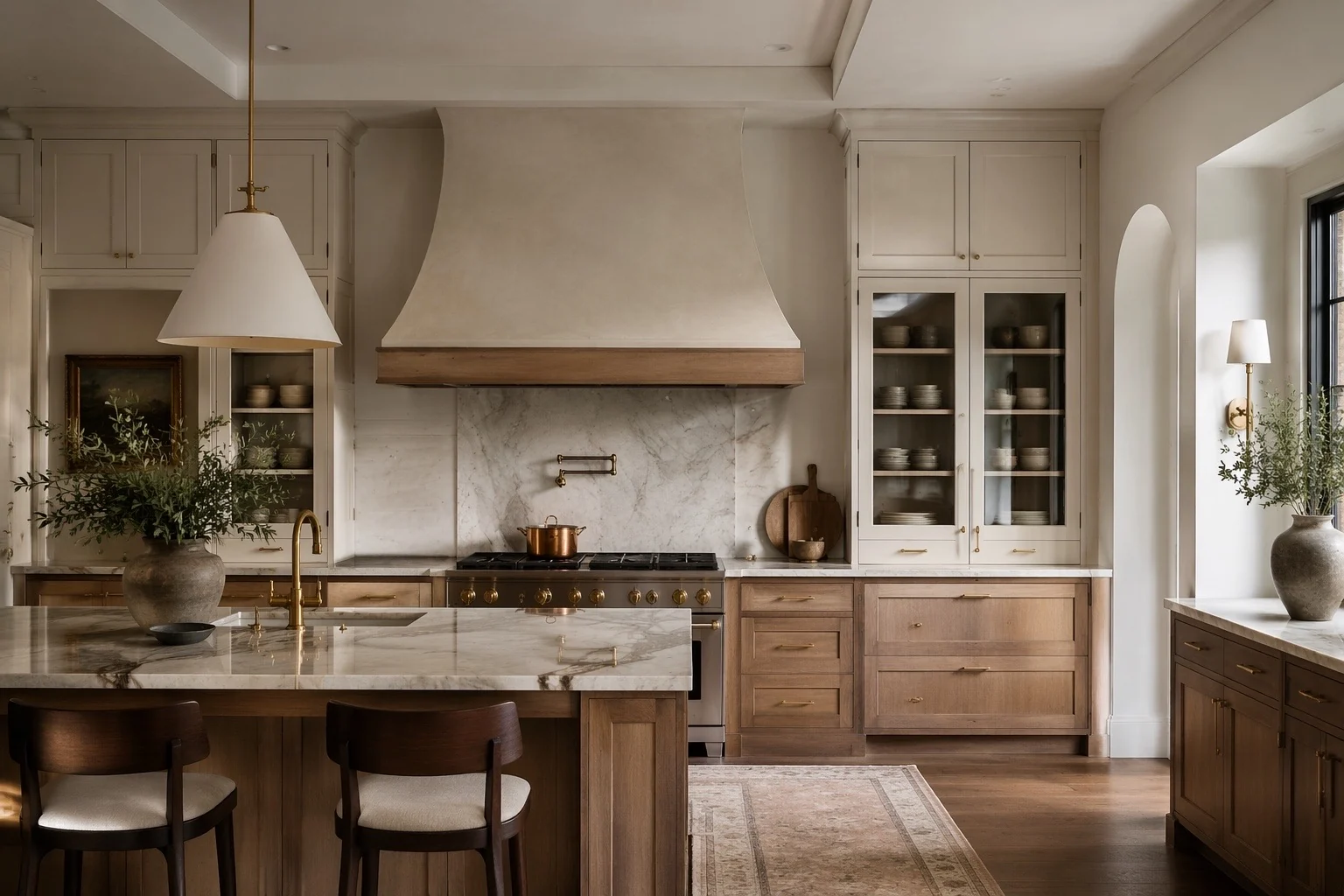
Vent Hood Materials
Wood, painted, stained, TFL, metal, metallic accents, carved details, ventilation inserts, liner planning, and range-wall hierarchy.
Explore this page →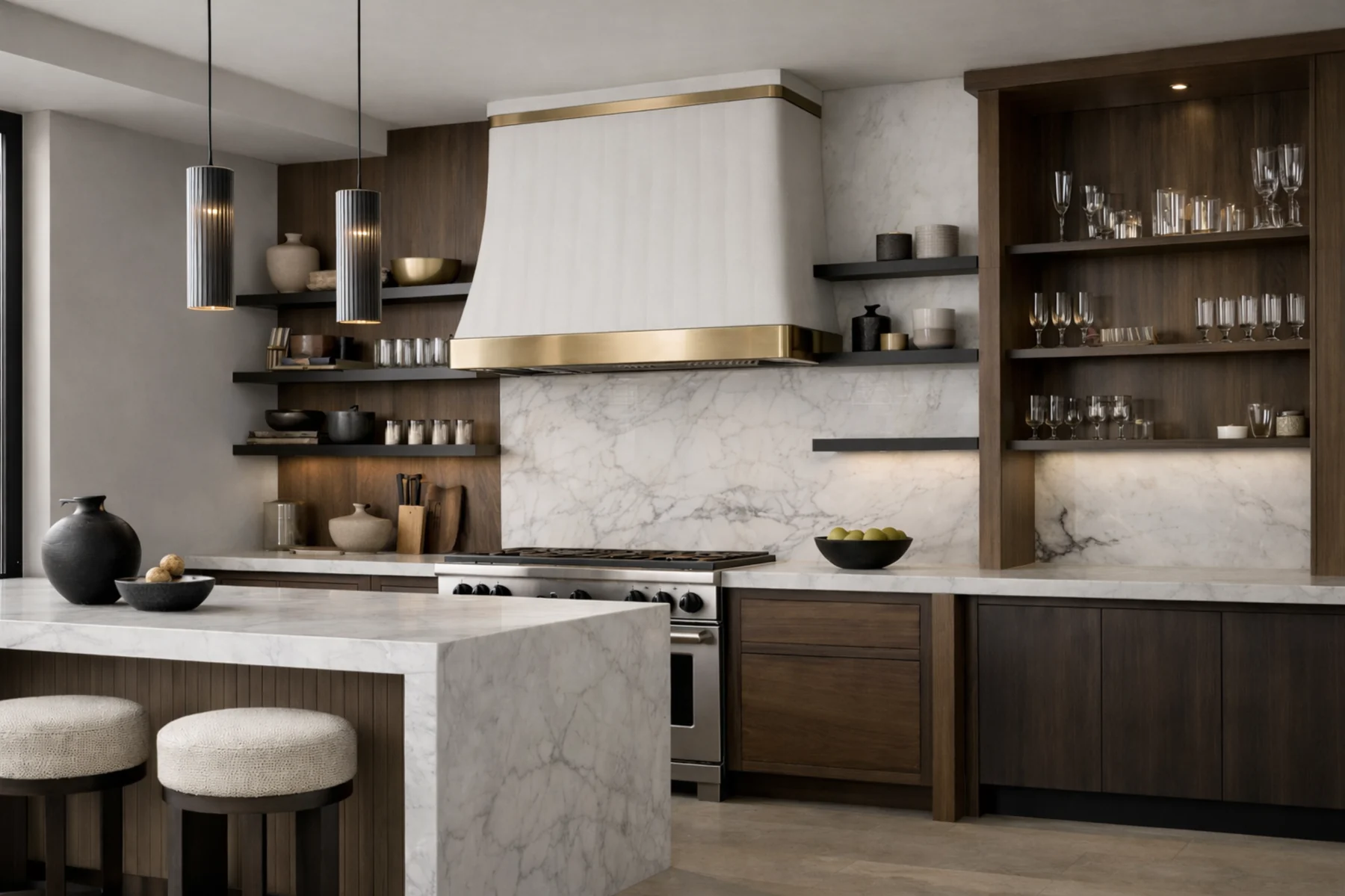
Specialty materials can turn cabinetry into architecture. The key is knowing where a custom material improves function, where it adds visual hierarchy, where it adds maintenance, and where restraint creates the better result.
A custom hood, shelf material, metal accent, glass door, leather-look panel, carved component, or architectural surface should not be selected simply because it is different. It should clarify the room. It should tell the eye where to look, support the way the room is used, and fit the client’s care expectations.
Specialty materials create focal points, warmth, contrast, texture, and furniture-level detail that standard cabinetry alone may not deliver.
Cost moves with custom sizing, material type, finish complexity, special-order lead times, labor, support hardware, liner or insert requirements, and installation coordination.
The biggest misses are selecting a beautiful feature without confirming ventilation, blocking, load capacity, clearance, maintenance, heat exposure, or how it meets adjacent cabinetry.
Different materials age differently. Wood, painted finishes, metal, glass, TFL, textured panels, and leather-look surfaces all need care expectations before commitment.
These pages are meant to help clients understand what is decorative, what is structural, what affects maintenance, what affects ventilation or support, and what should be decided before drawings and pricing become final.
Wood, painted, stained, TFL, metal, metallic accents, carved details, ventilation inserts, liner planning, and range-wall hierarchy.
Explore this page →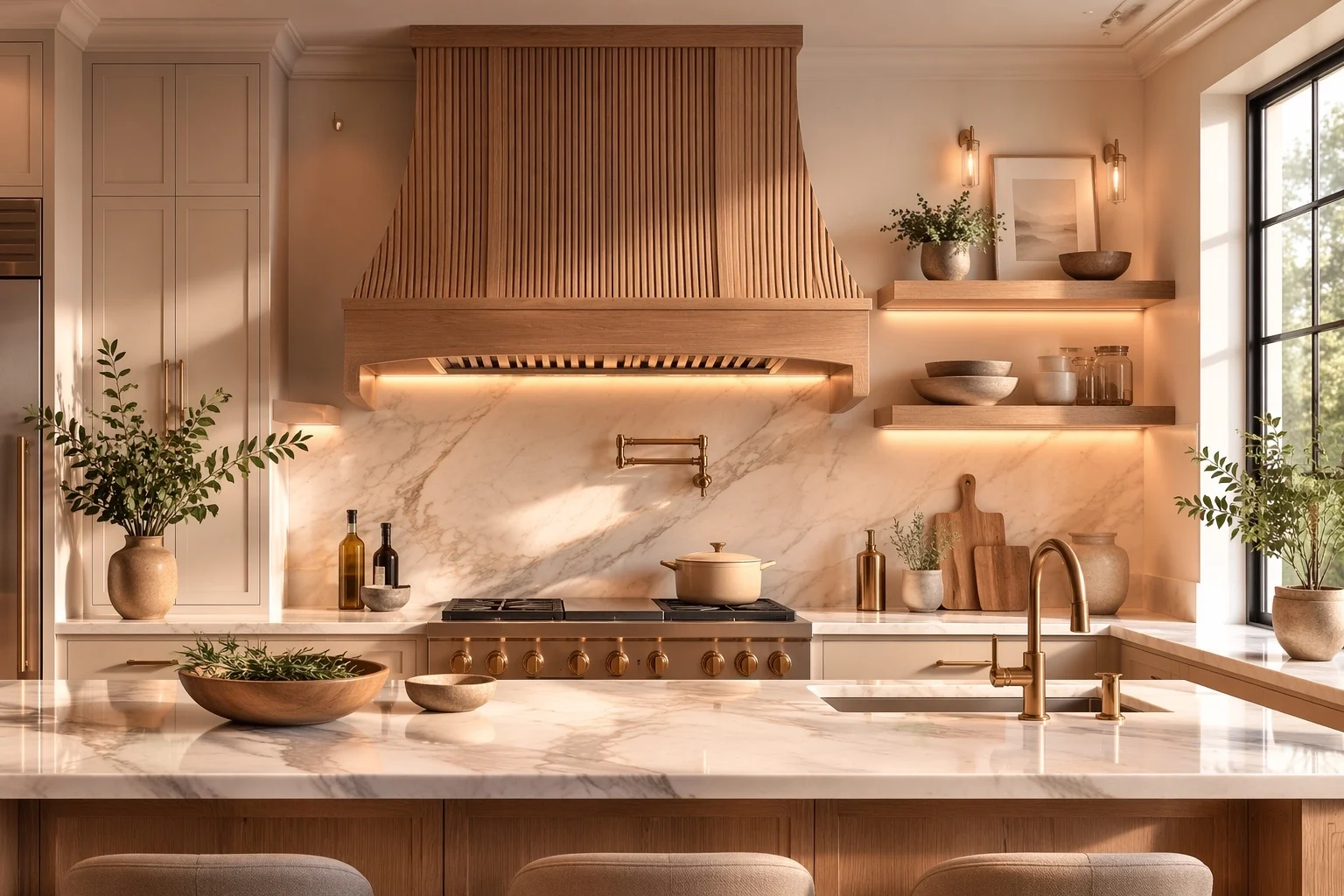
Wood, floating, bracketed, glass, metal-frame glass, accent surfaces, load limits, cleaning, display discipline, and support planning.
Explore this page →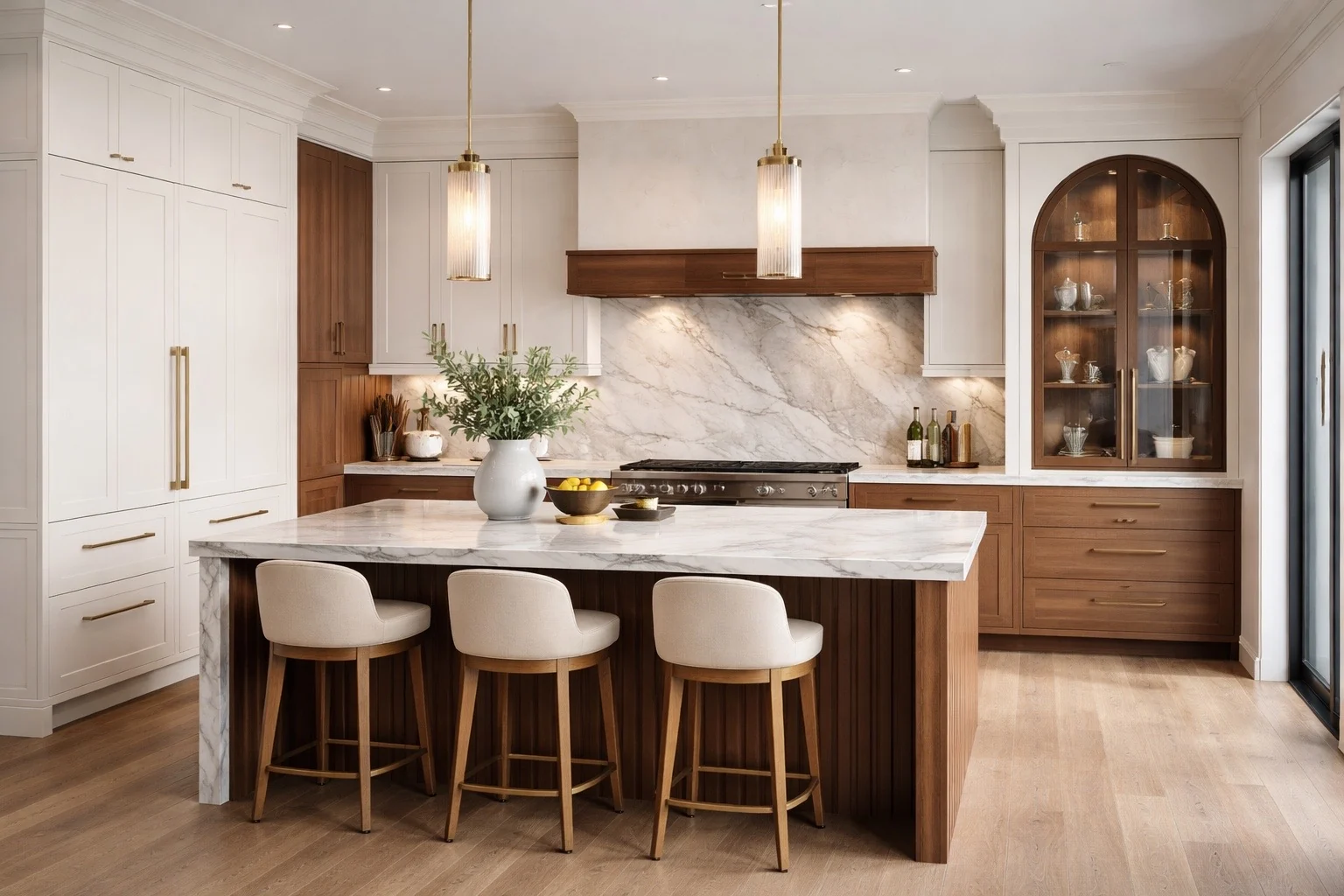
Paint with wood, glass with metal, leather-look surfaces, architectural panels, cabinet accents, bars, offices, vanities, and controlled contrast.
Explore this page →The best custom rooms usually have one clear lead feature, one or two supporting materials, and a quiet background. A hood wall can lead. An island can lead. A glass-and-metal cabinet wall can lead. Open shelves can support. Decorative panels can create texture. The problem begins when every element tries to be the focal point.
Specialty material decisions should also respect use. A metal hood has a different cleaning profile than a cabinet-finished wood hood. A floating shelf used for display has a different responsibility than a shelf holding plates every day. A leather-look panel in a bar reads differently than the same texture across an entire kitchen wall.
Understanding the family helps compare value, care, and design impact without letting inspiration images control the entire decision.
Painted or stained wood can integrate hoods, shelves, panels, and decorative parts into the cabinetry package. It gives warmth and continuity, but it still needs care around heat, moisture, grease, and seasonal movement.
Steel, stainless, brass-tone, copper-tone, dark metal, rivets, straps, banding, and metal-coated accents can add strength and contrast. Fingerprints, patina, scratching, and cleaning method should be understood.
Glass shelves, aluminum-frame doors, backpainted glass, ribbed glass, and translucent inserts lighten a cabinet elevation. They require precision, reveal discipline, and honest expectations around visibility and fingerprints.
Laminate and thermally fused laminate can provide durable color, texture, and wood-look surfaces. They are useful where consistent pattern, maintenance, and repeatability matter more than natural wood variation.
Recycled leather veneer, dimensional panels, specialty wall surfacing, and decorative overlays can add tactile interest to bars, offices, vanities, closet zones, and accent panels. They should be used with restraint.
Corbels, onlays, appliques, columns, mantels, carved range-hood parts, posts, and mouldings can shift a room toward furniture-grade or traditional architecture. Scale and style discipline matter more than quantity.
A custom material can be worth the investment when it gives the room hierarchy, solves a use problem, or creates a level of refinement that cabinetry alone cannot. It becomes weak value when it is expensive, hard to maintain, difficult to install, and visually disconnected from the rest of the project.
The most successful specialty material decisions are usually simple to explain: this hood anchors the range wall, this shelf warms the stone, this glass reduces heaviness, this metal line ties into the hardware, this panel makes the bar feel intentional.
The material may be beautiful, but the room still fails if the hood does not ventilate correctly, the shelf cannot support the intended load, the glass exposes clutter, or the accent material fights every other finish.
A room with a statement hood, statement island, statement tile, statement lights, and statement shelves can feel expensive but unresolved.
Ventilation, blocking, lighting, outlet locations, cabinet widths, insert sizes, and fasteners should not be solved after the material is selected.
Grease, dust, hard water, fingerprints, and abrasion affect materials differently. Daily-use zones need a stronger maintenance conversation.
A shelf that is too thin, a hood that is too small, a panel that is too busy, or metal that is too heavy can distort the room’s proportions.
Materials should connect. Random metal, wood, stone, glass, and painted finishes make the room feel assembled rather than designed.
Specialty components often need samples, approvals, finish confirmation, shop coordination, or vendor lead time before installation can proceed.
The same material can be excellent in one room and distracting in another. A stained shelf might warm a white kitchen, but feel unnecessary in a room that already has wood floors, wood beams, and a wood island. A metal hood might anchor a simple range wall, but compete with bold stone and oversized lighting.
Consider stained wood, veneer, wood shelves, wood hood details, leather-look accents, or warm textured panels. Repeat the warmth in at least one other location.
Consider open shelving, glass doors, aluminum frames, mirror, lighter metals, or fewer upper cabinets. Lightness is as much about negative space as material.
Consider a custom hood, island back, bar feature, textured panel, or glass display zone. Give the focal point room to lead by keeping adjacent finishes quieter.
Consider smoother surfaces, durable laminates, controlled metal finishes, cleanable glass, or simpler profiles that do not trap dust and residue.
Consider aluminum frame doors, backpainted glass, matte fronts, slab panels, metal shelf frames, restrained reveals, and fewer decorative mouldings.
Consider carved details, paneled hoods, custom mouldings, furniture-style end panels, inset-compatible display zones, or carefully finished open interiors.
Inspiration photos usually show a room cleaned, styled, and professionally lit. Real kitchens and baths deal with grease, steam, dust, sunlight, fingerprints, children, pets, storage pressure, and daily routines. A material that looks extraordinary in a photo still needs to fit the client’s actual maintenance tolerance.
This does not mean specialty materials should be avoided. It means they should be placed where their beauty is visible and their care burden is appropriate. A textured island back may be easier to live with than textured panels beside a cooking surface. Glass in a bar may be easier to manage than glass on every upper cabinet.
A beautiful surface can become a problem if it does not align, clean, support, vent, or terminate correctly.
When the hood, island, shelves, hardware, stone, and glass all compete, the room feels less expensive even if each individual material is high quality.
Shelves, panels, metal accents, and hood shells need correct blocking, attachment, liners, backing, or framing. Visible beauty depends on hidden structure.
Not every decorative surface belongs near heat, steam, water, heavy touch, or grease. Exposure should drive material selection.
Edges and returns reveal whether a detail is designed or improvised. Plan the face, side, underside, seam, transition, and termination.
Materials should be reviewed together. Wood, metal, glass, stone, hardware, flooring, paint, and lighting change each other visually.
A client who wants low-maintenance living may not enjoy heavy open shelving, high-gloss dark surfaces, or textured panels in grease-prone zones.
A custom detail should make the project feel more resolved. Start with the design role, confirm the technical requirements, then select the material that earns its place.