Solid wood shelves
Wood shelves add warmth and a furniture quality. They work well near painted cabinetry, stone, tile, and metal. Expect wood movement, grain variation, and a need for careful cleaning near water or grease.
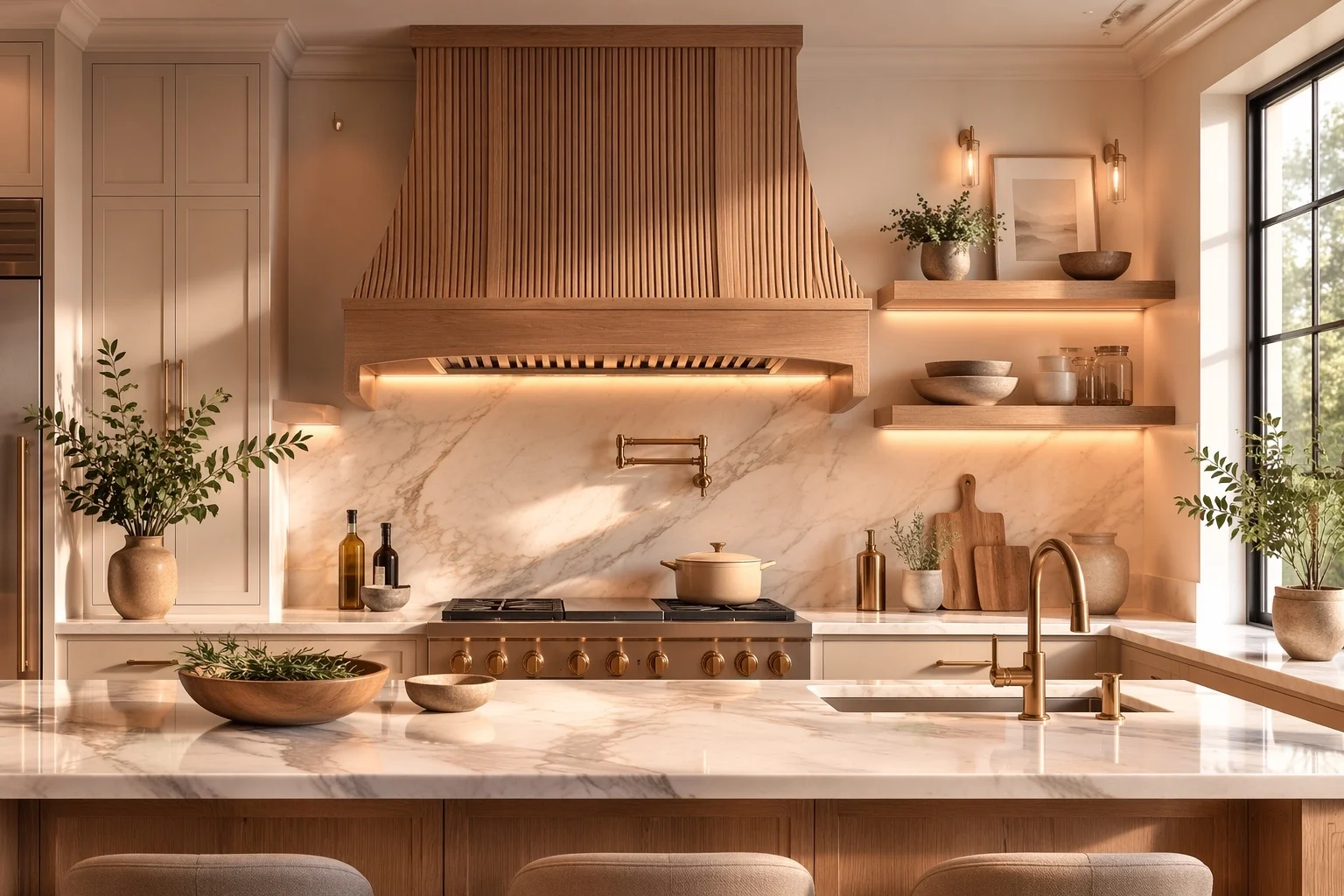
Shelving can add warmth, air, display, and rhythm to a room, but the material, support method, span, depth, load, cleaning profile, and styling discipline all matter. A shelf that photographs well but cannot hold the intended use is not a successful shelf.
A shelf used for a few styled objects can be lighter, cleaner, and more delicate. A shelf holding dishes, glassware, cookbooks, bottles, or pantry items needs a stronger support conversation. The material choice is only one part of the decision; the wall structure, support hardware, span, shelf thickness, depth, and installation matter just as much.
Display moments, coffee zones, bars, range-wall relief, dish access in moderation, bathrooms, laundry rooms, offices, and places where closed cabinets would feel too heavy.
Shelves can soften a cabinet elevation, introduce wood or metal, create a curated display zone, and keep the room from feeling overbuilt.
Weight limits, wall blocking, long spans, grease, dust, clutter visibility, fragile material choices, insufficient depth, and shelves used for storage they were never meant to carry.
Open shelving is a design feature with storage consequences. It should be planned with the same discipline as cabinetry.
The best shelf material depends on where it sits, what it carries, how it is supported, and how visible the shelf will be in the overall room.
Wood shelves add warmth and a furniture quality. They work well near painted cabinetry, stone, tile, and metal. Expect wood movement, grain variation, and a need for careful cleaning near water or grease.
Painted or stained shelves finished with the cabinetry can feel built-in and controlled. They are excellent when the shelf should relate directly to surrounding cabinets or trim.
Floating shelves create the cleanest look, but they are the most dependent on concealed support, wall blocking, fasteners, span, and installation quality.
Visible brackets can be decorative or architectural. They usually make support more honest visually and can add metal, wood, or traditional detail to the elevation.
Glass shelves reduce visual weight and work well in bars, display cabinets, baths, and refined open storage. They show dust and fingerprints and need polished, safe edge detailing.
Aluminum frames give glass more structure and finish presence. They can coordinate with cabinet doors, metal accents, hardware, and modern interior details.
Metal shelves bring an industrial or tailored accent. They can be excellent in bars and utility spaces, but finish selection affects fingerprints, scratching, warmth, and cleaning.
Specialty veneers can create a rich tactile shelf or panel moment in bars, offices, closets, and display zones. They should be used where touch and visual texture are intentional.
Stone, quartz, porcelain, or solid-surface shelves can connect to countertops and backsplash. They need proper structural support because weight and installation tolerance are more demanding.
Shelf load depends on the material, shelf depth, shelf length, thickness, support spacing, bracket type, fasteners, wall framing, blocking, substrate, installation, and whether the load is spread evenly or concentrated in one area. A short display shelf and a long dish shelf are different products even if they look similar.
Some standard cabinet shelf programs publish plain floating shelf ratings around 15 pounds per square foot. That is useful as a planning reference, not a universal guarantee. Final capacity should always be confirmed for the actual shelf, wall condition, support hardware, and intended use.
A shelf that requires constant styling may not be a good fit for every client. A shelf that supports a daily habit can become one of the most useful design moves in the room.
Shelves can lighten the range wall and frame the hood, but they collect cooking residue more easily and should not crowd the hood, backsplash, or lighting.
Shelves are strong for mugs, glassware, coffee accessories, bottles, and styled objects when weight and dust expectations are realistic.
Glass, metal-frame glass, wood, and accent shelves can create a more hospitality-level display moment without adding heavy closed cabinetry.
Shelves can hold towels and display, but moisture, cosmetics, cleaners, and wall support must be considered carefully.
Open shelving can be practical for baskets and supplies when the shelf is easy to clean and sized for real items instead of styled photos.
Specialty shelves can warm an office, display collections, break up tall cabinet runs, and add a more finished custom furniture feeling.
Shelves should not be used simply because a wall feels empty. They are strongest when they keep the room from feeling too cabinet-heavy, create a natural display moment, support a daily routine, or introduce a material that the room needs.
A shelf is weak value when it replaces useful closed storage without a clear reason, requires constant styling, cannot support the intended load, or becomes a dust and grease collector in the wrong location.
Shelves expose what they hold. That is the point and the risk. The client should know whether the shelf will show dust, fingerprints, dishes, grease, hard-water residue, or clutter before the design is finalized.
Dust with a soft cloth, wipe spills quickly, dry moisture, avoid harsh cleaners, and use care near steam, grease, and direct sun.
Glass can look light and refined, but fingerprints, dust, smudges, and edge safety are part of the maintenance profile.
Use nonabrasive cleaning methods and understand whether the finish is meant to stay crisp, patina, or show hand contact.
Weight, edge detail, chipping risk, bracket strength, and cleaning products all matter more than they do on light display shelving.
Use the approved cleaning method for the surface. Avoid assuming a leather-look, laminate, or textured material behaves like wood.
Leave breathing room. A shelf packed like a cabinet usually looks cluttered and can exceed the support system’s intended use.
Open shelving should be designed around real objects and real maintenance. The shelf needs to be deep enough, strong enough, cleanable enough, and visually calm enough for the client’s life.
The best open shelves are placed where visibility is useful and maintenance is realistic. They are not ideal for every client or every wall.
Use open shelves for dishes, glassware, artwork, cookbooks, plants, and objects that support the room’s palette. The contents should look intentional when seen every day.
Use shelves to break up long cabinet runs, lighten a range wall, or keep a small kitchen from feeling too top-heavy.
Use shelves to repeat wood from an island, hood, beam, flooring, table, vanity, or furniture piece so the room feels connected.
Stacks of heavy dishes, appliances, cookware, or bottles require stronger support and may defeat the lightness that made shelves attractive.
Open shelves reveal packaging, mismatched items, cords, and everyday clutter. Closed cabinets are better for items that are not visually organized.
Shelves close to cooking require more frequent cleaning. Material, finish, and contents should be selected with grease and heat exposure in mind.
A wall cabinet hides mismatched items and provides more enclosed capacity. An open shelf gives visual lightness but asks for a more edited lifestyle. That tradeoff should be discussed honestly before replacing upper cabinets with shelves.
In many rooms, the strongest solution is a combination: closed storage for everyday utility, drawers for heavy items, and a small shelf zone for warmth and display. This gives the client function without making every object visible.
Unlike a cabinet interior, an open shelf exposes its front edge, underside, side returns, brackets, and relationship to the wall.
Thicker shelves feel more architectural and can hide support hardware. Thinner shelves feel lighter but may need visible brackets or shorter spans.
Square, eased, rounded, mitered, banded, metal-capped, or stone-polished edges change how refined the shelf feels.
The underside is often visible from seated or approach angles. It should be finished intentionally, especially when shelves are above a peninsula or bar.
Returns against tall panels, walls, windows, or hood sides need clean alignment. A shelf that dies awkwardly into a corner can look unfinished.
Tile, slab, plaster, painted drywall, shiplap, mirror, or textured panels behind shelves change the entire composition.
LED integration can make shelves feel premium, but glare, wiring, access, and dimming need to be resolved before installation.
The right shelf material should look intentional, support the intended load, clean reasonably, and fit the way the client actually lives.