Painted cabinetry with wood
A classic combination that adds warmth and prevents painted rooms from feeling flat. Common locations include islands, hoods, open shelves, interiors, vanities, and bar zones.
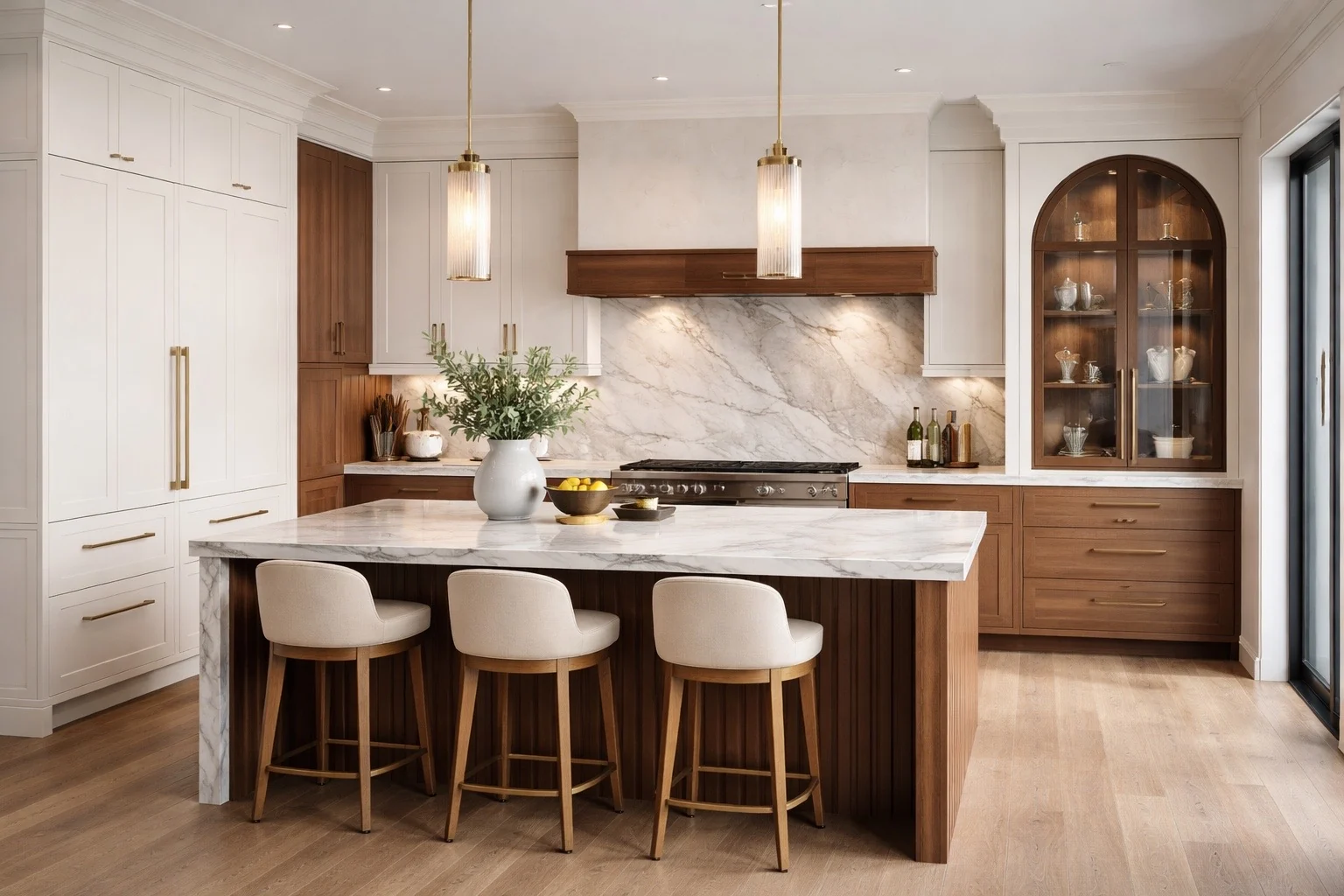
Painted cabinetry with wood, metal with glass, leather-look panels, dimensional surfaces, and architectural details can make a room feel custom. The result works when every material has a job and no finish is fighting for attention.
A layered room can still feel calm. The key is hierarchy: decide which material leads, which material supports, and which material is only an accent. Without that discipline, a project can become a collection of attractive samples that do not belong together.
Islands, range walls, bars, offices, vanities, entertainment walls, closets, display cabinets, glass-door moments, and rooms that need texture or warmth.
Mixed materials prevent flatness. They can add depth, contrast, lightness, warmth, and a more custom furniture-level feeling.
Too many finishes, random metal choices, untested samples, mismatched undertones, different maintenance profiles, and accent materials used in quantities that overwhelm the room.
One strong material story is better than six unrelated upgrades. The goal is a room that feels edited.
In a well-edited room, the lead material sets the identity. The supporting material adds depth. The accent material adds precision. This is why wood can warm painted cabinetry, metal can tie into hardware and lighting, glass can reduce visual weight, and textured panels can create a quiet feature without becoming the entire room.
The material palette should be judged as a full composition: cabinetry, countertops, backsplash, hardware, plumbing, lighting, flooring, wall color, appliances, and the rooms that connect to it.
The right combination depends on whether the room needs warmth, lightness, contrast, texture, durability, or architectural weight.
A classic combination that adds warmth and prevents painted rooms from feeling flat. Common locations include islands, hoods, open shelves, interiors, vanities, and bar zones.
Metal straps, frames, rivets, shelves, cabinet facings, toe details, and hood accents can sharpen wood cabinetry and tie into hardware or lighting.
Aluminum-frame cabinet doors and glass shelves can modernize a cabinet wall, reduce visual weight, and create a refined display condition without fully opening the storage.
Glass can be glossy, matte, ribbed, translucent, backpainted, or patterned. It works best when the contents and lighting are controlled.
Recycled leather veneer and specialty veneers can bring tactile richness to bars, offices, closet doors, display backs, panels, shelves, and accent zones.
Textured panels, carved components, screens, and wall surfaces can add shadow and movement. They work best when the rest of the room is restrained.
Durable laminate and TFL materials can provide consistent texture, color, or wood-look surfaces for hoods, panels, doors, closets, and utility spaces.
Countertops, backsplashes, stone shelves, slab surrounds, and stone returns can become the strongest visual mass. Cabinet materials should support the stone rather than compete with it.
Corbels, posts, onlays, appliques, and carved hood details can add heritage or furniture-level character when used in the right scale and quantity.
A mixed material strategy is not about spreading every material everywhere. It is about choosing the right moment.
The island can hold a contrasting wood, paint color, metal detail, furniture leg, decorative panel, or thicker countertop edge while the perimeter stays quieter.
The hood, backsplash, shelves, flanking cabinets, and hardware create a natural place for controlled contrast.
Bars can carry glass, metal, leather-look panels, backpainted glass, lighting, open shelves, and richer materials because they are typically smaller and more atmospheric.
A vanity can introduce wood warmth, metal legs, glass detail, stone, or specialty panels without requiring the whole bathroom to become visually busy.
Wood, leather-look panels, glass doors, metal frames, and lighting can create a more furnished, tailored feel than simple painted storage.
Aluminum-frame doors, glass, mirrors, leather-look panels, lighting, and specialty drawer faces can elevate a closet while preserving function.
The strongest mixed-material rooms feel intentional from across the room and still make sense up close. The wood tone has a reason. The metal finish connects. The glass lightens a heavy wall. The accent panel lives where it can be appreciated. The stone does not fight the cabinet finish.
Weak value happens when costly materials are spread too thin, used in the wrong place, or selected before the client understands how each finish will age and be cleaned.
The client should not assume every material can be cleaned the same way. Wood, paint, metal, glass, textured panels, recycled leather veneer, laminate, and stone each have their own care profile.
Expect natural movement, finish aging, potential hairline joint movement, and the need for soft-cloth care rather than harsh cleaners.
Metal may show fingerprints, water spots, patina, scratches, or finish variation. Cleaning products should match the specific metal finish.
Glass keeps rooms light, but it reveals fingerprints, dust, shelf contents, and alignment. Lighting can make both beauty and clutter more visible.
These surfaces can be highly distinctive, but use approved cleaners and understand whether they are best for vertical, horizontal, low-contact, or display applications.
Texture adds shadow and dimension, but profiles can collect dust. Use them where the maintenance burden fits the room.
These materials can be practical and consistent, but exposed edges, heat, cleaning products, and panel seams still deserve attention.
A material can be beautiful and still be wrong for the room. The whole palette needs to be edited together before individual selections are approved.
The strongest palettes usually start with a dominant cabinet finish, then add one warmth layer, one metal language, and one controlled texture or glass moment.
A painted perimeter with stained shelves, island, hood, or display cabinet adds warmth without abandoning a clean cabinet palette.
Woodgrain cabinetry with metal frames, hood accents, shelf brackets, or hardware can feel tailored and architectural when the metal tone is repeated.
Glass display doors and interior lighting can elevate a simple painted kitchen, bar, hutch, or bath without adding another heavy material.
When stone or porcelain carries dramatic movement, cabinetry and specialty surfaces should usually become calmer and more supportive.
Reeded, fluted, tambour, or dimensional panels work best next to simpler slab or shaker surfaces that give the texture room to breathe.
A dark hood, bar cabinet, metal frame, or island can anchor a light room when the accent is repeated and not isolated.
A metal sample can look perfect alone and wrong next to the hardware. A wood veneer can look warm in the showroom and too red under project lighting. A glass texture can feel subtle until it is backlit. A laminate can look quiet until it is placed beside natural stone. Samples should be reviewed together, in the actual palette, under lighting similar to the final room.
This is especially important when mixing sheen. Gloss, satin, matte, brushed, polished, mirrored, and textured finishes all reflect light differently. Good mixed-material design controls reflection as carefully as color.
Restraint is not a lack of design. It is often what makes the custom details feel more expensive.
Let the slab lead. Use quiet cabinet finishes, simpler glass, and restrained metal so the room does not become visually loud.
Detailed doors, ornate mouldings, and strong profiles usually need simpler specialty surfaces to keep the room balanced.
Small kitchens and baths can handle contrast, but too many materials make them feel fragmented. Use fewer, cleaner gestures.
Highly textured, dark matte, glass-heavy, or patina-prone surfaces may not fit clients who want the lowest-maintenance path.
Reflective and textured materials can look very different under recessed, pendant, undercabinet, and natural light.
Put investment where it is most visible: hood, island, bar, display wall, vanity, or entertainment feature. Keep hidden areas simpler.
Mixed materials should add depth, not confusion. The right combination makes the project feel more resolved from the first impression through daily use.