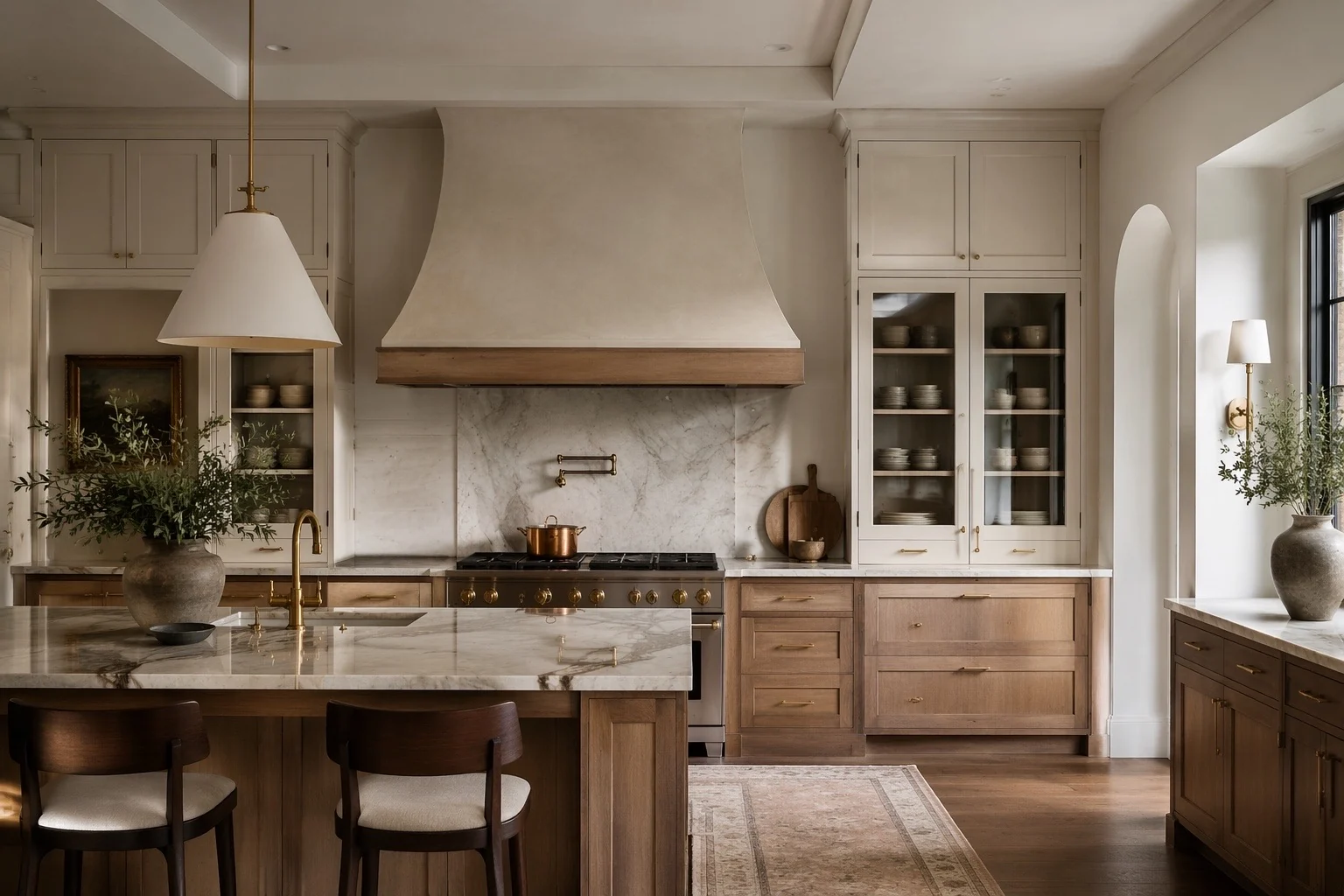
Custom vent hood over range with cabinetry and stone backsplash
Specialty Materials

A vent hood should be designed as both a focal point and a working ventilation element.

The hood is often the strongest architectural move in a kitchen. It can match cabinetry, introduce metal, carry carved detail, or disappear into a clean elevation, but it still has to handle heat, grease, liner fit, service access, and the realities of cooking.

At a glance

The best hood plan balances the visual shell with the ventilation system inside it.

A hood is not just a decorative cover. The finished hood body, liner, blower, filters, lighting, controls, duct route, clearance above the cooking surface, cabinet integration, and service access all need to work together. The most expensive hood in the room is still a poor decision if it looks right but performs poorly.

Best for

Range walls, cooking focal points, kitchens that need architectural weight, and projects where the hood should connect cabinetry, backsplash, countertop, and hardware.

Strongest quality

A well-scaled hood can make the entire kitchen feel more custom, especially when the material and proportions support the room rather than overpowering it.

Watch for

Undersized capture area, weak ventilation, unplanned ducting, poor liner access, combustible material clearances, bulky proportions, and finishes that are hard to keep clean near grease and heat.

Black Label read

The hood should be designed early because it affects cabinetry layout, range-wall symmetry, backsplash stops, crown details, lighting, and mechanical planning.

Material families

Vent hood materials create different design signals and different care expectations.

No hood material is universally best. The right answer depends on whether the room needs warmth, contrast, simplicity, metal strength, traditional detail, or a low-maintenance visual surface.

Cabinet-matched wood hood

A wood hood finished to match the cabinetry creates continuity and can make the range wall feel built-in. It is strong for traditional, transitional, and tailored kitchens, but it needs thoughtful protection from heat, steam, and grease.

Painted hood

A painted hood can either disappear into the cabinetry or become a controlled color feature. Paint reads crisp and architectural, but grease, heat, and repeated cleaning can make care discipline more important.

Stained wood hood

A stained hood adds warmth and natural character. It works especially well when the kitchen needs a wood focal point, but grain, stain absorption, sun exposure, and finish aging should be expected.

TFL or laminate hood

TFL and laminate-style hood surfaces can provide a consistent wood-look or textured surface with a practical maintenance profile. They are strongest when durability, consistency, and clean repeatability matter.

Metal hood

Steel, stainless, dark metal, brass-tone, copper-tone, rivets, and banding can make the hood a deliberate statement. Metal is visually strong, but fingerprints, finish variation, patina, scratching, and cleaning method should be discussed.

Wood hood with metallic accents

Metal straps, battens, bands, rivets, and metal-coated trim can give a wood hood depth without building the entire hood from metal. This is useful when the room needs a bridge between cabinet finish and hardware finish.

Ventilation planning

The decorative shell should never be designed separately from the liner and duct plan.

The liner or insert is the working portion of the hood. It captures cooking byproducts, filters grease, houses lighting and controls, and connects to the blower and ducting strategy. The hood body must be sized and shaped so the liner fits correctly and can be serviced without damaging finished cabinetry.

The right ventilation approach depends on the cooking appliance, cooking habits, ceiling height, cabinet layout, hood width, duct route, exterior wall or roof path, make-up air requirements, and local code. Recirculating or ductless kits can be useful in some constraints, but venting cooking exhaust outside is usually the stronger performance posture when the project allows it.

Ventilation decisions to confirm early

  • Hood width and capture area relative to the range or cooktop.
  • Liner or insert size, filter type, lighting, controls, and service access.
  • Blower location, sound expectations, and capacity appropriate to the cooking appliance.
  • Duct path, duct size, turns, roof or wall termination, and exterior vent location.
  • Cabinet clearances, crown details, soffit conditions, ceiling height, and backsplash stopping points.
  • Whether local code or appliance specifications require make-up air or other mechanical coordination.
Design role

The hood can lead, support, or disappear.

A hood does not need to be loud to be custom. Some kitchens need a dramatic focal point. Others need a quiet hood so stone, cabinetry, view, or lighting can lead.

Architectural focal point

Use a stronger form, deeper projection, wood detail, metal body, arched shape, mantle profile, or accent band when the range wall should anchor the room.

Cabinet-integrated hood

Use a cabinet-matched or simplified hood when the range wall needs refinement without visual interruption. This works well with calmer backsplashes and tailored cabinetry.

Material bridge

Use wood plus metal, painted body plus stained trim, or a subtle accent strap when the hood needs to connect cabinetry, hardware, lighting, and stone.

What usually moves hood cost

  • Custom width, height, depth, shape, curved body, mantle profile, or island application.
  • Wood species, painted finish, stain, TFL/laminate surface, metal body, or metallic accents.
  • Carved details, corbels, columns, appliques, mouldings, straps, banding, rivets, or specialty finishes.
  • Ventilation liner, blower, filters, lights, controls, ducting, roof or wall cap, and electrical work.
  • Installation labor, backsplash coordination, crown transition, adjacent cabinet modifications, and field fitting.
Value posture

A premium hood is worth it when it earns both its visual and functional role.

The hood is one of the few kitchen elements that can visibly change the entire room from standard cabinetry to custom architecture. That value is strongest when the hood improves the elevation, supports the cooking appliance, coordinates with the material palette, and is sized correctly.

A costly hood becomes weak value when it is selected from a photo without confirming the insert, cleaning profile, ducting, appliance requirements, or how the form affects nearby cabinets and backsplash seams.

Material behavior

Every hood material has a different maintenance and aging profile.

Cooking zones are demanding. Heat, moisture, grease, steam, cleaning products, and repeated hand contact all matter.

Wood and painted finishes

Use soft cloths, dry moisture quickly, avoid harsh cleaners, and keep heat and steam exposure controlled. Expect natural wood and paint to respond to humidity and seasonal movement.

Metal finishes

Metal hoods can be highly durable, but finish care matters. Fingerprints, water spots, grease, patina, and abrasive pads can change the appearance.

TFL and laminate surfaces

These surfaces can be practical and consistent, but edges, seams, heat exposure, and approved cleaners should be respected.

Carved details

Profiles and carvings add shadow and character, but they also collect dust and grease more easily than flat panels.

Filters and liners

Filters need routine cleaning or replacement according to the ventilation system. Grease should not be allowed to build up inside the hood.

Ductless systems

Ductless systems rely on charcoal or recirculation components and require more maintenance attention than a simple exterior exhaust path.

Common mistakes

Hood mistakes are expensive because they involve cabinetry, electrical, mechanical, and finished surfaces.

The hood should not be treated as a last-minute cabinet accessory. It affects layout, structure, ventilation, backsplash, and the finished look of the entire cooking wall.

Risk points to avoid

  • Choosing a hood shape before confirming the liner and blower requirements.
  • Making the hood too narrow for the cooking appliance or too small for the wall.
  • Forgetting duct route, soffit limitations, roof/wall termination, or make-up air requirements.
  • Using a finish that is too delicate for the client’s cooking and cleaning habits.
  • Letting the hood, tile, lighting, and hardware all compete for attention.
  • Not allowing service access for lighting, filters, controls, or blower components.
Best fit by client priority

The right hood material depends on what the client wants the range wall to do.

A hood can disappear, warm the room, make a metal statement, support a traditional furniture language, or create a cleaner modern focal point. The material should match the purpose.

For a quiet built-in look

Use a painted wood or plaster-style hood that blends into the surrounding cabinetry or wall color. This keeps attention on the full room rather than one feature.

For a furniture-grade focal point

Use stained wood, panels, corbels, posts, mantle details, or a carefully shaped hood profile. This works best when surrounding cabinetry is more restrained.

For a modern statement

Use a cleaner metal hood, simplified box hood, dark accent, TFL exterior, or slab-like surround. Keep ornament minimal and focus on proportion and finish.

For warmth without heaviness

Use a wood hood in a simple silhouette, or pair painted cabinetry with a stained wood hood accent. Repeat the wood tone in shelves, island details, or furniture.

For high-output cooking

Prioritize ventilation design first. The shell should be sized and shaped around a capable liner and exterior ducting strategy, not selected only for appearance.

For easy visual maintenance

Choose simpler shapes, smoother surfaces, accessible filters, and finishes that do not highlight every fingerprint, streak, or grease mark.

Material comparison

Each hood material has a different strength.

Painted wood is the easiest to integrate with cabinetry. Stained wood adds warmth and contrast. Metal adds presence and durability, but finish behavior matters. TFL and laminate-look exteriors can coordinate with modern woodgrain programs. Plaster-style hoods feel architectural, but require field execution and finish protection.

The decision should also account for the backsplash. A dramatic slab backsplash and a dramatic hood can compete. A quiet backsplash can give the hood more room to lead. Tile, stone, metal, and plaster all change how the hood reads.

Details that make a hood feel custom

  • Proportion that relates to the appliance, adjacent cabinets, ceiling height, and backsplash field.
  • A clear top termination: crown, soffit, ceiling, beam, or clean cap detail.
  • Side returns that look intentional from normal viewing angles.
  • Trim, banding, straps, corbels, or panels used with restraint rather than as decoration for its own sake.
  • Lighting, controls, and filter access that do not undermine the finished appearance.
Mistakes to avoid

Most hood problems come from treating the hood as decoration too late in the process.

A hood affects more than the cabinet elevation. It touches appliances, walls, electrical, HVAC, tile, stone, finish, and installation.

Choosing shape before ventilation

The liner and blower need a practical home. Select the decorative shell only after the ventilation requirements are understood.

Ignoring sight lines

The hood is viewed from the kitchen, dining area, living area, and side approach. Returns and seams should be resolved from all normal views.

Overdecorating the range wall

A detailed hood, busy backsplash, decorative sconces, and heavy cabinet details can dilute each other. Let one feature lead.

Forgetting cleaning access

If filters, controls, or liner surfaces are difficult to reach, maintenance becomes frustrating and grease buildup is more likely.

Undersizing the hood visually

A hood that is too narrow or too shallow for the appliance can look weak and may not capture cooking plume effectively.

Forgetting adjacent cabinets

Doors, reveals, crown, fillers, and side panels near the hood should align cleanly so the feature does not feel forced into the run.

Ready to apply this to a real project

Design the hood as the range wall’s architecture, not just a cover for ventilation.

The strongest hood plan connects material, scale, finish, ventilation, cleaning, and cabinet integration before the room becomes expensive to change.