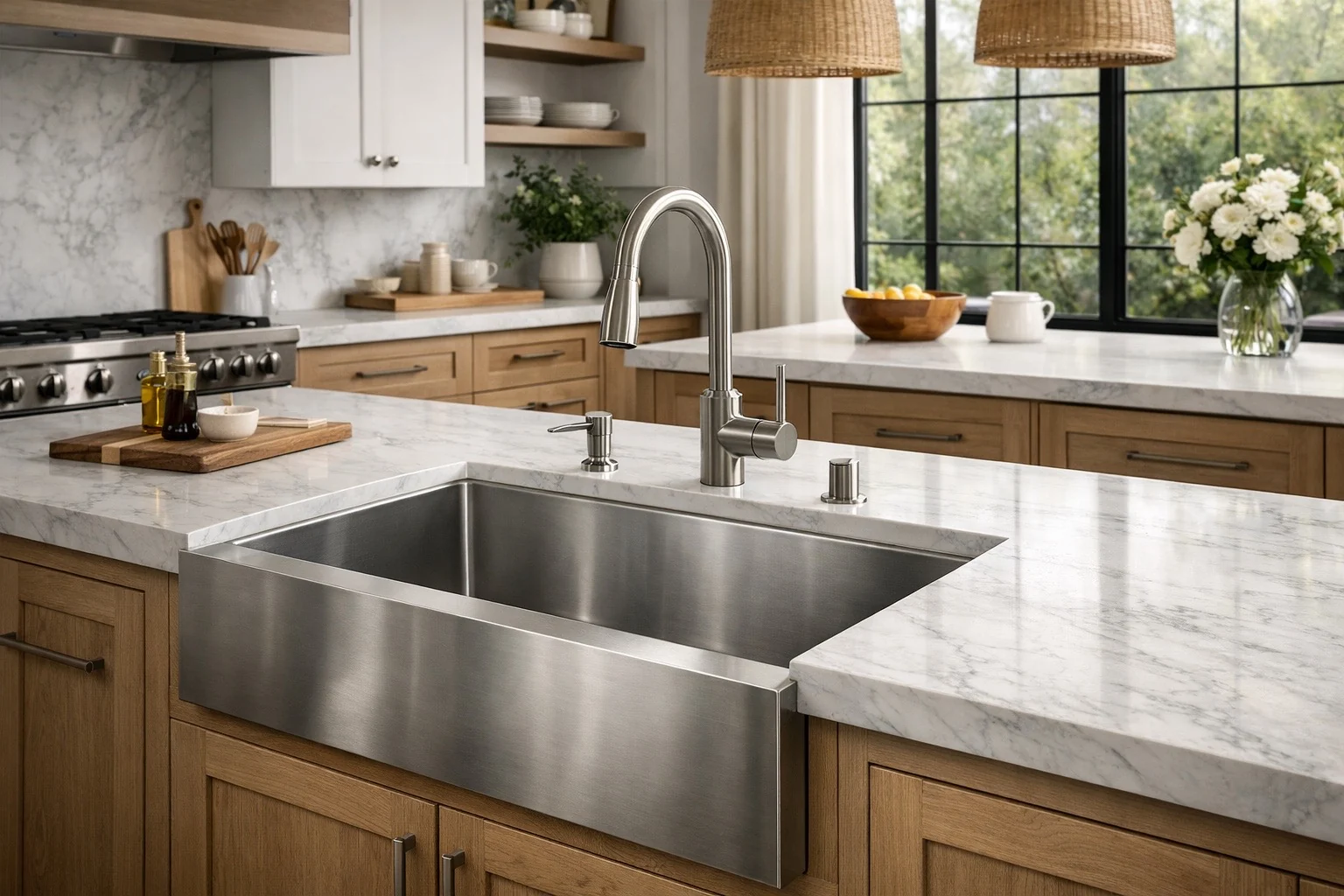
Kitchen Sinks
Installation styles, basin formats, materials, workstation systems, cabinet sizing, fabrication risk, and cleanup-zone planning.
Explore this page →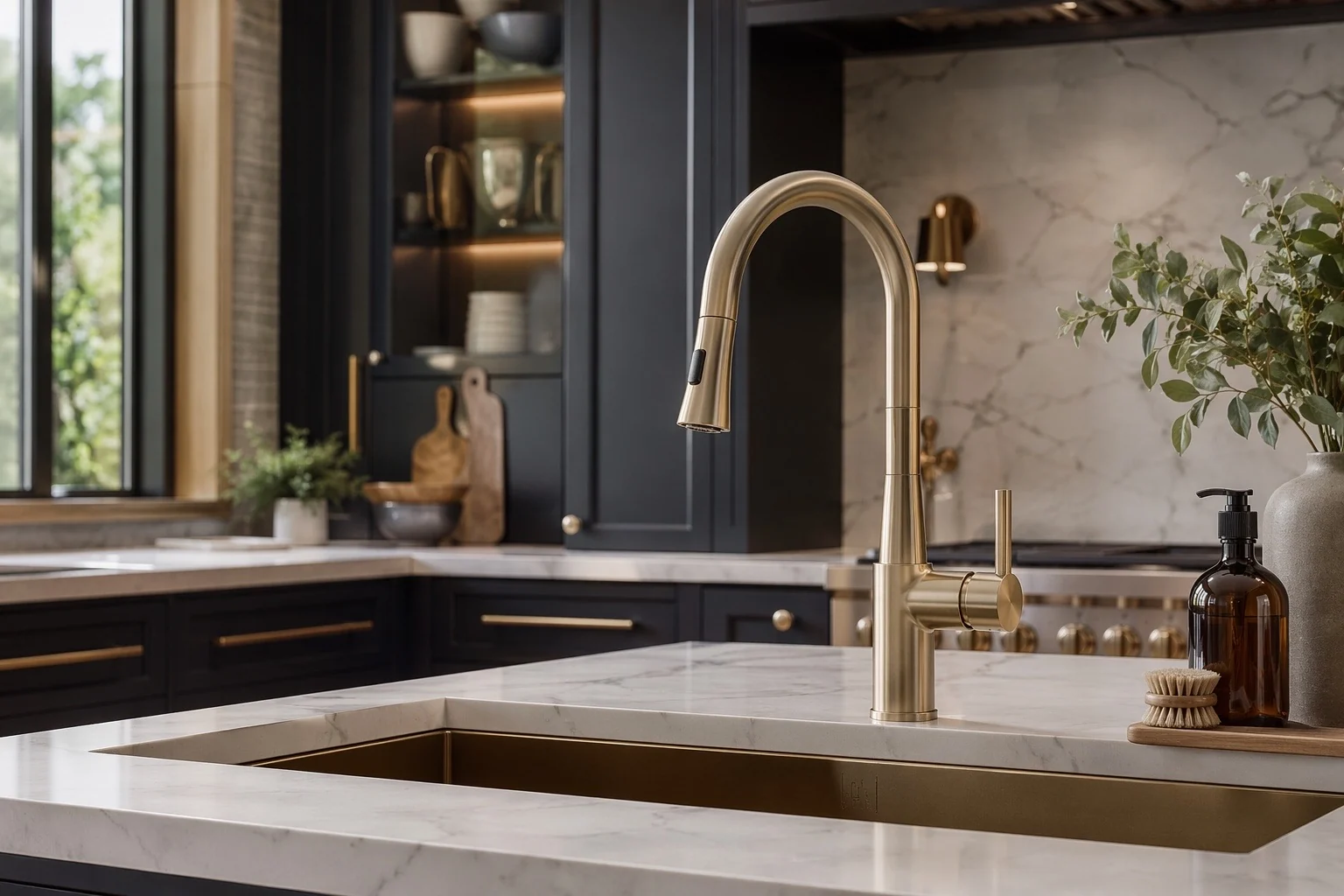
A faucet has to reach the right place, feel right in the hand, control water cleanly, coordinate with the room, and survive constant use. The best choice is equal parts performance, proportion, finish, and serviceability.
The faucet is one of the most touched parts of the kitchen. A good faucet selection supports filling, rinsing, cleaning, food prep, filtered water, and visual balance. A poor selection can splash, fight the sink, block a window, crowd the backsplash, or look disconnected from the rest of the room.
Better water control, smoother daily use, proper reach, comfortable handle operation, durable finish, and a more resolved relationship with the sink and countertop.
Main kitchen sinks, workstation sinks, prep sinks, bar sinks, sculleries, coffee stations, filtered-water zones, and secondary entertaining areas.
Spout reach that misses the drain, spray that splashes, handles that hit the backsplash, overly tall silhouettes, poor docking, and finishes that do not match the maintenance expectation.
The faucet should either quietly support the room or intentionally anchor the sink zone. It should not accidentally become the wrong focal point.
These pages are meant to be read together. Sink size affects faucet reach. Faucet holes affect countertop fabrication. Water filtration affects cabinet storage. Bathroom faucet style affects sink selection, drain choice, mirror clearance, and vanity proportion.
Installation styles, basin formats, materials, workstation systems, cabinet sizing, fabrication risk, and cleanup-zone planning.
Explore this page →Pull-down, pre-rinse, bridge, bar, pot filler, filtered water, hot/cold dispensers, finish coordination, and everyday usability.
Explore this page →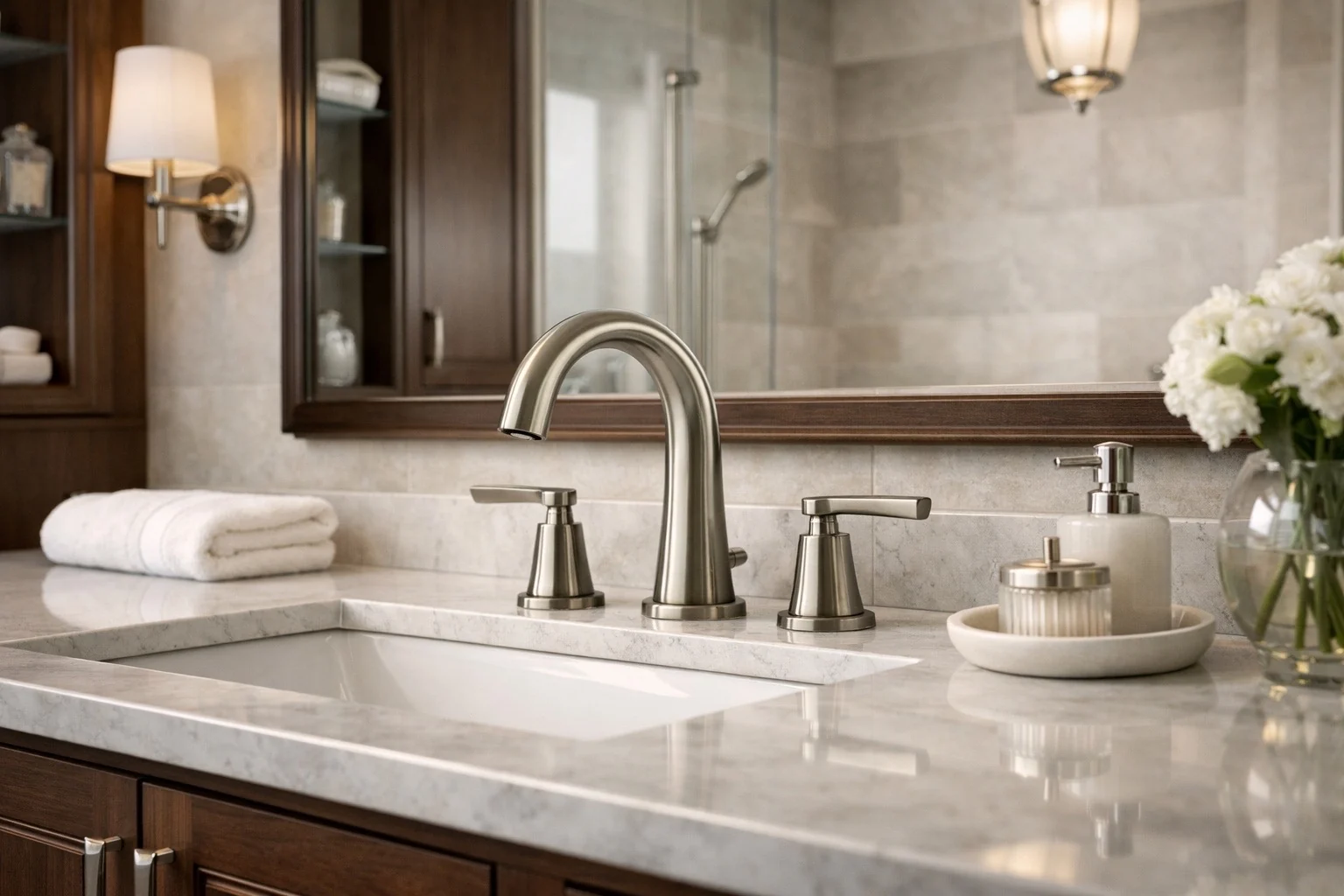
Single-hole, widespread, wall-mounted, vessel, centerset, shower trim coordination, splash control, and vanity-scale decisions.
Explore this page →The right category depends on sink size, cabinet zone, cooking style, finish direction, and how much visual weight the sink area can carry.
The common workhorse. The spray head pulls down into the sink, which is useful for rinsing cookware and cleaning the basin. Docking quality and hose feel matter.
Higher-impact and more commercial in feel. It can be excellent in large sinks and hardworking kitchens, but it carries more visual height and needs the right room scale.
Often lower and more compact than a pull-down. Useful where overhead clearance, window views, or a quieter faucet silhouette matter.
Clean and efficient. The handle location and rotation should be checked against the backsplash, wall, window trim, and the user’s normal stance at the sink.
Traditional and architectural. A bridge faucet adds character and symmetry, but it can require more holes, more cleaning around the base, and a stronger design context.
Convenient for messy prep and high-use kitchens. Confirm power requirements, battery access, sensor behavior, override operation, and whether the client wants technology at the sink.
Scaled for smaller sinks and beverage zones. The style should coordinate with the main faucet without necessarily being identical in size or function.
Useful near a range when the client actually cooks with large vessels. It requires wall rough-in, exact placement, backsplash coordination, and clear expectations about leak responsibility and use.
Dedicated filtered, cold-only, hot-only, or hot/cold taps can improve convenience. They require holes, under-sink equipment, power in some cases, and future service access.
Spout reach is not just a spec-sheet number. It determines where water lands in the basin, how much splash occurs, how well cookware rinses, and whether the user naturally works over the drain or toward the front edge of the sink. A faucet that looks beautiful but throws water too far forward can become irritating immediately.
Height matters too. Tall faucets can add presence and clearance for large items, but they can block windows, compete with lighting, or create splash in a shallow sink. Lower faucets can feel more refined, but they may limit pot filling or large cookware rinsing.
A faucet can look similar to another faucet and still feel very different in daily use.
Aerated, laminar, stream, sweep, and higher-pressure spray modes behave differently. The best mode depends on whether the client rinses produce, fills pots, cleans pans, or washes sink accessories.
Magnetic or mechanical docking should keep the spray head seated cleanly. A loose spray head makes even an expensive faucet feel tired.
Handle movement should feel precise, not vague. Valve quality affects temperature control, long-term serviceability, and confidence in daily use.
A wide swivel range helps with large sinks and double bowls. Limited swivel can prevent accidental over-rotation but may frustrate use in larger sink zones.
Large workstation sinks often benefit from strong reach, clearance, and spray control because accessories can sit over the basin and change how water is used.
Touchless controls, filtration, dispensers, hose weights, and valves need accessible space below the sink. The prettiest faucet still needs to be serviceable.
The faucet lives near cabinet hardware, lighting, appliances, sink material, countertop veining, and often window trim. Exact matching is not always necessary and can even feel forced. What matters is that the metal palette has a deliberate hierarchy.
A faucet can match the hardware for continuity, contrast the hardware for emphasis, or connect to appliances for quietness. The selection should be made in the context of the full room rather than from a small finish chip alone.
Filtered water, reverse osmosis, instant hot, cold-only, hot/cold, and beverage faucets can make a kitchen feel more complete. They also introduce equipment, service intervals, holes, valves, tanks, cartridges, and cabinet-space requirements.
Provides a dedicated drinking-water point. Confirm filter type, cartridge access, flow rate, faucet finish, and whether the system requires a separate hole.
Can support very clean drinking water, but it may require a dedicated faucet, storage tank, drain connection, and more under-sink space than clients expect.
Useful for tea, prep, and cleaning tasks. It typically requires an under-sink tank, power, safe installation, and a client who understands maintenance.
Combines convenience functions in one visible fixture. The finish, spout shape, and placement should coordinate with the main faucet rather than crowd it.
Can keep the countertop cleaner, but placement matters. It should not interfere with faucet operation, sink accessories, or hand movement at the counter.
Disposal switches and dishwasher air gaps can be necessary or preferred depending on the project. They should be placed deliberately instead of wherever a leftover hole exists.
The same general silhouette can exist at many price points. Better versions often justify cost through valve quality, finish consistency, docking behavior, spray performance, metal construction, parts availability, sensor reliability, and a more refined proportion.
A faucet is worth upgrading when the user will feel the improvement every day. It is not worth upgrading purely because it has a louder silhouette or a trend finish that the rest of the room cannot support.
Water, minerals, soap, food residue, and cleaning products are constant at the sink. The routine should protect the finish and keep moving parts performing cleanly.
Wipe dry when possible, use a soft cloth, avoid abrasive pads, and clean with mild soap or manufacturer-approved products rather than harsh chemicals.
Mineral buildup can affect aerators, spray heads, dark finishes, glass, and sink walls. Regular gentle cleaning helps prevent a new fixture from looking neglected.
Spray heads, hoses, weights, sensors, and handles should remain accessible. Overpacked under-sink storage can interfere with faucet movement.
Filtered-water and reverse-osmosis systems need cartridge access. The under-sink cabinet should allow service without dismantling the whole storage plan.
Touchless and smart features add convenience but also add batteries, sensors, power, calibration, or user preferences that should be understood before selection.
Some finishes are meant to stay consistent; others are intended to age. The client should know which one they are buying before installation.
A strong faucet selection makes the sink zone easier to use and more resolved to look at. It should have the right scale, the right reach, the right finish posture, and the right amount of visual presence for the cabinetry around it.
When the faucet is planned with the sink and countertop instead of selected afterward, the entire water zone feels more deliberate.
Black Label helps clients choose faucets, dispensers, and related accessories that support the sink zone without overcomplicating the room.