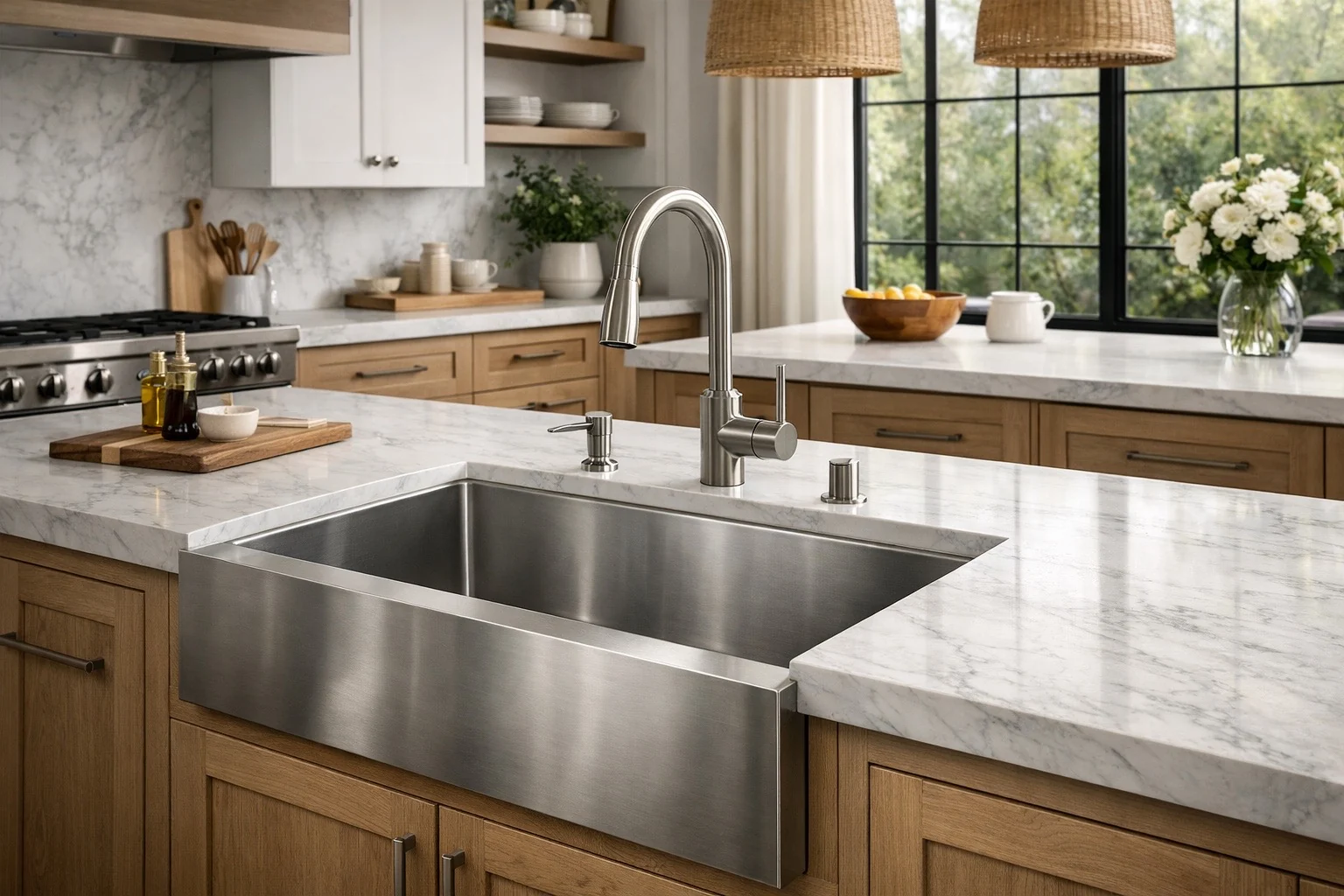
Kitchen Sinks
Installation styles, basin formats, materials, workstation systems, cabinet sizing, fabrication risk, and cleanup-zone planning.
Explore this page →The kitchen sink controls prep, cleanup, countertop cutouts, lower-cabinet storage, disposal planning, faucet placement, and how the room handles daily use. A good sink decision is both practical and architectural.
The right sink choice depends on how the client cooks, cleans, entertains, and stores items below the sink. Size, depth, material, installation style, drain placement, bowl configuration, accessory system, countertop material, and cabinet construction all influence whether the sink feels excellent or merely acceptable.
A kitchen sink earns its value when it improves prep and cleanup, fits cookware, protects the work zone, and supports the faucet and accessory plan.
Main cleanup sinks, prep sinks, bar sinks, workstation sinks, island sinks, scullery sinks, pantry sinks, laundry-adjacent utility zones, and beverage centers.
Wrong minimum cabinet size, uncomfortable depth, poor drain placement, difficult cleaning corners, awkward faucet reach, and countertop cutouts that do not suit the material.
A sink should feel intentional with the countertop, cabinetry, hardware, and faucet. It should not look like a utility choice dropped into a finished room.
These pages are meant to be read together. Sink size affects faucet reach. Faucet holes affect countertop fabrication. Water filtration affects cabinet storage. Bathroom faucet style affects sink selection, drain choice, mirror clearance, and vanity proportion.
Installation styles, basin formats, materials, workstation systems, cabinet sizing, fabrication risk, and cleanup-zone planning.
Explore this page →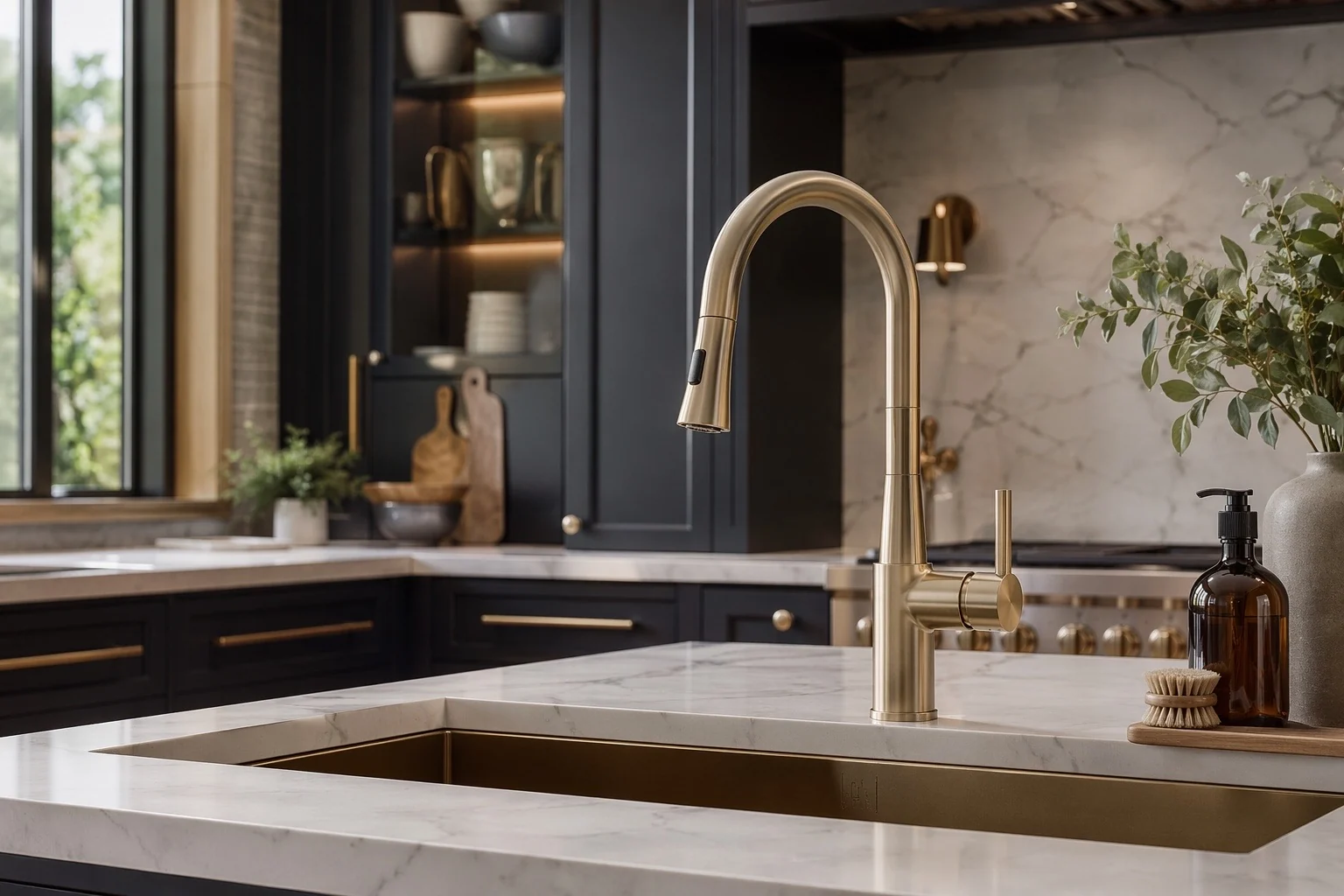
Pull-down, pre-rinse, bridge, bar, pot filler, filtered water, hot/cold dispensers, finish coordination, and everyday usability.
Explore this page →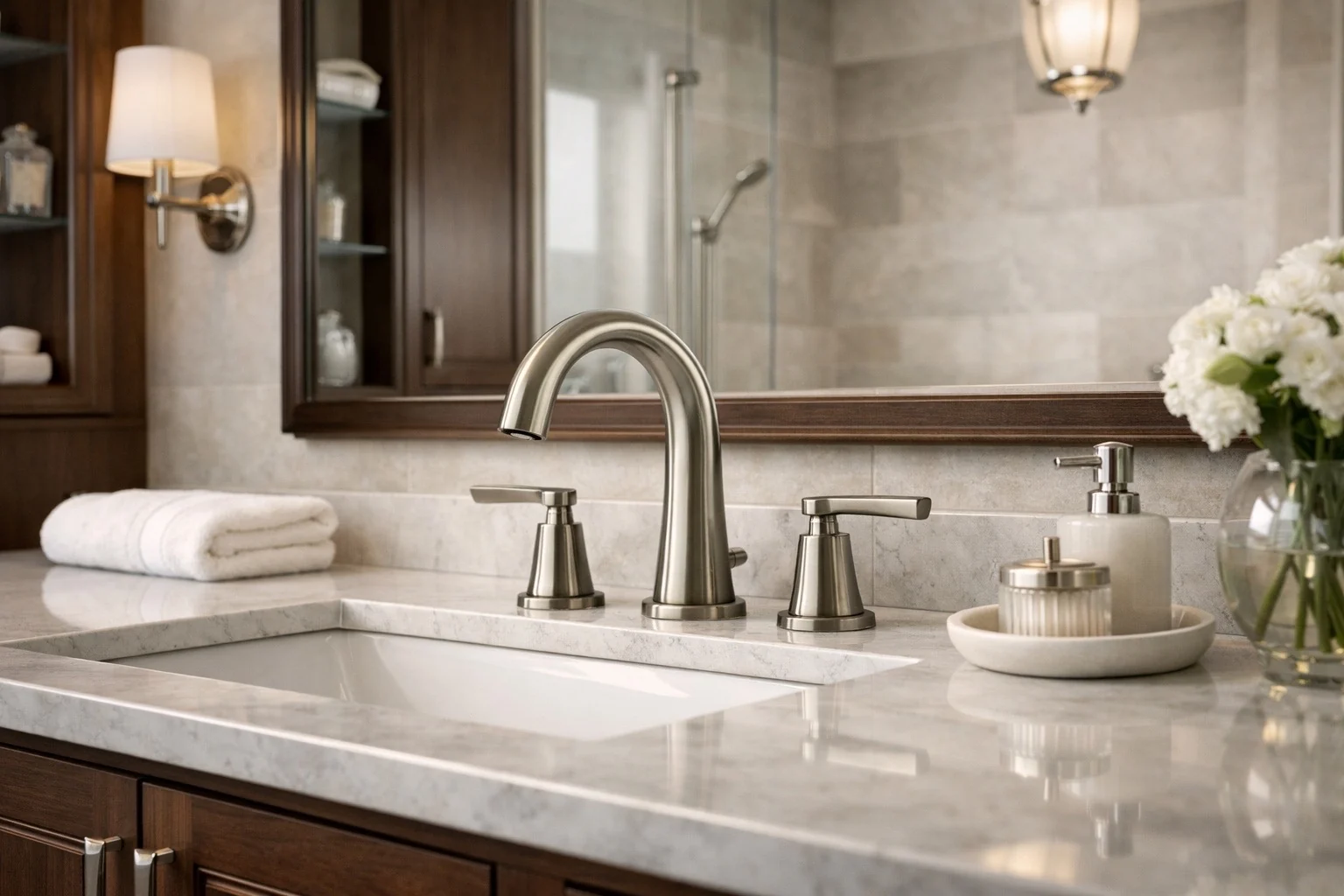
Single-hole, widespread, wall-mounted, vessel, centerset, shower trim coordination, splash control, and vanity-scale decisions.
Explore this page →The same sink material can feel very different depending on how it is mounted. The countertop, cabinet face, and sink edge all have to be planned together.
Clean and popular for stone and solid-surface countertops. It allows crumbs and water to be wiped into the basin, but the reveal, cutout polish, mounting method, and countertop strength matter.
Creates a strong design statement and places the basin closer to the user. It requires compatible sink-base planning, front support, careful countertop returns, and attention to cabinet door and drawer clearances.
Sits on top of the counter and can be practical in utility, budget-sensitive, or replacement conditions. The rim is more visible and may interrupt the cleanest countertop line.
Uses integrated ledges or decks to support accessories above the bowl. It can increase prep efficiency but requires space, routine, cleaning discipline, and accessory storage.
A smaller sink can support beverage zones, coffee areas, islands, pantry prep, or entertaining. It has to be placed where it reduces traffic, not where it simply fills unused counter space.
Some projects use integrated sinks, specialty metal sinks, utility basins, or custom installations. These can be beautiful but require tighter coordination between cabinetry, countertop, and plumbing trades.
No material is automatically best. Each one has a value profile and a maintenance profile.
Versatile, familiar, and strong for hardworking kitchens. Gauge, corner radius, sound-dampening, finish direction, drain placement, and grid quality separate a basic stainless sink from a refined one.
Classic, bright, and substantial. It pairs well with traditional and transitional kitchens, but dimensions can vary, impact can chip the surface, and apron-front installations require thoughtful support.
Heavy, glossy, and durable under normal use. It has a strong design presence, but the cabinet must support the weight and the enamel should be protected from chips and harsh abrasion.
Often selected for color, quieter sound, and a softer visual transition with countertops. It can be practical, but dark colors may show residue and some materials need specific cleaning routines.
Warm, distinctive, and intentionally alive. Copper can patina, darken, and react to use. It is best for clients who want character rather than a permanently uniform finish.
Brass, black stainless, PVD-coated finishes, and decorative sink finishes can create a refined look, but cleaning expectations and finish durability should be confirmed before selection.
A large single bowl is excellent for sheet pans, large pots, cutting boards, and simplified cleanup. A double bowl can separate washing and rinsing or create a soak side and a disposal side, but each bowl is smaller. A workstation sink can add prep surface and accessory support, but it should be wide enough to feel useful rather than cramped.
Depth also matters. A deeper sink hides dishes and catches water, but it can be less comfortable for shorter users and can reduce under-sink storage. Shallower sinks can be easier on posture but may splash more depending on faucet reach and spray behavior.
A workstation-style sink is more than a deep basin. It is a working platform with ledges, decks, accessories, and sometimes a dedicated faucet and filtration strategy. In the right kitchen, it can make prep cleaner and faster. In the wrong kitchen, it can become an expensive accessory stack that competes for cabinet and counter space.
The important questions are simple: will the client actually use the accessories, where will those accessories live when not in use, and does the sink size improve workflow enough to justify the cabinet width it consumes?
Many sink problems are not caused by the sink itself. They happen because the sink was selected without confirming the cabinet, counter, faucet, and plumbing details around it.
Confirm the manufacturer’s minimum cabinet requirement and the real interior opening. Face frames, frameless sides, supports, fillers, and sink-base configuration can all affect fit.
Positive, flush, and negative reveals each change the look and cleaning behavior. The reveal should be intentional, not guessed by the fabricator at template.
Plan the faucet, soap dispenser, filtered tap, air gap, air switch, hot/cold dispenser, side spray, and deck switch before the countertop is drilled.
Drain location affects disposal placement, trap path, under-sink storage, cleaning supply organization, and whether a pull-out trash or sink organizer can fit nearby.
Farmhouse sinks require front support, accurate cabinet face modification, countertop return planning, and a decision on how the apron relates to doors and adjacent drawers.
Bottom grids, cutting boards, colanders, and drying racks add function only if the client has a clean, convenient way to store and maintain them.
A stainless sink can be basic or premium. A fireclay sink can be simple or highly refined. A workstation package can become a major investment because of sink size, accessory system, faucet pairing, cabinet width, countertop fabrication, and plumbing coordination.
The sink is worth upgrading when the upgrade changes how the kitchen works every day. It is less valuable when it simply adds complexity without improving the routine.
Sink care should match the material. The client should know what will scratch, spot, patina, chip, stain, ring, or require a specific cleaner before the sink is ordered.
Rinse residue, wipe dry when possible, clean with non-abrasive products, and avoid leaving metal cans, harsh chemicals, or wet sponges sitting in the basin.
These surfaces can look beautiful for years, but heavy impact can chip them. Bottom grids, careful cookware handling, and non-abrasive cleaning help protect the finish.
Composite sinks can be easy to live with, but dark colors may show mineral haze or soap film. Follow manufacturer guidance and avoid letting residue build up.
Copper is best treated as a living material. Patina, tonal variation, and reaction to use are part of its character, not a defect for clients who select it knowingly.
Accessories need to be cleaned, dried, and stored. Wood boards, metal grids, colanders, and drying racks should not be allowed to trap moisture against finished surfaces.
Leaks, disposal vibration, filter changes, and cleaning products all live below the sink. Cabinet interiors should be protected and regularly checked after installation.
The best sink is not always the largest, deepest, or most expensive. It is the one that fits the cabinet plan, supports the countertop, works with the faucet, and makes the client’s actual routine feel cleaner and more controlled.
When sink choice, faucet choice, storage below the sink, waste placement, and dishwasher location are planned together, the kitchen feels more composed because the work is happening where it should.
Black Label helps clients choose sink systems that look resolved, fit the project correctly, and support real prep and cleanup instead of creating late-stage compromises.