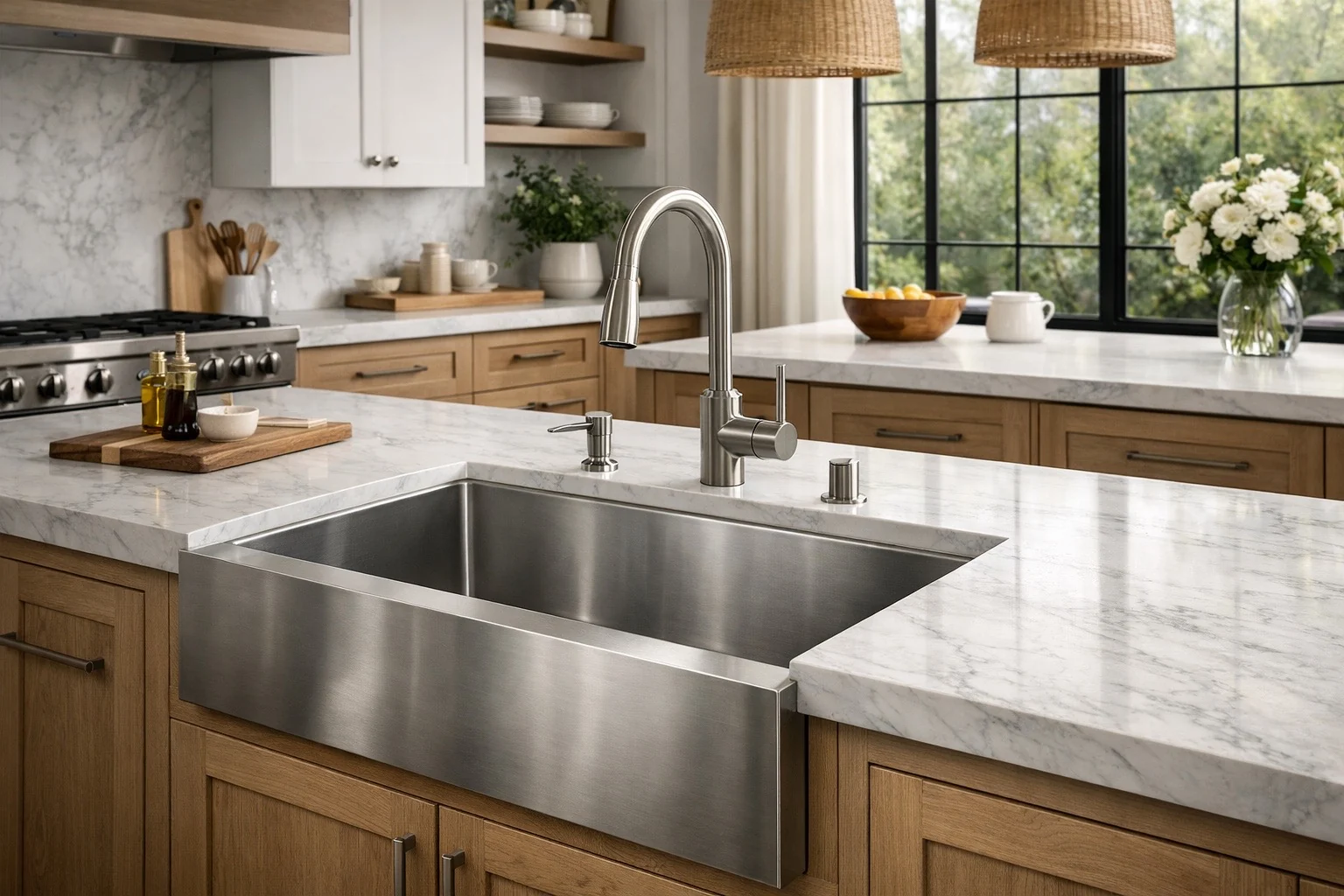
Kitchen Sinks
Installation styles, basin formats, materials, workstation systems, cabinet sizing, fabrication risk, and cleanup-zone planning.
Explore this page →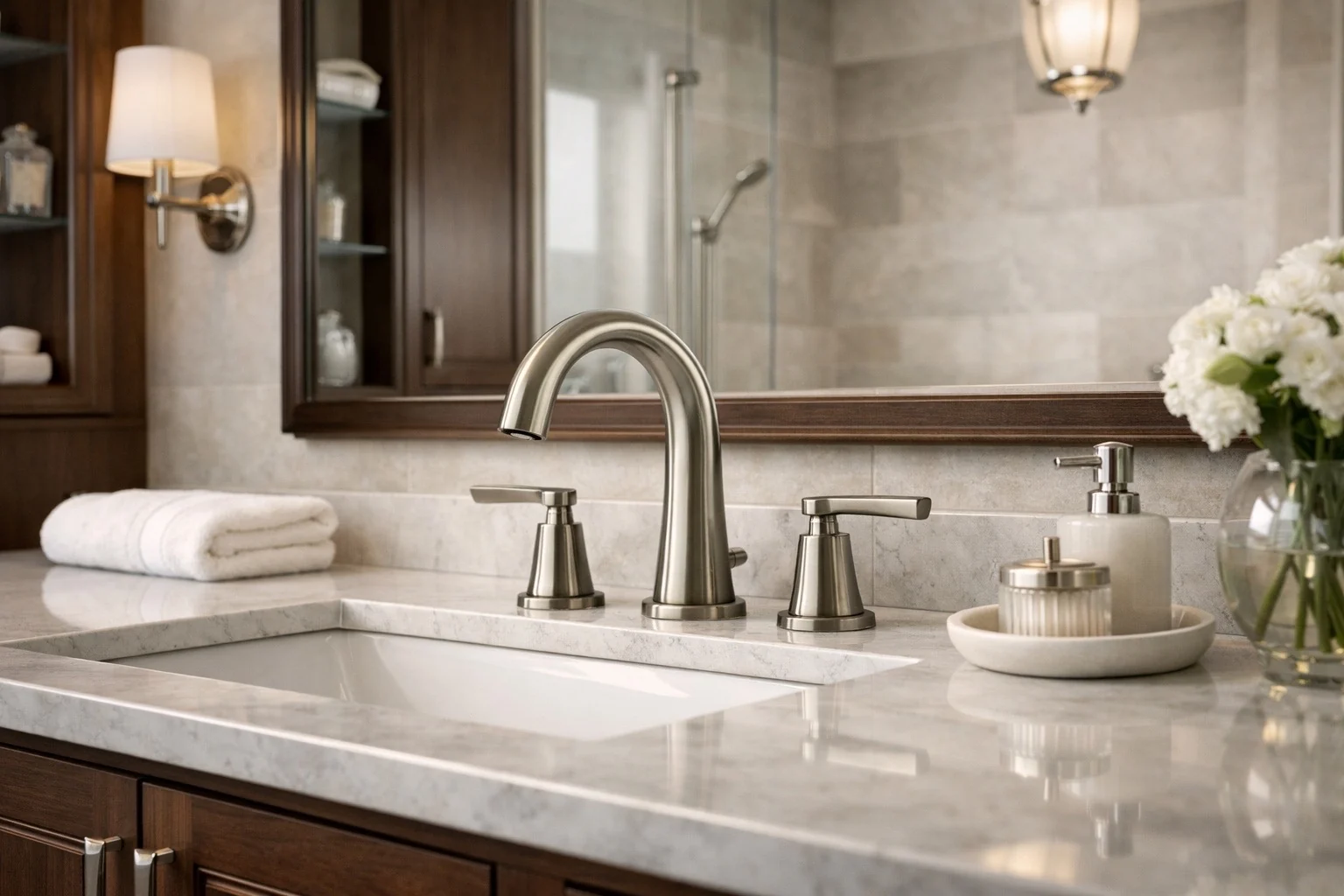
In a bathroom, faucet scale, sink pairing, finish, mirror clearance, splash behavior, drain detail, and shower trim coordination are highly visible. The right choice makes the vanity feel complete instead of simply furnished.
A bathroom faucet is smaller than a kitchen faucet, but its visual effect can be just as strong. It sits in a concentrated composition with the vanity, sink, countertop, mirror, lighting, cabinet hardware, wall finish, towel hardware, shower trim, and bath accessories. The selection should be scaled to the whole room, not just the sink.
A good faucet makes the vanity easier to use, reduces splash, supports the sink shape, and gives the bathroom a more intentional finished layer.
Primary bath vanities, powder baths, guest baths, wall-mounted vanity designs, vessel sinks, children’s baths, and bathroom suites with coordinated shower trim.
Incorrect spout reach, handles that crowd the backsplash, faucets too tall for the vanity, wall-mount rough-in errors, splash from vessel sinks, and mismatched finish families.
The bathroom faucet should support the vanity composition and the broader fixture suite. It should feel refined, not random.
These pages are meant to be read together. Sink size affects faucet reach. Faucet holes affect countertop fabrication. Water filtration affects cabinet storage. Bathroom faucet style affects sink selection, drain choice, mirror clearance, and vanity proportion.
Installation styles, basin formats, materials, workstation systems, cabinet sizing, fabrication risk, and cleanup-zone planning.
Explore this page →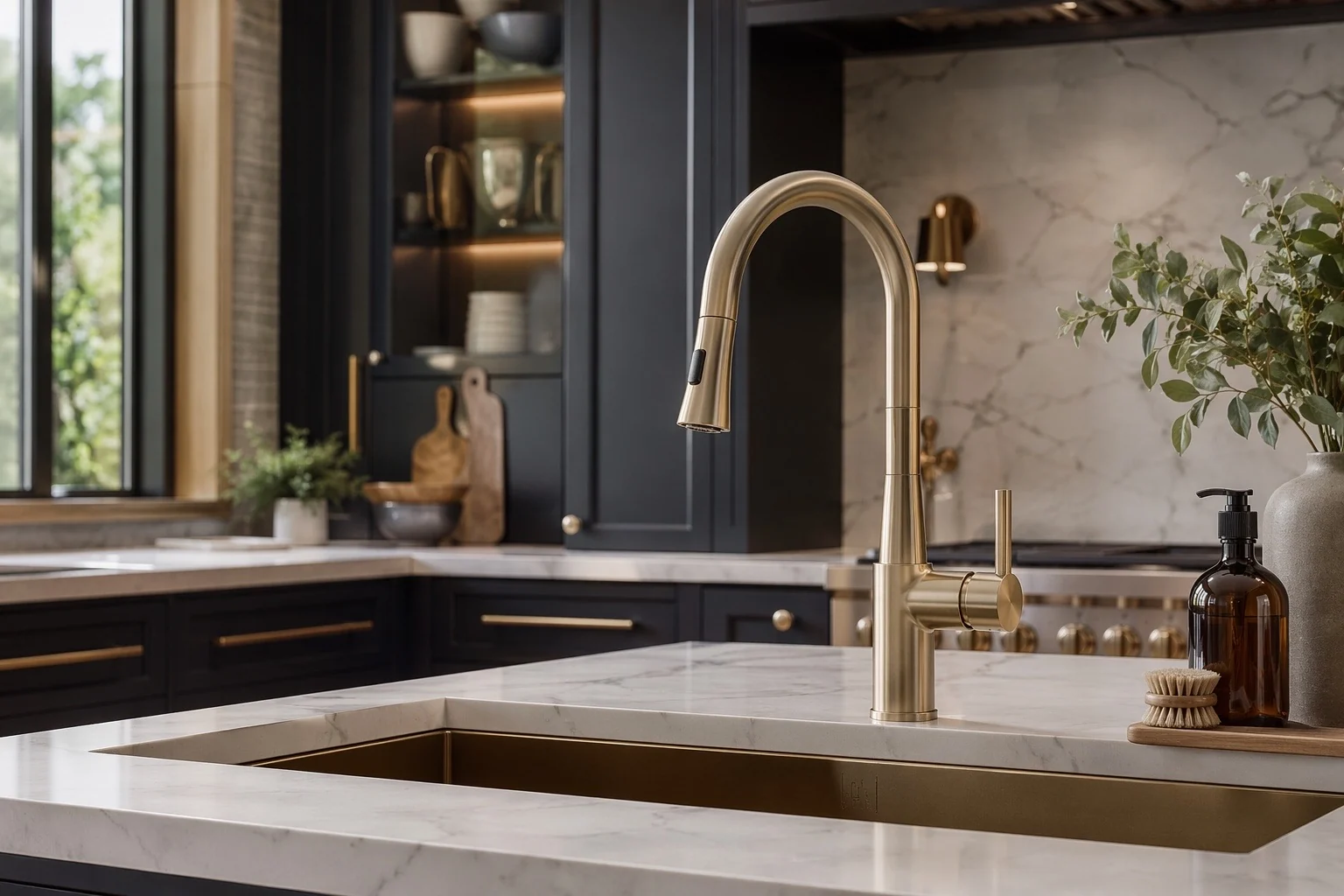
Pull-down, pre-rinse, bridge, bar, pot filler, filtered water, hot/cold dispensers, finish coordination, and everyday usability.
Explore this page →Single-hole, widespread, wall-mounted, vessel, centerset, shower trim coordination, splash control, and vanity-scale decisions.
Explore this page →The faucet type should be selected with the sink, countertop, mirror, backsplash, and plumbing rough-in in mind.
Clean, compact, and efficient. Strong for modern, transitional, and smaller vanities. Confirm spout reach, handle position, and sink depth to avoid splash.
Classic and elevated. Separate hot and cold handles give a more tailored look and can suit wider vanities, but the countertop hole layout and cleaning around bases matter.
Compact and familiar, often used in tighter or budget-conscious conditions. It is practical but may not feel as custom as single-hole, wall-mounted, or widespread options.
Architectural and clean on the countertop. It requires accurate rough plumbing, blocking, spout-height planning, mirror/backsplash coordination, and harder future access.
Taller and designed for raised sinks. It can create a strong powder-bath statement, but height and spout reach must be carefully paired to control splash.
Useful for powder rooms, accessibility-minded designs, or high-use guest spaces. Confirm power, sensor behavior, finish, water control, and service access before selection.
Bathroom sinks come in undermount, drop-in, vessel, wall-mounted, pedestal, console, and semi-recessed formats. Each one changes where the faucet should sit, how far the spout should project, and how water should land. A faucet that works beautifully with an undermount sink can splash badly with a vessel sink.
The strongest vanity compositions make the sink and faucet feel like a deliberate pair. The bowl shape, drain location, counter thickness, faucet height, spout angle, and backsplash all have to make sense together.
A faucet can look perfect in product photos and still be wrong for the vanity. Height, reach, handle clearance, backsplash thickness, sink slope, and water pressure all affect daily use.
Reach determines where water lands. Too short can hit the back of the sink; too long can crowd the front edge or splash forward.
Height affects hand clearance and splash. Taller is not automatically better, especially with shallow or highly sloped bowls.
Handles need room to operate. Backsplashes, mirror frames, side walls, and deck thickness can interfere with comfort if not checked.
Wall-mounted faucets and tall faucets must be coordinated with backsplash height, mirror placement, medicine cabinets, outlets, and lighting.
Aerators, stream shape, pressure, and bowl slope can change splash. Water should feel controlled, not harsh or scattered.
A bold faucet can overwhelm a narrow vanity. A small faucet can disappear on a large custom vanity. Scale should match the cabinet elevation.
A bathroom has many visible metal points: vanity faucet, drain, cabinet hardware, light fixtures, mirror frame, shower trim, tub filler, towel hardware, hooks, toilet lever, and accessories. The goal is not always one exact finish everywhere. The goal is an intentional metal story.
Powder baths can carry stronger contrast because they are smaller and more expressive. Primary baths usually benefit from calmer coordination, durable finishes, and a suite of fixtures that will age consistently over time.
A refined vanity is built from coordinated details. The faucet is one of them, but it touches many others.
Single-hole, centerset, widespread, and vessel faucets require different drilling. Confirm the hole pattern before the vanity top is fabricated.
Wall-mounted faucets require the valve and spout to be placed before finished wall surfaces. The sink, mirror, backsplash, and drain must be known early.
Vanity drawers and plumbing traps can conflict. Confirm that supply lines, drains, valves, and pop-up mechanisms do not defeat the storage plan.
Pop-up, push drain, grid drain, overflow compatibility, finish, and sink type should be selected as part of the faucet package.
Tall faucets and wall-mounted faucets need clearances around mirrors, sconces, medicine cabinets, outlets, and backsplash returns.
Decorative vanities still need access to supply lines, shutoffs, drains, and cartridges. Beauty should not block basic maintenance.
Primary baths usually benefit from durable finishes, comfortable use, easy cleaning, and a calmer relationship with the vanity and shower suite. Powder baths can handle more drama because they are used differently and often become a guest-facing design moment.
That does not mean powder rooms should ignore function. A sculptural faucet still needs correct reach, splash control, hand clearance, and a sink that can receive the water cleanly.
Even when the vanity faucet is the focus, the room feels more resolved when the shower head, valve trim, hand shower, tub filler, towel hardware, and accessories have a clear relationship.
The shower trim should coordinate with the vanity faucet finish and style, but the valve type and rough-in compatibility matter more than appearance alone.
Hand showers add cleaning and daily-use flexibility. Placement, hose length, wall bar height, and finish should be coordinated early.
Deck-mounted, wall-mounted, freestanding, and roman tub fillers have different rough-in, access, and scale requirements. They should not be selected last.
Matching every fixture exactly can work, but a deliberate mixed-metal plan can also feel elevated. The key is repetition and restraint.
Towel bars, robe hooks, toilet paper holders, mirror frames, lighting, and cabinet pulls should support the same metal story.
Choose fixture families with reasonable parts support and a finish direction that will not make future service or replacement unnecessarily difficult.
A simple single-hole faucet is usually less complex than a wall-mounted faucet with behind-wall rough-in or a widespread set with separate handles. Decorative finishes, matching suite pieces, shower trim, tub fillers, valves, drains, and rough plumbing can move the final investment.
The best value is a faucet that improves the vanity’s finished look without creating avoidable maintenance, splash, or installation problems.
The best care routine protects the finish before buildup becomes visible. This matters even more in bathrooms because faucets, drains, and shower trims are viewed up close.
Soft cloth wiping helps prevent water spots, mineral rings, and soap film from dulling the finish.
Harsh pads, acidic cleaners, and aggressive bathroom chemicals can damage decorative finishes, drains, and trim.
Mineral buildup at the outlet can distort water flow and worsen splash. Aerator service should be simple and understood.
Unlacquered or living finishes may darken, spot, and patina. This is desirable only when the client knowingly wants that character.
Standing water around faucet bases can affect caulk, stone, sealers, and finish edges. Good cleaning habits protect the whole vanity zone.
Wall-mounted and specialty faucets can be harder to service. Plan access and choose products with reasonable parts availability.
A good faucet is not just an object on the counter. It is part of the vanity composition. It should support the sink, stone, cabinet, mirror, lighting, and finish palette with the right amount of visual weight.
When the faucet is planned early, the bathroom feels calmer because the details align instead of competing for attention.
Black Label guides faucet, sink, drain, mirror, lighting, and shower-trim coordination so bathroom selections look refined and perform cleanly.