Drawers
Wide drawer banks pair well with frameless construction because the face can stay clean and the interior can be highly accessible.
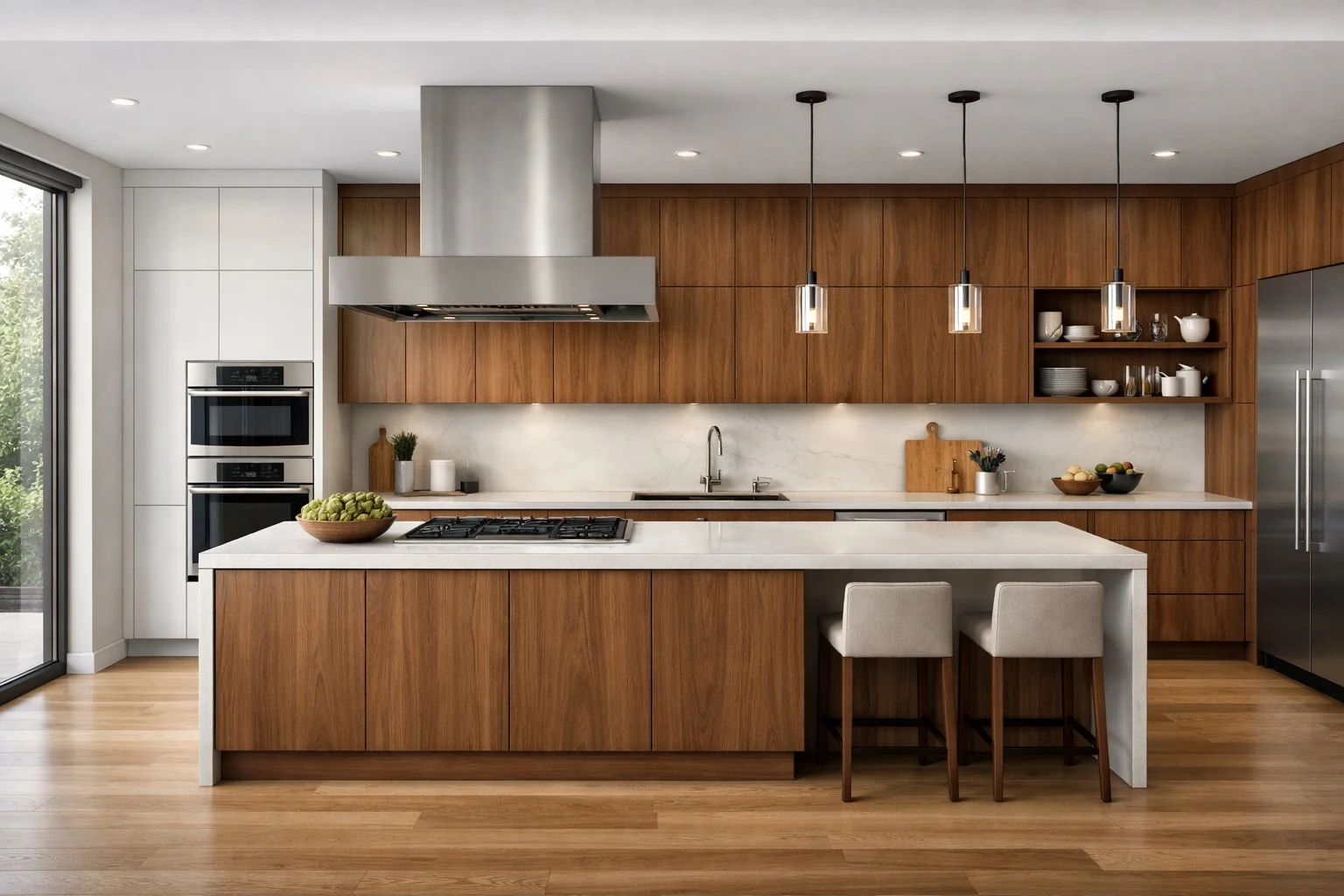
Frameless cabinetry, often called full-access cabinetry, removes the traditional face frame from the front of the cabinet box. That gives the room a cleaner rhythm and gives the user wider access to the cabinet interior.
In a frameless cabinet, doors and drawer fronts attach directly to the cabinet box, usually with concealed European-style hinges. Because there is no front face frame, the cabinet opening is less interrupted and the finished elevation can feel cleaner, flatter, and more continuous.
Modern, contemporary, transitional, and edited traditional rooms where clean cabinet lines and efficient access matter.
Full-access interior openings, minimal face-frame interruption, and a cleaner cabinet-front rhythm.
Cost depends on box quality, hardware, door style, finish, exposed panels, drawer systems, and installer precision rather than the frameless label alone.
Weak box construction, poor edge banding, inconsistent reveals, and layouts that need a warmer or more traditional cabinet face.
Traditional face frame cabinets have a structural frame attached to the front of the cabinet box. Frameless cabinets do not use that front frame. The cabinet box itself becomes the structure, and the doors and drawers cover the front of that box with narrow reveal lines between each front.
This is why frameless cabinetry often feels more streamlined. The eye sees more door and drawer surface and less cabinet structure. The result can be very modern, but it can also be softened with shaker doors, warm wood, textured finishes, and classic hardware.
The lack of a face frame can make it easier to reach into cabinet interiors, especially in wider drawers, roll-outs, tray storage, pantry cabinets, and tight work zones. The function advantage is not only about capacity. It is about how easy the cabinet is to use every day.
Wide drawer banks pair well with frameless construction because the face can stay clean and the interior can be highly accessible.
Pantry pull-outs, tray dividers, internal drawers, and appliance storage can feel cleaner when the cabinet face has fewer frame interruptions.
In compact kitchens, bathrooms, offices, and bars, frameless construction can help the room feel less visually busy while preserving usable storage.
A frameless cabinet face can go very modern with slab doors and integrated pulls. It can also feel transitional with slim shaker doors, warm white finishes, natural oak, or a quiet painted palette. The deciding factor is not whether the home is modern. The deciding factor is whether the room benefits from less visual interruption at the cabinet face.
This makes frameless a strong choice for kitchens with large islands, clean appliance panels, tall wall storage, and rooms where the cabinetry should support the architecture without feeling heavy.
Frameless cabinetry can deliver excellent value when the design calls for efficient storage and a refined visual field. The caution is that a weak frameless build can feel thin or disposable. Box construction, hardware, and installation quality are critical.
It is also not the right answer when the client wants the depth, shadow, and heritage feel of a traditional face frame cabinet. In that case, full overlay or inset may support the room better.
Clean door and drawer fronts with a soft cloth and mild cleaner appropriate for the finish. Avoid soaking edges, leaning wet towels against cabinet fronts, or allowing steam from small appliances to repeatedly hit the same cabinet area. Wipe spills early, especially near sinks, dishwashers, coffee stations, and trash pull-outs.
Because frameless cabinetry relies heavily on concealed hinges and accurate drawer systems, minor adjustments may be needed over time. Quality hardware makes those adjustments easier and helps the clean reveal pattern stay consistent.
Choose full overlay when the project wants classic warmth and a face frame cabinet language without the formality of inset.
Explore full overlay →Choose inset when exact reveals, furniture-grade detailing, and a more tailored traditional result are central to the design.
Explore inset →Return to the full cabinet construction overview to compare all three client-facing directions.
View guide →Black Label helps decide whether frameless cabinetry supports the room’s architecture, storage needs, finish direction, and overall investment.