Everyday usability
Doors and drawers are straightforward to use and adjust. The cabinet face can stay refined without requiring the same exact reveal discipline as inset.
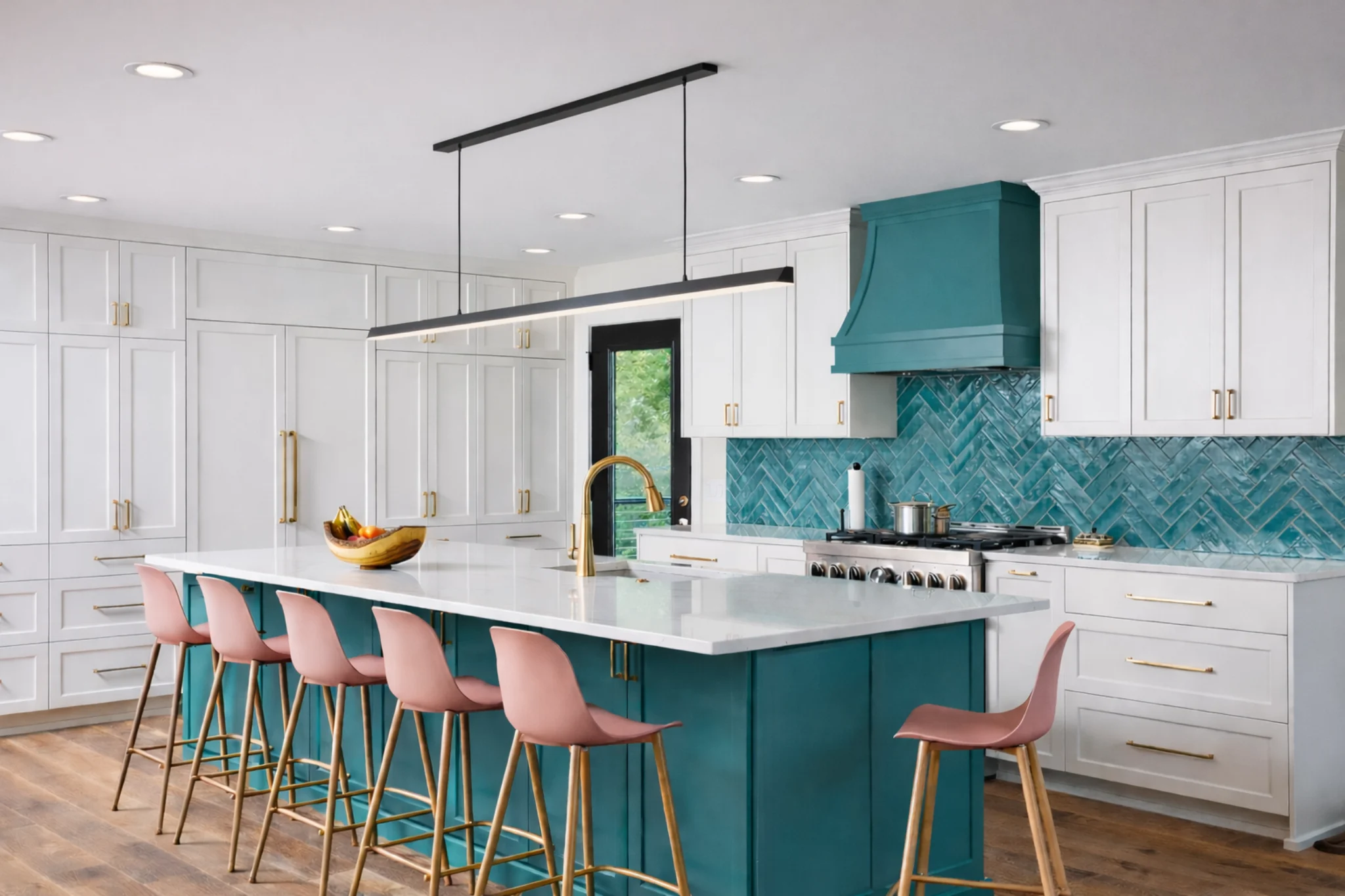
Full overlay is a face frame construction style where the doors and drawer fronts cover most of the frame. It preserves the familiar strength and warmth of framed cabinetry while reducing visual interruption across the cabinet elevation.
In face frame full overlay cabinetry, the cabinet has a front frame, but the doors and drawer fronts are sized to cover most of that frame. The finished look is cleaner than a traditional partial-overlay cabinet because less of the frame is visible, but the room still keeps the depth and familiarity of face frame construction.
Transitional, classic, coastal, and refined kitchens where the client wants warmth and structure without a heavy cabinet face.
A balanced visual rhythm: classic enough to feel established, clean enough to avoid looking busy.
Often less demanding than inset and more detailed than basic overlay. Cost depends on door style, finish, frame standards, hardware, and installation quality.
Uneven reveals, poorly proportioned doors, fillers that look accidental, or hardware placement that makes the cabinet face feel generic.
A face frame cabinet has rails and stiles attached to the front of the cabinet box. In full overlay construction, the door and drawer fronts are larger and sit over most of that frame, leaving narrow, controlled gaps between fronts. This creates a more polished cabinet face while keeping the construction language familiar.
The result can feel classic, transitional, or relaxed depending on the door style, finish, hardware, crown detail, and surrounding materials.
Compared with inset cabinetry, full overlay is generally more forgiving in daily use because doors and drawers sit proud of the frame instead of being fit precisely inside the openings. Compared with frameless, it usually has a more classic feel and slightly more front-frame structure.
Doors and drawers are straightforward to use and adjust. The cabinet face can stay refined without requiring the same exact reveal discipline as inset.
The face frame can slightly reduce the open front compared with frameless cabinetry, but full overlay remains practical for most kitchens and storage zones.
Full overlay works with painted finishes, stained woods, mixed finishes, glass doors, appliance panels, and traditional or transitional trim packages.
This construction profile is especially useful in rooms that need a clean but not cold cabinet face. It can support coastal kitchens, classic white kitchens, warm transitional kitchens, family-friendly remodels, and high-end built-ins where the cabinetry should feel substantial without demanding attention through extreme detailing.
It is also a strong option when the countertop, backsplash, lighting, or hood detail will carry more of the design interest and the cabinetry needs to provide a disciplined foundation.
The value of full overlay comes from its ability to look intentional without pushing every cabinet detail into a highly custom, high-maintenance posture. It is a strong choice when the room needs a premium face but does not need the exact reveal language of inset cabinetry.
The limitation is that full overlay can look ordinary if proportion, hardware, finish, and elevation design are not handled well. It should be specified as part of a complete cabinet composition, not as a default upgrade word.
Clean with a soft cloth and a mild cleaner appropriate for the finish. Avoid abrasive pads, harsh chemicals, and repeated water exposure around sink bases, dishwashers, trash pull-outs, and coffee stations. Wipe spills quickly and dry cabinet edges instead of allowing moisture to sit.
Hinges and drawer slides may need minor adjustment over time. Because full overlay doors cover most of the frame, slight movement is usually less visually exposed than inset, but clean reveal lines still depend on proper hardware and installation.
Choose frameless when wider access, cleaner planes, and less front-frame structure are more important than a classic cabinet rhythm.
Explore frameless →Choose inset when the room calls for flush furniture-like doors, exact reveals, and a more formal level of cabinet refinement.
Explore inset →Return to the full cabinet construction overview to compare all three client-facing directions.
View guide →Black Label helps refine the cabinet elevation, reveal rhythm, hardware scale, finish direction, and material coordination so full overlay looks intentional rather than default.