Door behavior
Because doors sit inside the frame, any swelling, settling, hinge movement, or uneven adjustment is easier to see than it would be on overlay cabinetry.
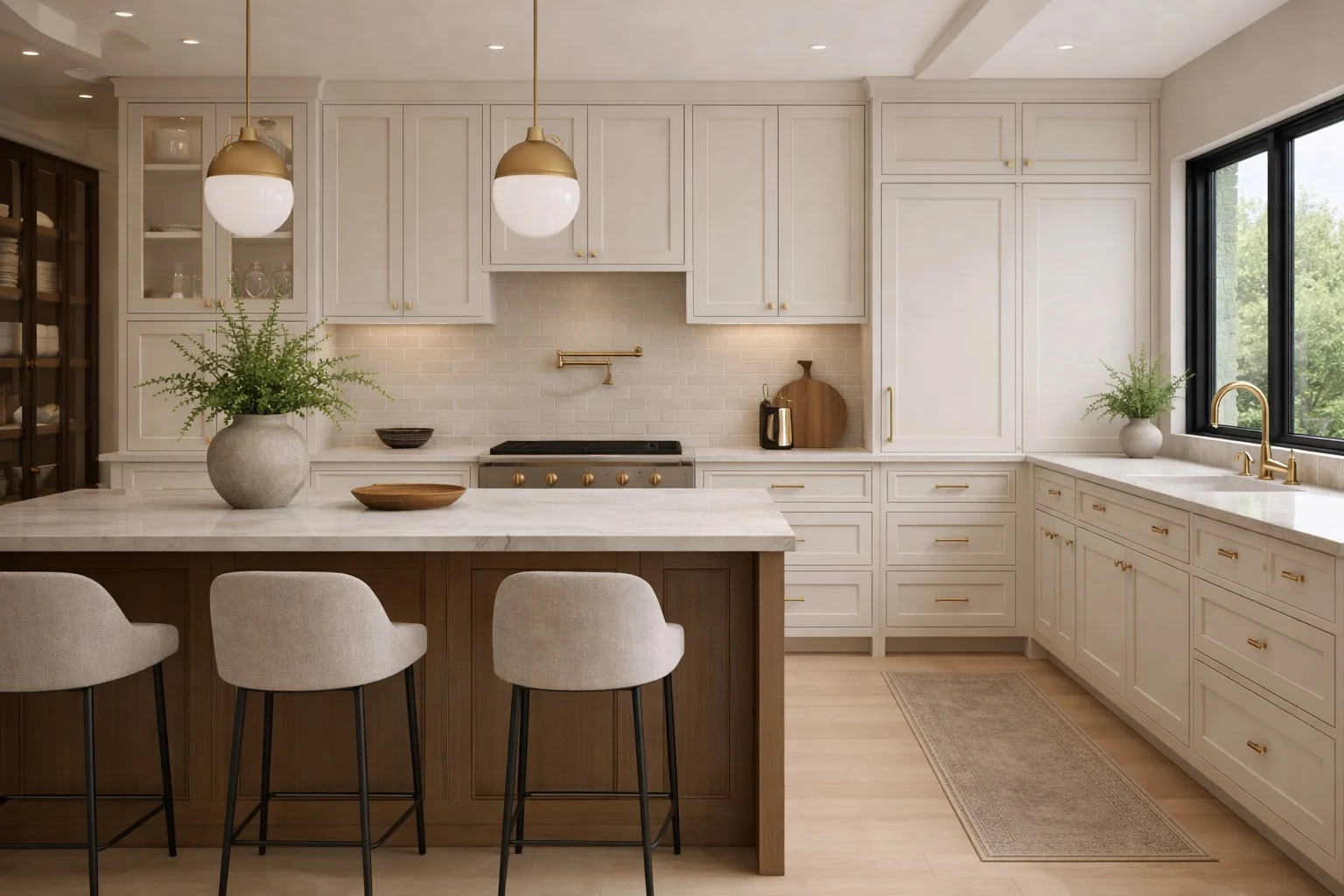
Inset cabinetry places each door and drawer front inside the face frame opening. The result is precise, refined, and architectural, but it requires more exacting fabrication, installation, and ownership expectations.
Inset cabinetry is one of the most refined cabinet construction styles because every front must fit cleanly within its framed opening. When done well, the result feels tailored, furniture-grade, and deeply intentional. When expectations are not set correctly, the same precision can become a source of frustration.
Traditional, transitional, coastal, heritage, and furniture-inspired rooms where exact detailing is part of the design value.
Flush doors and drawer fronts with visible, intentional reveal lines that create a highly tailored cabinet face.
Typically higher because the fronts require more precise fitting, installation, adjustment, and detail control.
Humidity movement, tight reveals, seasonal adjustment, reduced tolerance for imperfect walls, and a higher need for skilled installation.
In full overlay cabinetry, the doors and drawers cover most of the face frame. In inset cabinetry, the doors and drawers are fit into the frame openings so the fronts sit flush or nearly flush with the frame. That creates a furniture-like plane with narrow reveals around each door and drawer.
Those reveal lines are the point. Inset cabinetry is not trying to hide the frame. It uses the frame as part of the design language.
Inset doors and drawers are used every day just like other cabinetry, but the tolerances are more visible. The front of the cabinet is designed around consistent gaps. That means quality hinges, drawer slides, installation, and ongoing adjustment matter more.
Because doors sit inside the frame, any swelling, settling, hinge movement, or uneven adjustment is easier to see than it would be on overlay cabinetry.
The face frame and inset fit can slightly reduce front access compared with frameless construction. Good drawer planning helps offset this.
Knobs, pulls, exposed hinges, concealed hinges, latches, and backplates all shape the final read. Hardware is not an afterthought on inset work.
Inset cabinetry works best in rooms where the cabinet face should communicate refinement, permanence, and craftsmanship. It pairs naturally with tailored shaker doors, beaded frames, furniture feet, classic hardware, appliance panels, custom hoods, and architectural trim.
It can also work in quiet modern-traditional spaces when the finish, hardware, and countertop are edited. The key is discipline. Inset cabinetry already provides detail, so the rest of the room should not fight it.
Inset cabinetry can be the right investment when the room is designed around a tailored cabinet face and the client appreciates the craftsmanship. It is not valuable simply because it is more expensive. It should be chosen because the finished room needs that level of detail.
The limitation is tolerance. Inset cabinetry gives less room to hide movement, uneven walls, imperfect floors, or rough handling. It is a beautiful answer for the right client and the right room, not a universal upgrade.
Clean cabinet fronts with a soft cloth and mild cleaner appropriate for the finish. Dry moisture quickly near sinks, dishwashers, coffee stations, and trash areas. Avoid harsh abrasives and repeated steam exposure. Be careful with impact at door and drawer edges because touch-ups can be more visible on refined work.
Expect occasional hinge or drawer adjustment. Wood cabinetry can respond to humidity, especially where reveal lines are tight. That does not make inset impractical, but it does mean the owner should understand the care profile before choosing it.
Choose frameless when clean planes, wider access, and a less traditional cabinet face are stronger priorities than furniture-like reveals.
Explore frameless →Choose full overlay when the room needs a face frame feel with cleaner spacing and less cost or adjustment pressure than inset.
Explore full overlay →Return to the full cabinet construction overview to compare all three client-facing directions.
View guide →Black Label helps determine whether inset cabinetry supports the project’s architecture, daily use, care expectations, and total investment.