Built-in refrigerators
Need exact openings, air clearances, anti-tip support, toe-kick planning, and service access.
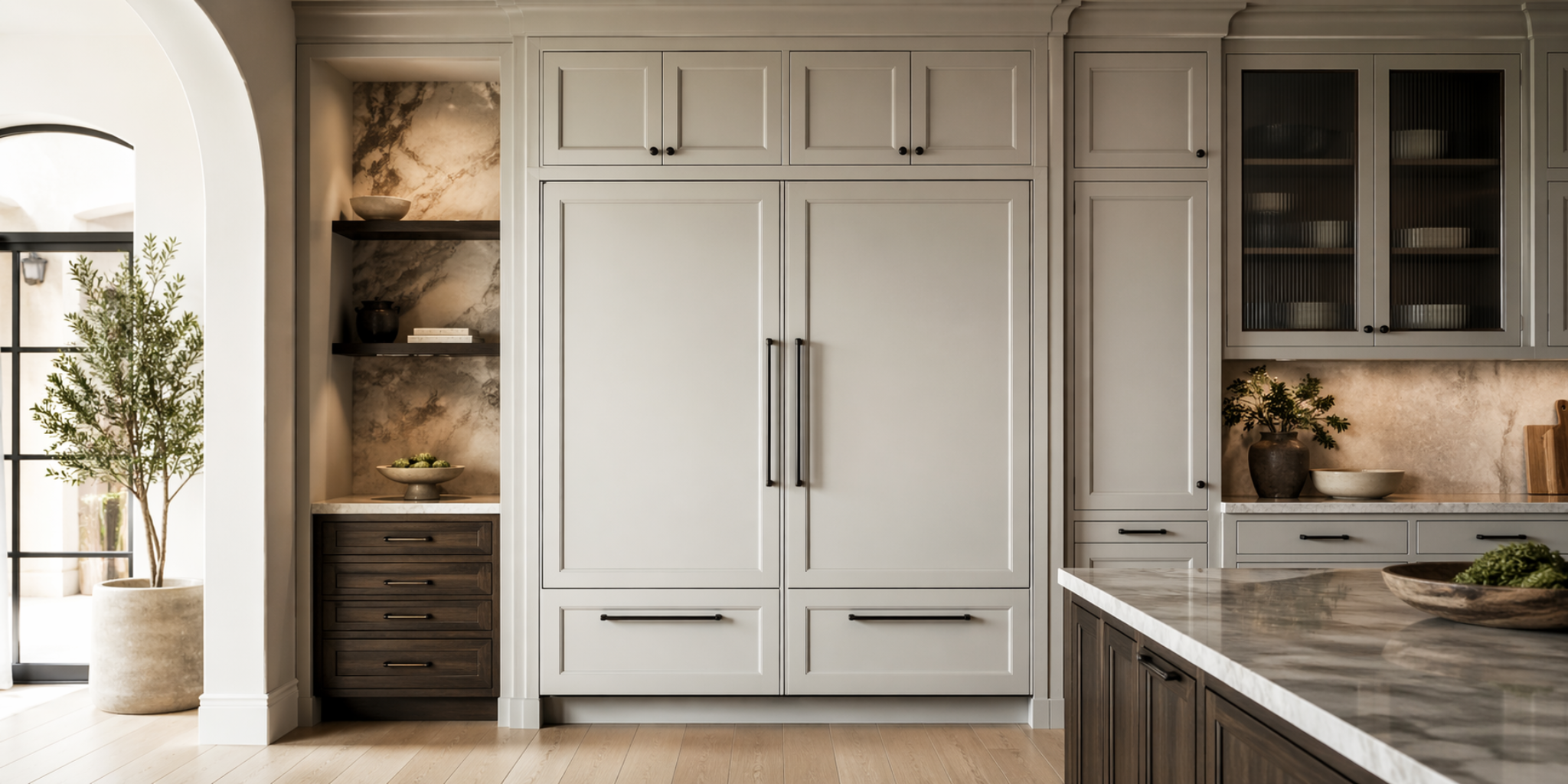
Built-in refrigerators, freezer columns, panel-ready units, wine storage, and beverage cooling shape cabinet openings, panel proportions, traffic flow, pantry planning, ventilation, and service access.
Built-in refrigerators, freezer columns, panel-ready units, wine storage, and beverage cooling shape cabinet openings, panel proportions, traffic flow, pantry planning, ventilation, and service access.
Appliances should be coordinated before cabinet release because they affect openings, panels, fillers, clearances, countertop decisions, electrical, plumbing, ventilation, and field responsibility.
The goal is not to overbuy. The goal is to make the appliance package support the way the home lives while keeping the finished cabinetry clean, serviceable, and practical.
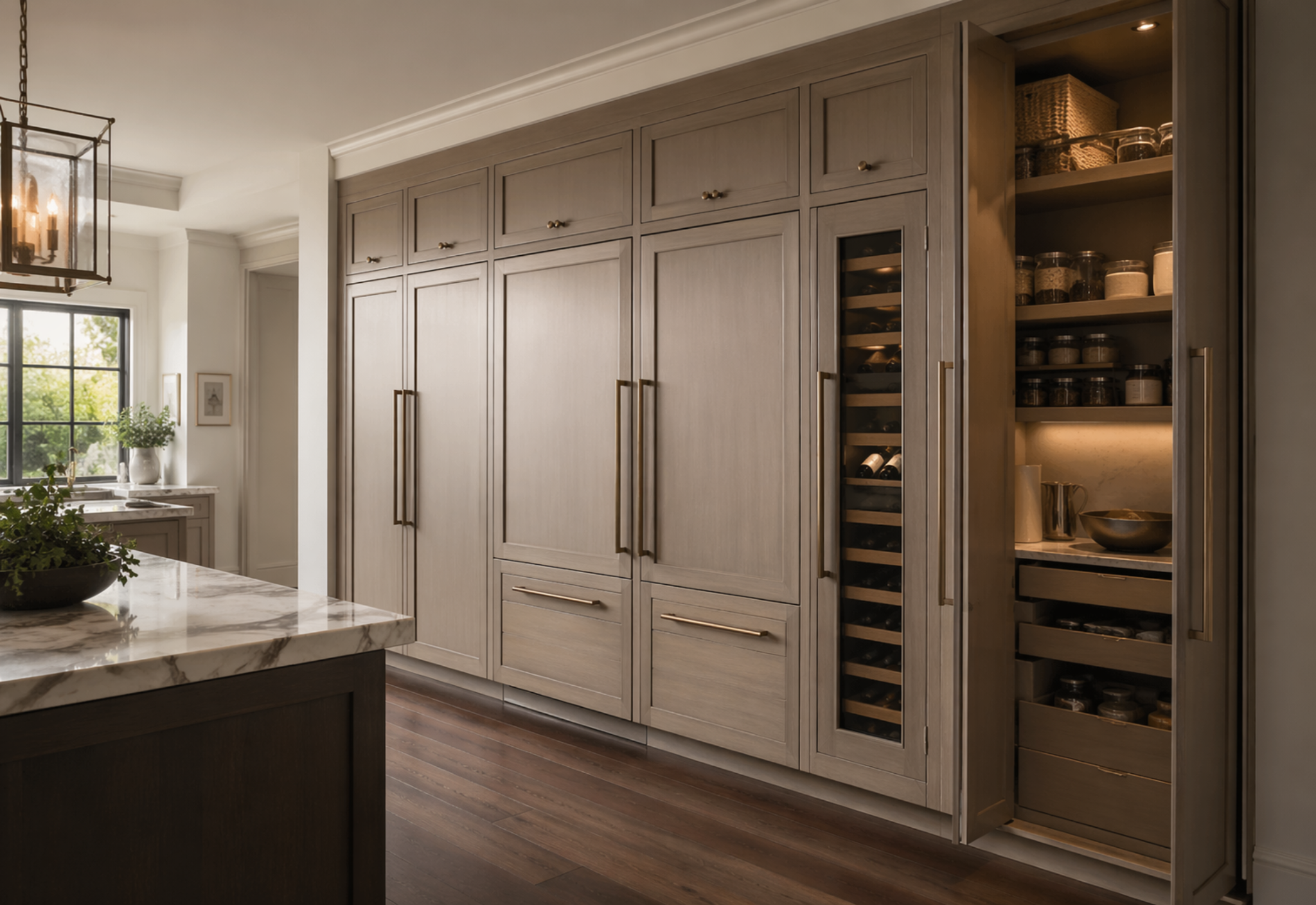
These are the details that most often affect drawings, pricing, field readiness, installation, and daily use.
Need exact openings, air clearances, anti-tip support, toe-kick planning, and service access.
Allow separate refrigerator and freezer placement with strong symmetry and high-end integration.
Require correct panel weight, thickness, reveals, appliance pulls, and hinge behavior.
Plan temperature zones, glass exposure, bottle count, light, and service or display goals.
Support grocery unloading, prep, cooking, and pantry access without creating traffic conflicts.
Coils, filters, water lines, shutoffs, leveling, and panels must remain serviceable.
Black Label treats appliance planning as part of the design system: cabinetry, countertops, electrical, plumbing, ventilation, panels, hardware, and service access all have to work together.
Category-level assumptions are not enough for final design. Exact model numbers and installation guides protect the project.
Confirm exact model numbers and installation guides before cabinet release.
Review clearances, door swings, handles, panels, and adjacent cabinet conflicts.
Coordinate electrical, gas, water, drain, ventilation, and service access.
Assign responsibility for delivery, inspection, installation, connection, and final adjustment.
Set maintenance expectations before final approval.
Keep appliance documents with the project record.
Filters, vents, coils, drains, seals, finishes, cleaning products, and service panels should stay part of the conversation before the appliance is enclosed by finished cabinetry.
Black Label guides appliance decisions as part of the full design plan so cabinetry, rough-ins, panels, ventilation, and daily workflow stay aligned.