Side-by-side layout
Best when the client wants a folding counter above or direct access to both machines.
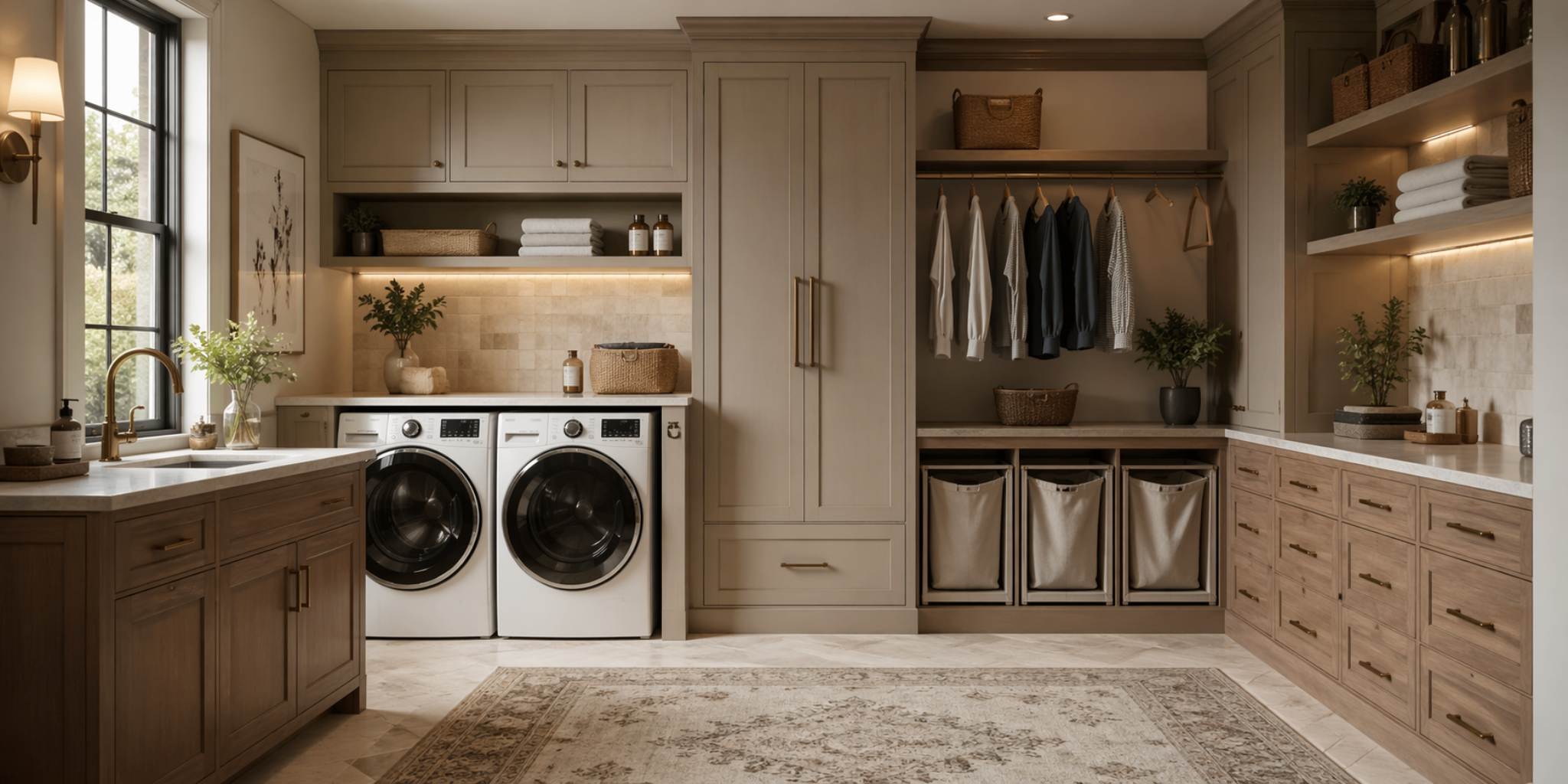
Washers, dryers, stacked units, side-by-side layouts, folding counters, utility sinks, hanging zones, hampers, venting, cabinet depth, and service clearance shape whether the laundry room feels easy or frustrating.
Washers, dryers, stacked units, side-by-side layouts, folding counters, utility sinks, hanging zones, hampers, venting, cabinet depth, and service clearance shape whether the laundry room feels easy or frustrating.
Appliances should be coordinated before cabinet release because they affect openings, panels, fillers, clearances, countertop decisions, electrical, plumbing, ventilation, and field responsibility.
The goal is not to overbuy. The goal is to make the appliance package support the way the home lives while keeping the finished cabinetry clean, serviceable, and practical.
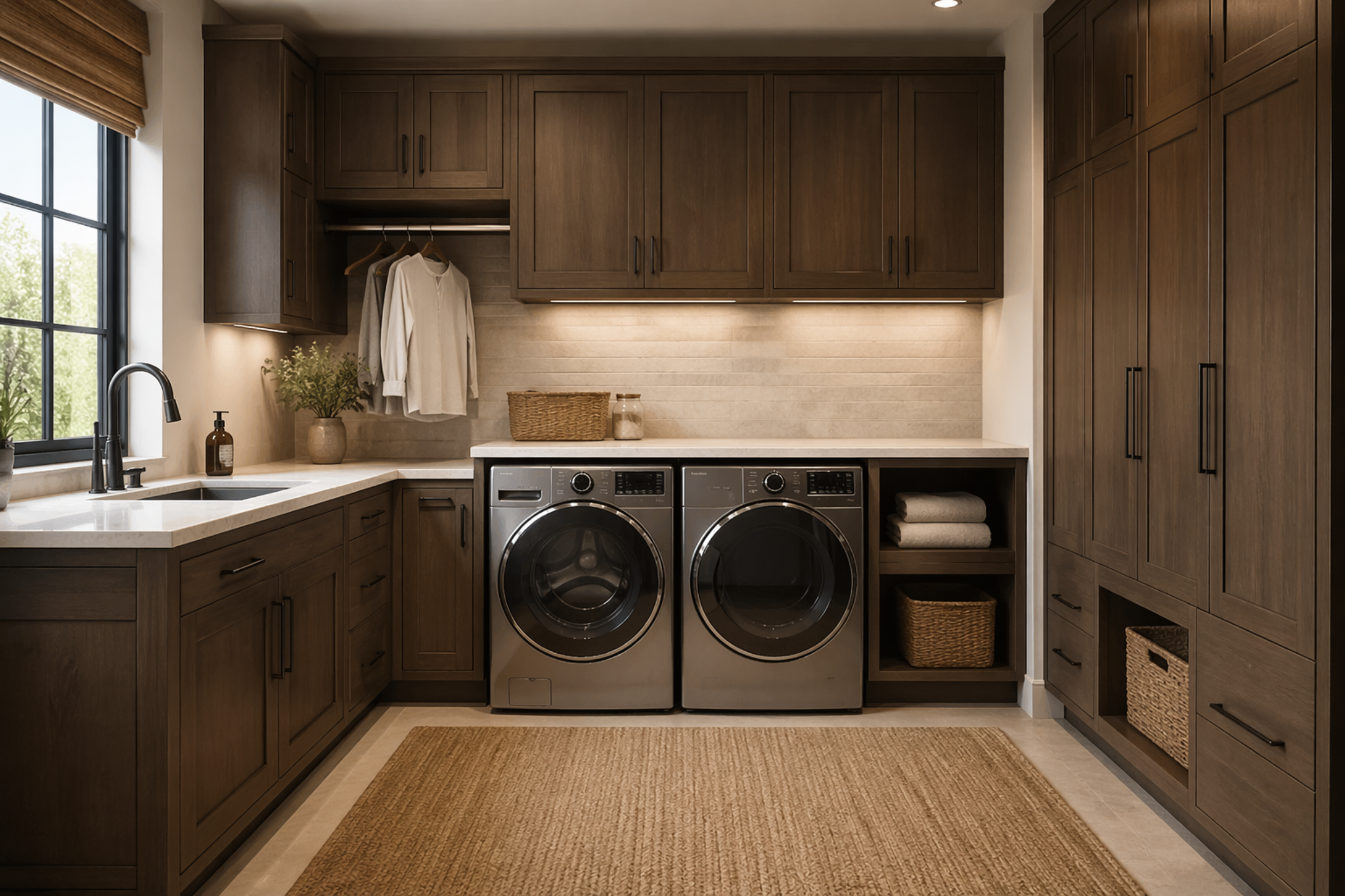
These are the details that most often affect drawings, pricing, field readiness, installation, and daily use.
Best when the client wants a folding counter above or direct access to both machines.
Useful when floor space is limited, but reach height and service access matter.
Counter height should respect appliance height, user comfort, depth, and support.
Adds function for soaking, cleaning, pets, flowers, and household tasks.
Dryer vent route, access, airflow, and future cleaning should be practical.
Laundry improves with hampers, detergents, hanging, broom storage, linens, and backstock.
Black Label treats appliance planning as part of the design system: cabinetry, countertops, electrical, plumbing, ventilation, panels, hardware, and service access all have to work together.
Category-level assumptions are not enough for final design. Exact model numbers and installation guides protect the project.
Confirm exact model numbers and installation guides before cabinet release.
Review clearances, door swings, handles, panels, and adjacent cabinet conflicts.
Coordinate electrical, gas, water, drain, ventilation, and service access.
Assign responsibility for delivery, inspection, installation, connection, and final adjustment.
Set maintenance expectations before final approval.
Keep appliance documents with the project record.
Filters, vents, coils, drains, seals, finishes, cleaning products, and service panels should stay part of the conversation before the appliance is enclosed by finished cabinetry.
Black Label guides appliance decisions as part of the full design plan so cabinetry, rough-ins, panels, ventilation, and daily workflow stay aligned.