Hood width
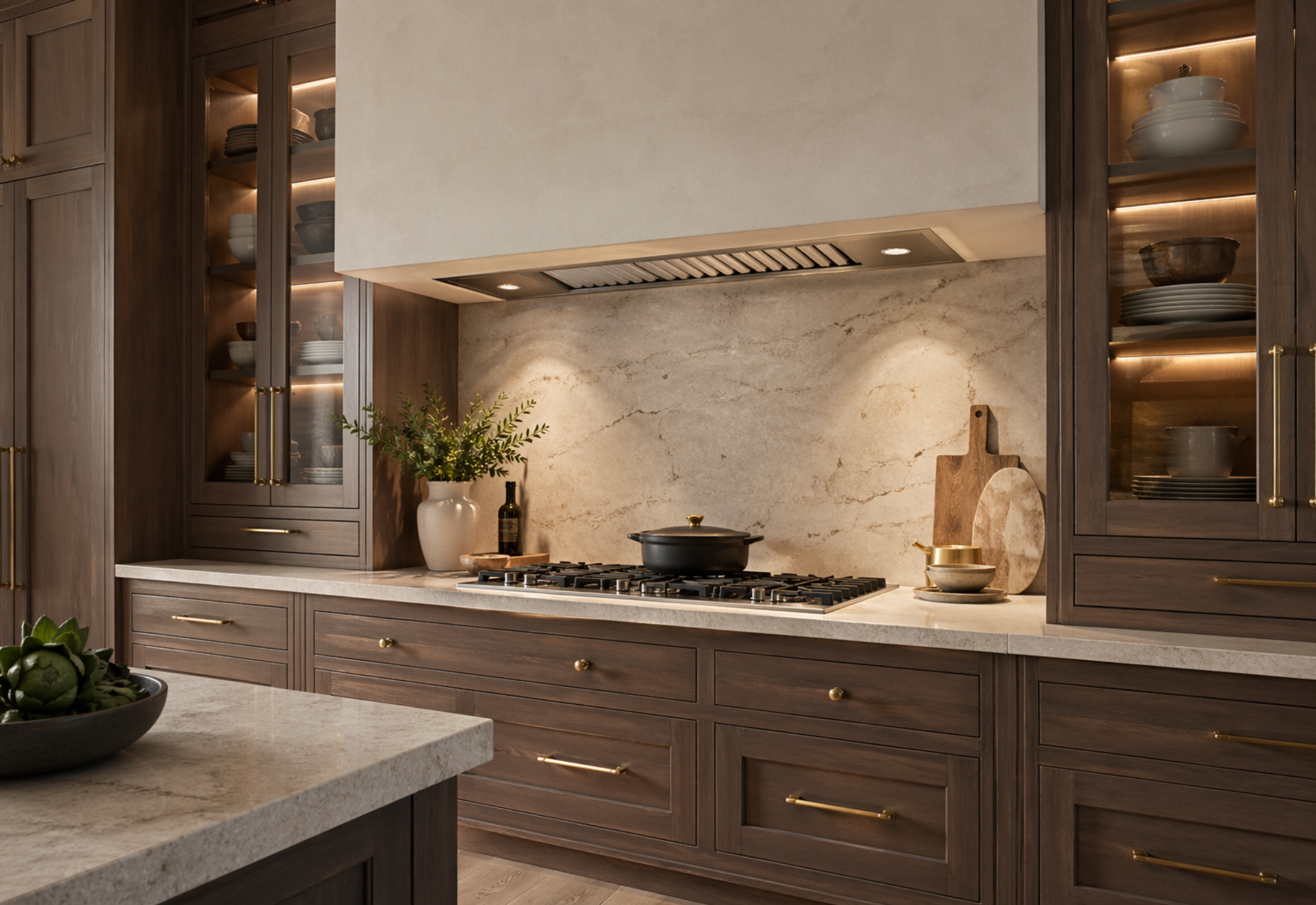
Many cooking centers benefit from a hood wider than the cooking surface.

Range hoods, inserts, liners, blower capacity, capture area, ducting, makeup-air awareness, and cabinet clearances must be planned as part of the cooking wall.
Range hoods, inserts, liners, blower capacity, capture area, ducting, makeup-air awareness, and cabinet clearances must be planned as part of the cooking wall.
Appliances should be coordinated before cabinet release because they affect openings, panels, fillers, clearances, countertop decisions, electrical, plumbing, ventilation, and field responsibility.
The goal is not to overbuy. The goal is to make the appliance package support the way the home lives while keeping the finished cabinetry clean, serviceable, and practical.
These are the details that most often affect drawings, pricing, field readiness, installation, and daily use.
Many cooking centers benefit from a hood wider than the cooking surface.
The hood needs enough depth and shape to collect heat, steam, grease, and odor.
Custom hoods should be designed around the correct insert and liner.
Duct size, route, turns, termination, and damper planning affect performance and noise.
Higher-capacity systems may trigger makeup-air requirements depending on local conditions.
Filters, lights, and liners should stay accessible after the hood is finished.
Black Label treats appliance planning as part of the design system: cabinetry, countertops, electrical, plumbing, ventilation, panels, hardware, and service access all have to work together.
Category-level assumptions are not enough for final design. Exact model numbers and installation guides protect the project.
Confirm exact model numbers and installation guides before cabinet release.
Review clearances, door swings, handles, panels, and adjacent cabinet conflicts.
Coordinate electrical, gas, water, drain, ventilation, and service access.
Assign responsibility for delivery, inspection, installation, connection, and final adjustment.
Set maintenance expectations before final approval.
Keep appliance documents with the project record.
Filters, vents, coils, drains, seals, finishes, cleaning products, and service panels should stay part of the conversation before the appliance is enclosed by finished cabinetry.
Black Label guides appliance decisions as part of the full design plan so cabinetry, rough-ins, panels, ventilation, and daily workflow stay aligned.