Glaze
A glaze is a contrasting material applied over a painted or stained finish and then wiped back so it remains in profiles, corners, open grain, and detail areas. It can add warmth, age, and depth.
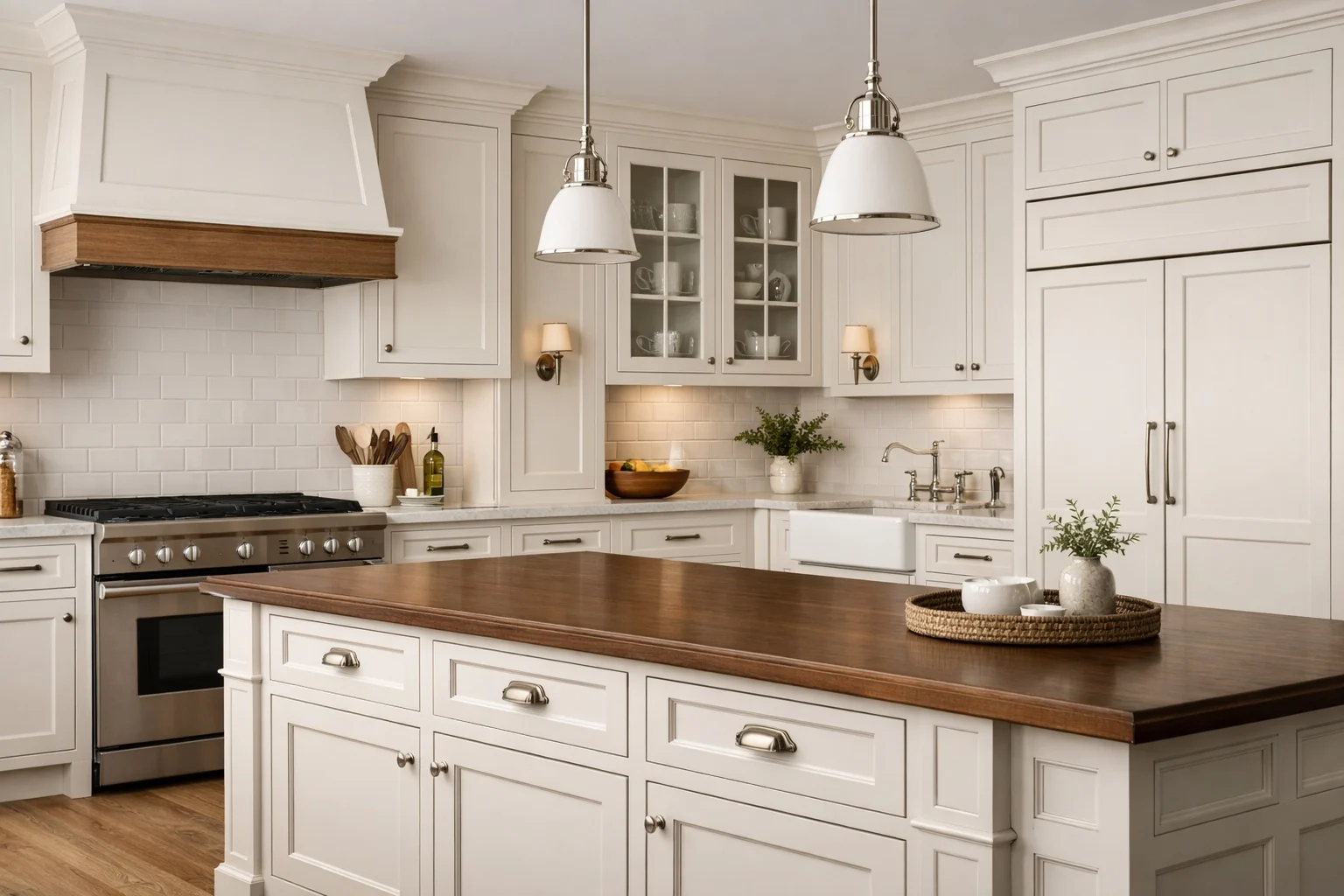
Specialty finishes include glazes, brushing, heirloom effects, distressing, rub-through, wire-brushed textures, veneers, laminates, leather-look panels, and other custom material moves. They are powerful because they are specific—and risky when used without restraint.
Specialty finishes are not one category. Some are hand-applied enhancements over paint or stain. Some are textured wood treatments. Some are decorative surfaces such as veneer, laminate, acrylic, or leather-look panels. The common thread is that they create a more specific design statement than a standard paint or stain.
Islands, bars, hutches, vanities, range hoods, built-ins, display cabinetry, appliance panels, and selected focal areas where the room benefits from a stronger signature.
Specialty finishes can make cabinetry feel custom, layered, aged, textured, or furniture-like without forcing the entire room into one highly decorative finish.
Overuse, trend fatigue, difficult touch-up, cleaning complexity, extra lead time, heavier cost, and finish effects that look interesting as a sample but too loud at full scale.
Textured, glazed, distressed, and decorative surfaces can need more careful cleaning because crevices, profiles, edges, and surface texture hold dust, residue, or oils differently.
A glaze adds contrast and depth to profiles and grain. A brushed or striated effect adds soft movement over a painted finish. A rub-through or heirloom finish creates intentional age. Distressing adds physical or visual wear. Wire-brushing exposes wood texture. Veneer allows controlled grain and species selection. Laminate and acrylic create consistent modern surfaces. Leather-look or textured panels add tactile character in carefully chosen locations.
The best specialty finishes do not try to be everywhere. They create hierarchy. They help the eye understand what is important in the room.
Glaze, brushing, rub-through, and distressing are not simply color choices. They are visual effects that become stronger as door profiles, moldings, and cabinet scale increase.
A glaze is a contrasting material applied over a painted or stained finish and then wiped back so it remains in profiles, corners, open grain, and detail areas. It can add warmth, age, and depth.
Brushing introduces subtle linear movement, often over painted finishes. It can keep a solid color from feeling flat, but the effect should be soft enough to support the room rather than distract.
Rub-through creates intentional worn areas at edges or details, exposing a lower layer or wood tone. It can feel charming in the right architecture and artificial in the wrong one.
Heirloom effects create a more weathered or aged cabinet personality. They are strongest in furniture-like cabinetry, hutches, vanities, and rooms with architecture that can carry that story.
Distressing adds intentional dents, worn corners, softened edges, rock marks, worm holes, or other age cues. It should be chosen carefully because it is a permanent style statement.
These finishes emphasize open grain, especially on oak, by adding contrast within the grain structure. They can look refined and current when the tone is restrained.
Veneer, laminate, acrylic, and leather-look surfaces can create design options that standard paint and stain cannot provide. These choices should be evaluated for edge detail, cleanability, durability, replacement logic, and how much of the room they occupy.
Veneer allows selected species, premium grain, and more controlled layout, especially on slab doors and large modern surfaces. Rift, quartered, and exotic veneers can create a highly tailored material plane.
Laminate can offer consistent color, pattern, or wood-look surfaces with a modern, practical read. Edge quality, panel thickness, and the realism of the pattern are critical to how premium it feels.
These can create a sleek, reflective, contemporary look. They require precise installation and are less forgiving of fingerprints, surface scratches, and uneven reveals.
Leather, shagreen, buffalo, crocodile, or similar textured looks can add a tailored furniture quality. They are usually best as accents, not the main cabinet finish throughout a room.
Wire-brushing removes softer grain and leaves a tactile texture. It can add depth and help disguise some minor wear, but it can also hold dust and residue in the texture.
These create shadow and rhythm. They are powerful on islands, bars, hoods, and display cabinetry, but too much can make the room feel busy or difficult to clean.
A specialty finish should usually identify a focal zone, not compete with every other finish in the room. An island, bar, hutch, range hood, vanity, or built-in can carry a special finish beautifully because the eye understands its role. When every cabinet run has a different enhancement, the room can lose hierarchy.
The more expressive the finish, the calmer the supporting materials usually need to be. A heavy glaze, dramatic stone, patterned backsplash, ornate hardware, and distressed cabinetry can all be attractive individually, but together they may age the room quickly.
The added cost of a specialty finish is usually tied to labor, samples, materials, finish steps, and coordination. That cost can be very worthwhile when the finish creates a focal point that standard paint or stain cannot achieve.
The value drops when the finish is selected only because it looks interesting in isolation. A specialty finish should clarify the design, not simply add another upgrade line.
Specialty finishes can be durable, but many of them have profiles, pores, striations, open grain, texture, or decorative edges that behave differently from a smooth painted door. Dust and residue can collect in glaze lines, distress marks, fluting, wire-brushed grain, and textured panels.
Care should remain gentle: soft cloth, mild cleaner when needed, minimal water, and no abrasive pads. For specialty surfaces, manufacturer-specific care instructions matter because laminate, veneer, glazed wood, textured panels, and leather-look materials may not all tolerate the same cleaning products.
The same finish that makes a room memorable can also make it feel overdesigned, themed, or dated when applied without restraint.
Highly specific textures, colors, glazes, and distressed effects can age faster than simpler paint or stain. Choose them because they fit the home, not because they are momentarily popular.
A sample can look subtle while a full wall of cabinets feels heavy. Specialty effects should be judged at the largest practical sample size and in room context.
Texture, open grain, grooves, and detailed profiles can hold dust or residue. This matters in kitchens, bath vanities, laundry rooms, and homes with heavy cooking.
Hand-applied or textured effects can be difficult to repair invisibly because the finish is not a single flat color.
Not every finish is available on every species, door, construction style, or cabinet line. Some combinations are limited by manufacturer program rules.
Specialty finishes can fight dramatic countertops, patterned tile, ornate lighting, heavy hardware, or busy flooring if the full palette is not edited.
Before approving a specialty finish, make sure the finish has a clear purpose, appropriate maintenance expectations, and enough restraint to age well.
Is the finish adding age, texture, depth, contrast, modernity, warmth, or a furniture-like focal point?
Decide whether the finish belongs on a feature zone or throughout the room. Most specialty finishes perform better with a controlled footprint.
Review the effect on the largest sample available and compare it against the actual stone, tile, flooring, hardware, and lighting direction.
Ask how the surface should be cleaned, whether texture will hold residue, and whether the location is appropriate for the use level.
Confirm the finish is available on the selected door, species, construction style, and cabinet line before emotionally committing to it.
If the specialty finish is expressive, make another surface calmer so the room has hierarchy.
When specialty finishes are edited, properly located, and tested against the full palette, they can add depth and identity that standard paint and stain cannot provide.