Deep green kitchen with warm wood hood, marble backsplash, and brass accents
Black Label Standard

The standard is what protects the project before the cabinets are ordered.

Black Label holds cabinetry decisions to a higher standard of clarity, preparation, and release discipline so clients are not left trying to solve scope, pricing, selections, and field details too late.

Purpose

The standard is not about making every project expensive. It is about making every project clearer.

Good, Better, Best, and Furniture Grade can all be correct. The Black Label Standard is the discipline used to decide the right path before momentum creates drift.

When the standard is working, clients feel guided instead of pushed. The room, budget, construction path, finish expectations, and level of detail are easier to understand.

Standard checks
  • Scope is understood before selections multiply
  • Budget lane is aligned before commitment
  • Room function leads the finish conversation
  • Approvals are cleaner before release
  • Field conditions are considered early
  • The final room feels intentional

Practical

The selected cabinetry path should fit the room and the investment logic, not just the inspiration.

Premium

The process should feel guided, coordinated, and more disciplined than a normal cabinet transaction.

Protective

The standard exists to reduce confusion, late changes, and decision drift before the project becomes harder to control.

Navy home office built-in with walnut desk, shelving, and brass task lighting

The standard applies to working rooms, built-ins, and cabinetry moments that require proportion, alignment, and design control.

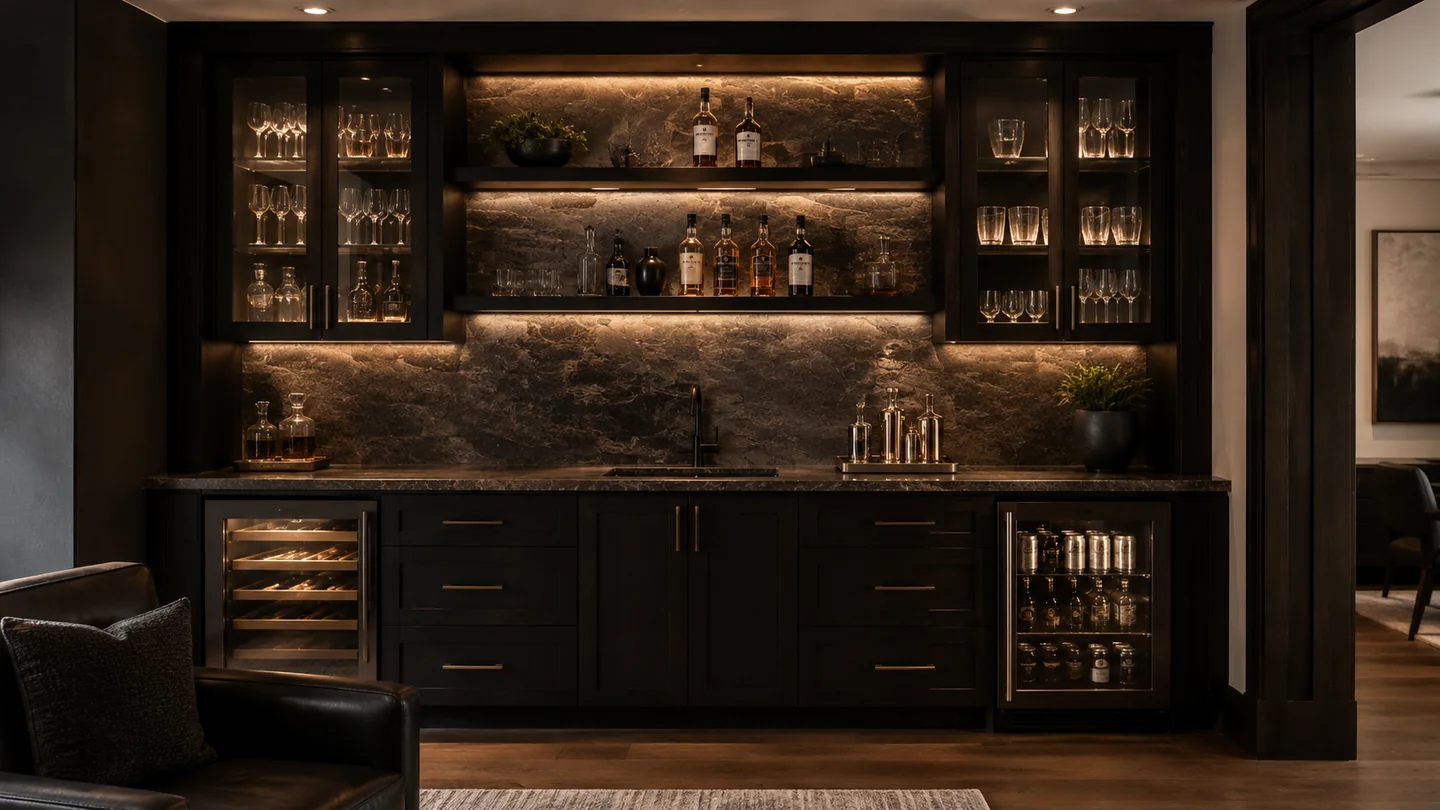
Dark home bar with stone backsplash, cabinet lighting, and beverage refrigeration

Lighting, appliance integration, stone, glass, and finish direction need to be coordinated before release decisions become expensive.

The six checks

The lane can change. The standard should not.

Good does not mean careless. Better does not mean automatic upgrade. Best does not mean overbuilt. Furniture Grade does not mean every room needs the highest refinement.

Scope Clarity

The room must be understood before pricing becomes serious.

Investment Alignment

The cabinetry lane must fit the room, the home, and the investment posture.

Function First

Storage, appliances, daily use, and room behavior guide the plan.

Selection Discipline

Door style, finish, hardware, countertop, and material direction should work together.

Field Readiness

Measurements, walls, appliances, lighting, and site conditions must be respected before release.

Approval Protection

Release should happen after decisions are documented, understood, and ready.

LaneWhat the standard protects
GoodClean scope, controlled investment, practical function, and a clear room plan.
BetterImproved flexibility, finish direction, and room refinement without defaulting to the highest lane.
BestStronger customization, proportion, design control, and detail discipline where the room deserves it.
Furniture GradeHighest detail sensitivity, furniture-like refinement, and premium execution discipline.
What the standard prevents

The standard exists to reduce avoidable drift.

Pricing drift, unclear allowances, disconnected finish selections, appliance conflicts, storage misses, rushed approvals, field confusion, expensive late changes, and pretty design with weak execution all become harder to fix late in the project.

What clients should feel
  • Guided, not pushed
  • Informed, not overwhelmed
  • Clear, not rushed
  • Protected, not surprised
  • Confident before release
White mudroom bench with closed storage, hooks, cubbies, and shoe zones
Ready to begin

Build the room around a stronger standard from the beginning.

Start with Concept Design and Budget Analysis so the room, cabinetry lane, and investment direction are understood before final pricing, selections, and release decisions take over.

Start Your Concept Design