Style is useful when it gives direction. It becomes a problem when it turns into shorthand, mood-board drift, or surface-level labeling. The goal is not to name the room for its own sake. It is to understand what kind of atmosphere, proportion, restraint, and material language the room should carry.
That is why a better design conversation usually starts below the label.
Contemporary
Contemporary usually works best when the goal is cleaner lines, more reduction, and a stronger architectural read. It often relies on simplicity, restraint, and fewer competing details. But good contemporary rooms still need warmth. Without that balance, they can start to feel sterile rather than refined.
Coastal
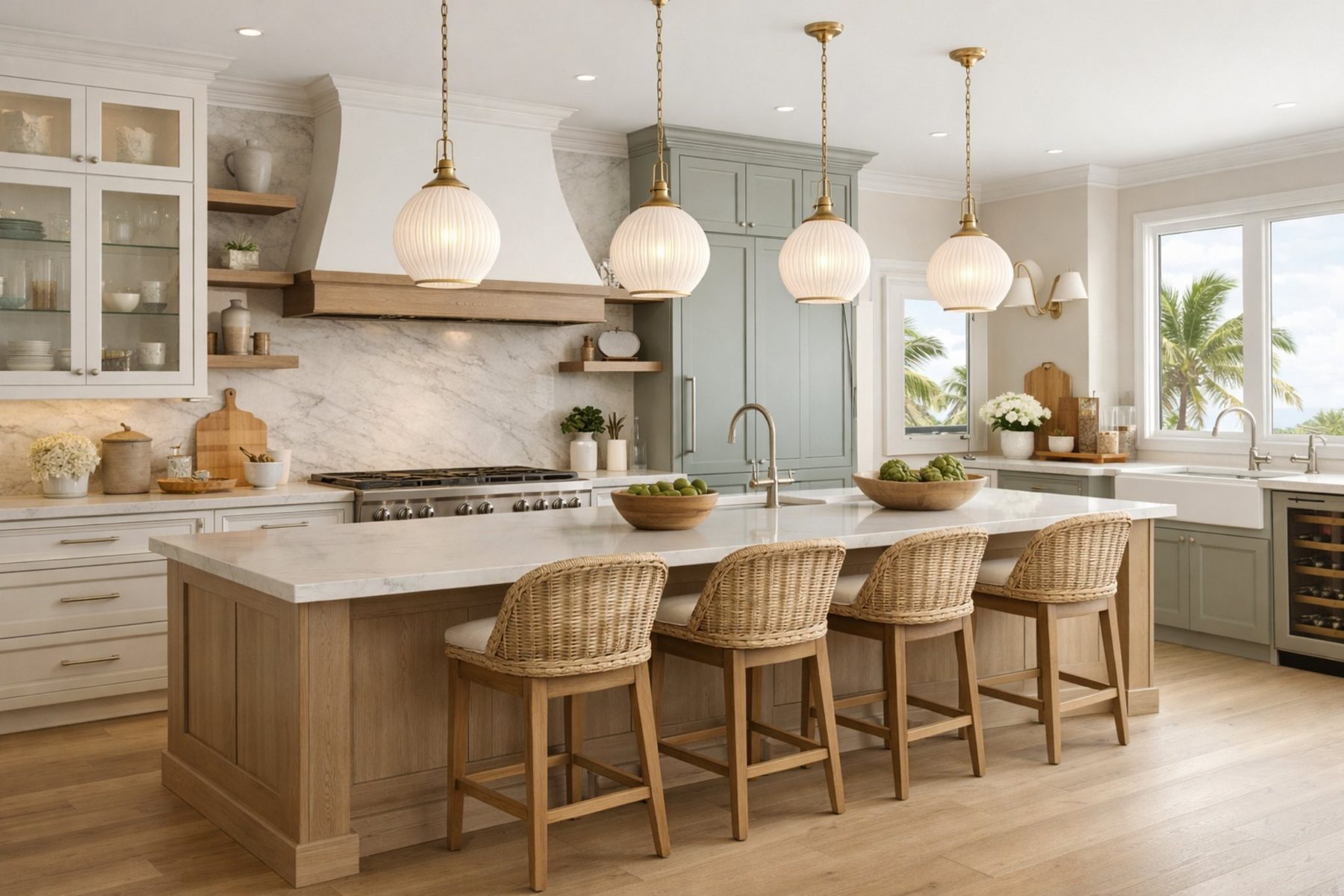
Coastal works best when it is interpreted through lightness, calm, and livability rather than cliché. The strongest coastal rooms usually use brighter palettes, softer transitions, natural texture, and a more relaxed visual rhythm. But they still need editing. When coastal becomes too literal, it loses polish quickly.
Transitional
Transitional is often the broadest category and also one of the most misunderstood. At its best, it combines classic proportion with cleaner detailing and more disciplined finish direction. It works well because it can bridge warmth, familiarity, and versatility. But it still needs choices to be made clearly. Transitional is not a free pass to mix everything.
A well-led room does not need a louder label. It needs clearer design direction.