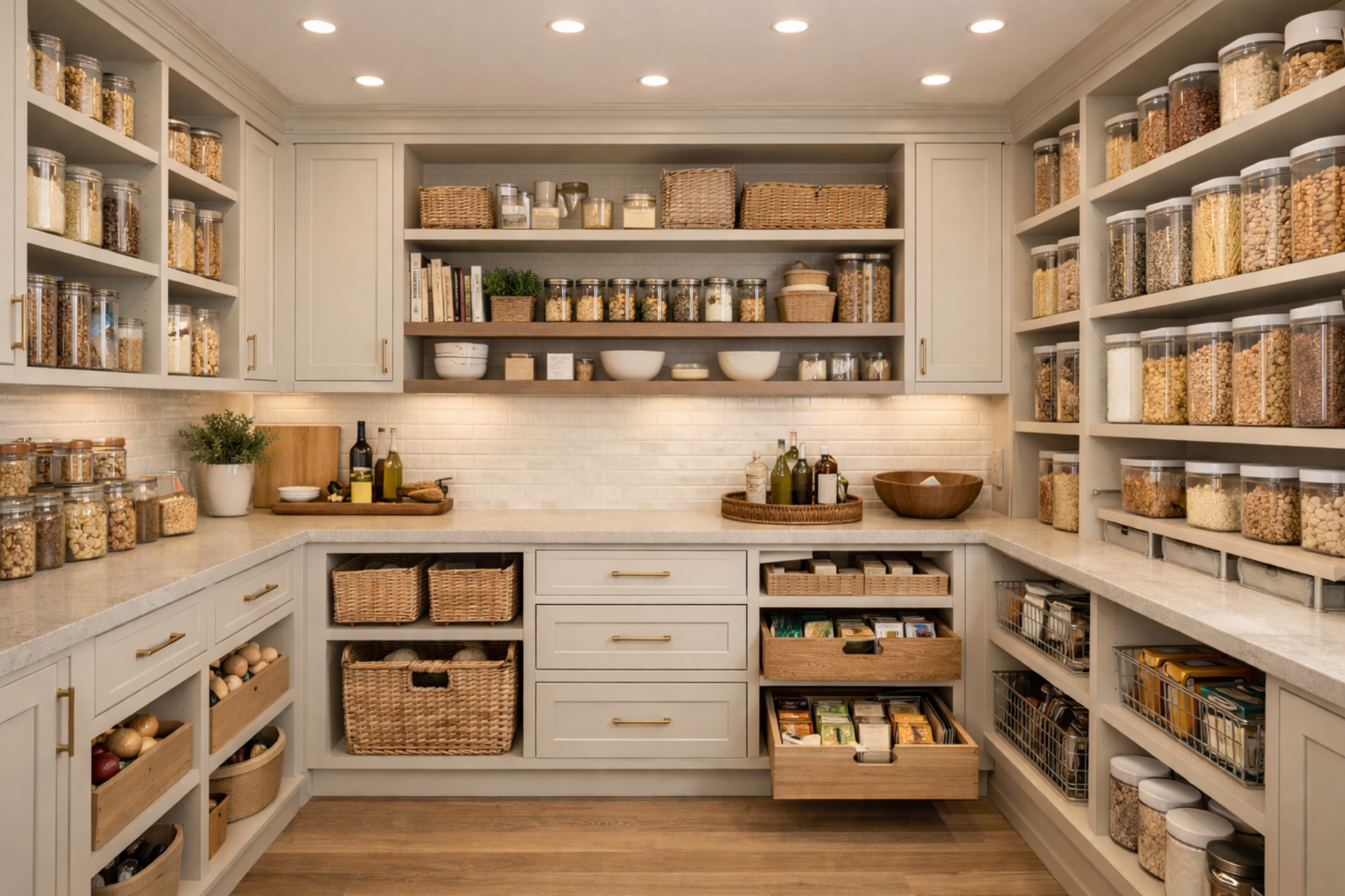
A pantry can look organized in a photo and still perform poorly in real life. That is usually because the room was treated like a storage leftover instead of a space with its own logic.
The most common pantry mistakes are not dramatic. They are small planning misses that show up every day.
These spaces deserve more than extra shelves
One of the biggest mistakes is designing shelves without thinking about what actually needs to live on them. Deep shelving can look generous, but if it causes products to get buried, duplicated, or forgotten, it creates friction instead of clarity. The best pantry storage is not just spacious. It is readable.
Another common mistake is giving the room too little countertop space. Even a support pantry often needs a surface for unloading groceries, setting small appliances, staging serving items, or supporting overflow prep. Without that work zone, the room becomes harder to use and the main kitchen has to absorb more clutter.
Good planning keeps the room calm
Open storage can also be overused. Some visibility is useful. Too much visibility turns into visual noise. A pantry should not feel chaotic just because it holds a lot. Good pantry design balances display, access, and concealment so the room feels calm while still staying functional.
Appliance planning is another place projects go sideways. Coffee equipment, toasters, microwaves, beverage support, charging, and overflow refrigeration all need power, breathing room, and an intentional place to land. If those needs are added after cabinetry is set, the room often starts to feel crowded quickly.
What better pantry planning usually solves
- Stronger dry-goods organization
- Cleaner countertop behavior
- Better appliance placement
- Less visual clutter
- More useful overflow support for the kitchen
- Easier daily reset
The best pantry is not the one with the most shelves. It is the one that makes the house run more clearly.