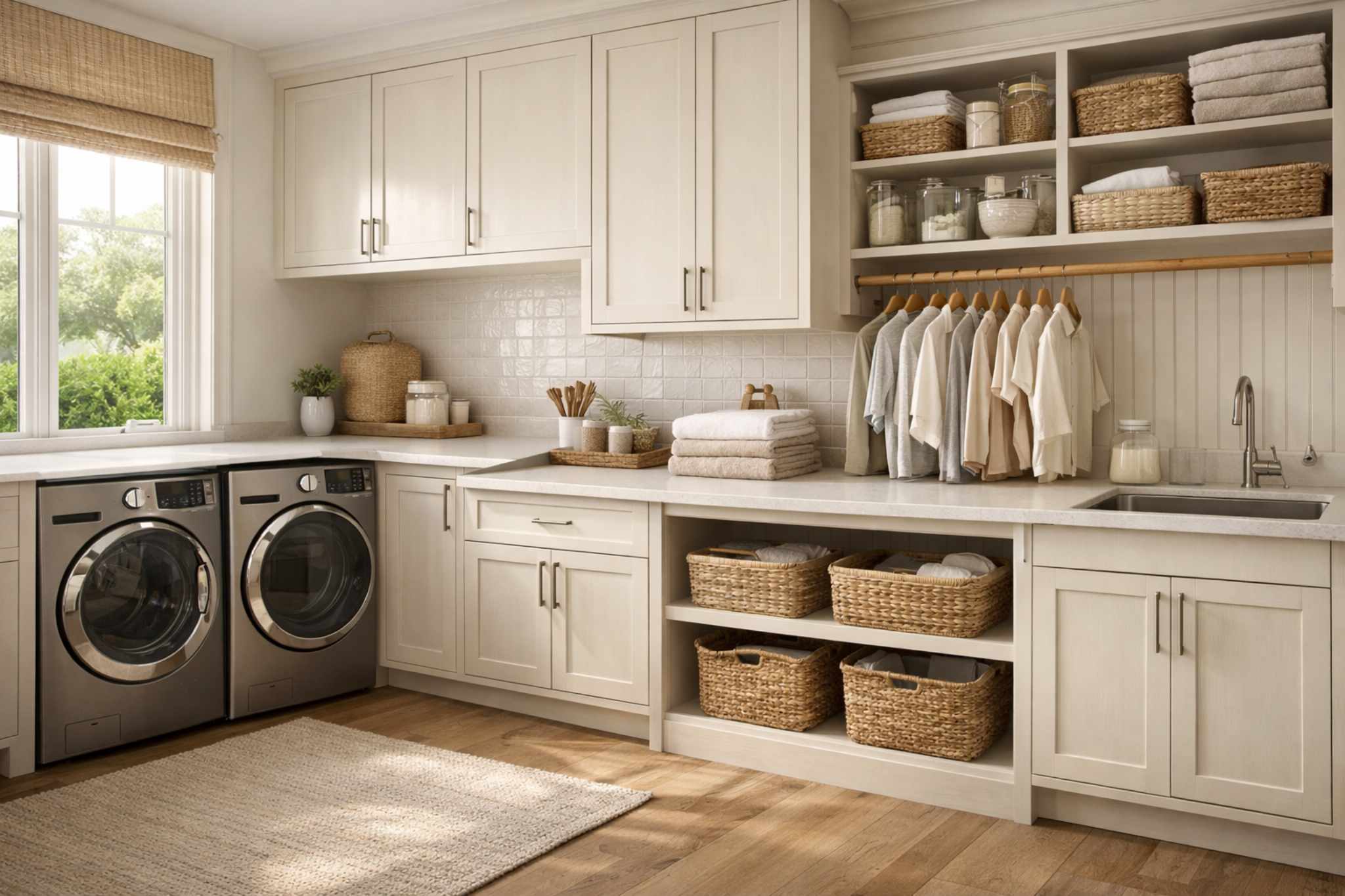
Laundry rooms are easy to underrate because they are practical spaces. But that is exactly why they deserve better planning. A room used constantly should not feel like an afterthought.
When laundry rooms are poorly designed, the friction shows up almost immediately. There is nowhere to fold. Hanging support is missing. Storage is too shallow, too exposed, or too vague. Hampers float around the room. Cleaning supplies compete with linens. The room starts to feel cluttered even when it is technically clean.
Utility does not have to feel utilitarian
A better laundry room is usually not about luxury. It is about discipline.
The room needs a clear sequence. Intake. Sorting. Washing. Drying. Folding. Hanging. Storage. If those activities are not supported spatially, the user ends up improvising every day. That daily improvisation is what makes utility spaces feel more frustrating than they should.
What pays off fastest
Counter space matters more than many people think. Even a modest folding zone can dramatically improve how the room behaves. Hamper planning matters too. When laundry sorting is hidden or built in, the room stays calmer and easier to maintain.
- Folding surface in the right place
- Hidden or built-in hamper logic
- Hanging support
- Better sink placement when needed
- Storage for cleaning and overflow
- Enough countertop to avoid constant clutter
These are not flashy upgrades. They are everyday quality-of-life improvements that make the room calmer, brighter, and easier to use.