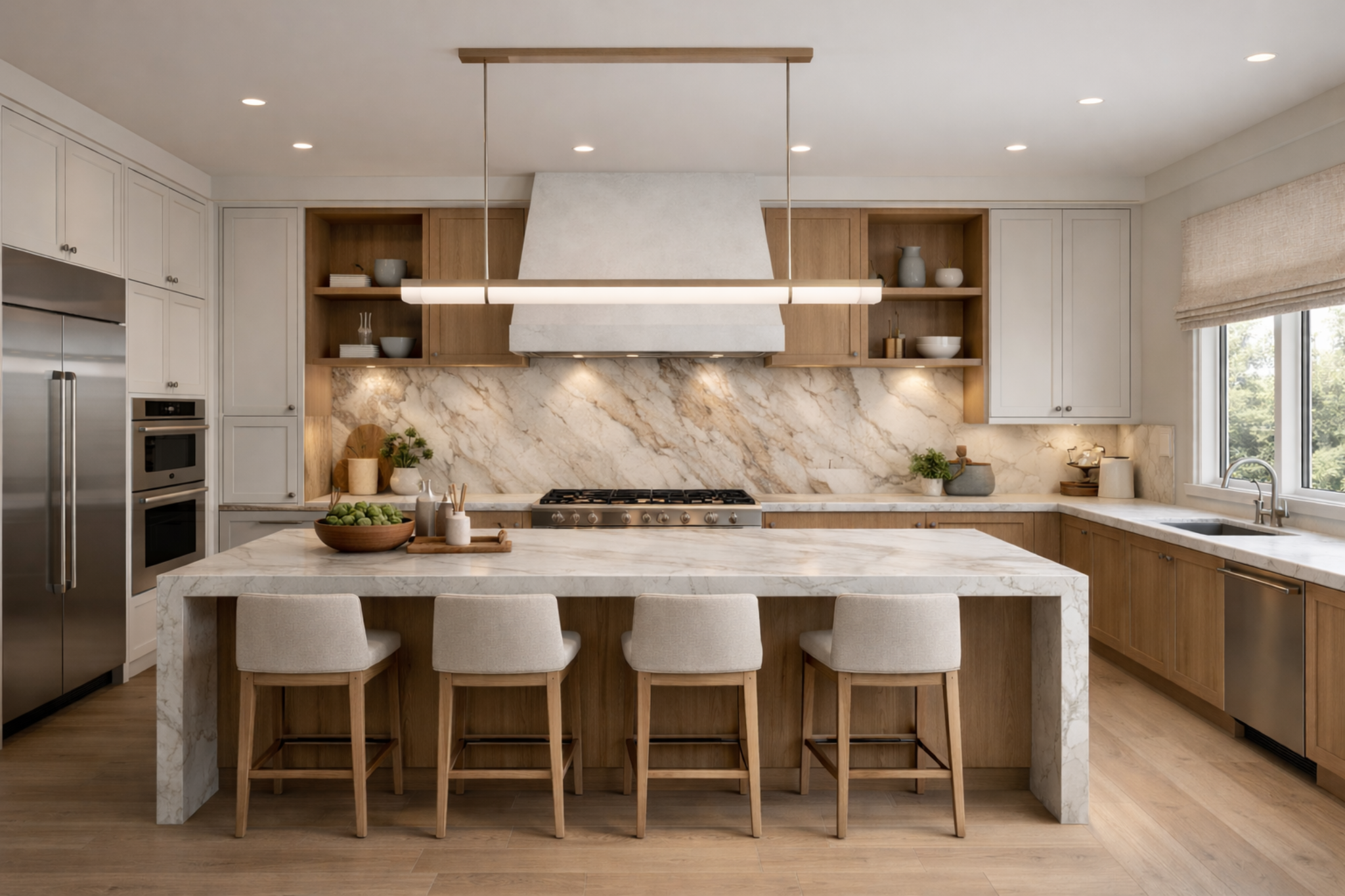
A kitchen usually carries more interconnected decisions than any other room in the home. Cabinet layout influences appliance placement. Appliance placement affects storage. Storage affects circulation. Finish direction affects the visual hierarchy. When those decisions are made too late, the room often gets more expensive, less coherent, and harder to correct.
Start with the room, not just the products
That is why a stronger kitchen project usually starts with the room before it starts with the products.
Many kitchen problems begin when people shop cabinets, appliances, or finishes before the room has a clear plan. A better first move is to establish how the kitchen should work: where prep happens, where cleanup happens, how the island should behave, what storage matters most, and where the focal point belongs.
When that foundation is missing, even good-looking selections can fight each other. The room may still be attractive, but it often feels unresolved in daily use. Traffic gets tight. Appliance placement becomes compromised. Storage is added reactively. The final result can look more expensive without actually feeling better.
Resolve the expensive relationships early
A disciplined start protects the parts of the project that are hardest to fix later.
Cabinetry, appliances, lighting, venting, countertops, and circulation are tied together. The earlier those relationships are clarified, the easier every later decision becomes. That is one of the main reasons Black Label begins with concept design and budget direction rather than letting product specification set the pace.
What a stronger start protects
- Less layout drift
- Cleaner appliance integration
- Stronger storage planning
- Better budget realism earlier
- More confidence before release decisions
- A calmer path into finish and fixture selection
A well-led kitchen does not happen by accident. It happens when the room is understood before the expensive decisions compound.